
The green that gets complicated: A green smoothie sounds like an unconditionally healthy choice. A handful of spinach, a few chard leaves, an apple, water, and a blender – what could go wrong? However, within the human body, even healthy food operates inside a biological context. For those prone to forming kidney stones, large amounts of leaves rich in oxalates can turn a healthy habit into a painful ordeal.
Oxalate is a natural substance found in many plants. In the body, it can bind to calcium and create calcium oxalate crystals, which are the most common type of kidney stones. These crystals can accumulate in the urinary tract and, in certain cases, become a stone that causes sharp pain, blood in the urine, nausea, and sometimes a blockage requiring medical treatment.
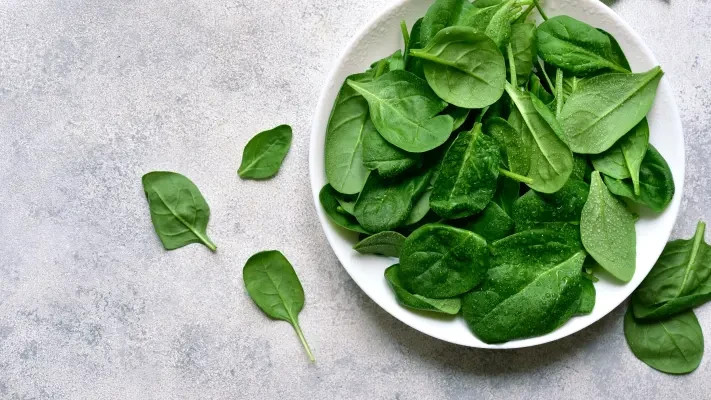
Spinach is considered one of the foods richest in oxalate. Chard, rhubarb, and certain green leaves also contain significant amounts. Kale is sometimes mentioned in the same breath as "green leaves," but in terms of oxalate, it is generally ranked lower than spinach and chard, and therefore does not carry the same level of concern. It is therefore important to be precise: The main problem is not every green smoothie or every green leaf, but a high and frequent consumption of oxalate-rich foods, especially among people who have already suffered from calcium oxalate kidney stones or received medical guidance to reduce oxalates.
The risk increases when consuming these leaves in the form of a smoothie. When eating a salad, a person usually consumes a limited amount. When putting a large handful and then another handful into a blender, it is easy to consume a quantity of leaves at once that we would never chew in a regular meal. The smoothie also creates the sensation of a soft drink, even though in terms of nutritional load, it may be highly concentrated.
Not everyone who eats spinach will develop kidney stones. Far from it. Stones form from a combination of personal tendency, genetics, fluid intake, urine concentration, diet, underlying illnesses, and sometimes medications. In a healthy person, a serving of spinach as part of a varied diet is usually not a problem. But anyone who has already experienced a calcium oxalate stone event, or who has received a medical recommendation to reduce oxalates, needs to know the list.
Sufficient fluid intake is a critical tool for preventing stones
There is a way to reduce risk without cutting out vegetables entirely. Adequate fluid intake is one of the most important tools in preventing stones, because it dilutes the urine and reduces crystal precipitation. Adequate calcium intake from food – rather than complete avoidance of it – can help bind some of the oxalate in the intestine and reduce its absorption. Therefore, extreme calcium-free diets can achieve the opposite result.
Variety is also important. Instead of drinking a concentrated spinach smoothie every day, one can vary with lettuce, cucumber, herbs in moderation, cooked vegetables, and whole grains according to personal needs. Anyone who is under nephrological or urological follow-up can receive a tailored diet based on the type of stone, blood and urine tests, and dietary habits.
The message is not against green vegetables. Spinach, chard, and kale are foods rich in vitamins, minerals, and fibers, and for most people, they can be integrated into a healthy menu. The caution mainly concerns people with a known tendency toward kidney stones, and especially when they consume large quantities of spinach or chard in concentrated smoothies every day. Health is not measured by the color of the drink in the glass, but by adaptation to the body, medical history, and tests.

When to seek medical help
If sharp pain in the flank, blood in the urine, vomiting, fever, or difficulty urinating appears, a medical examination is necessary. These are signs that can match a stone in the urinary tract, and sometimes also an infection or blockage. The smoothie can wait, the kidney cannot always.
Dr. Itay Gal is a specialist in pediatrics, sports and aviation medicine, and the medical commentator for Maariv. For more articles click here