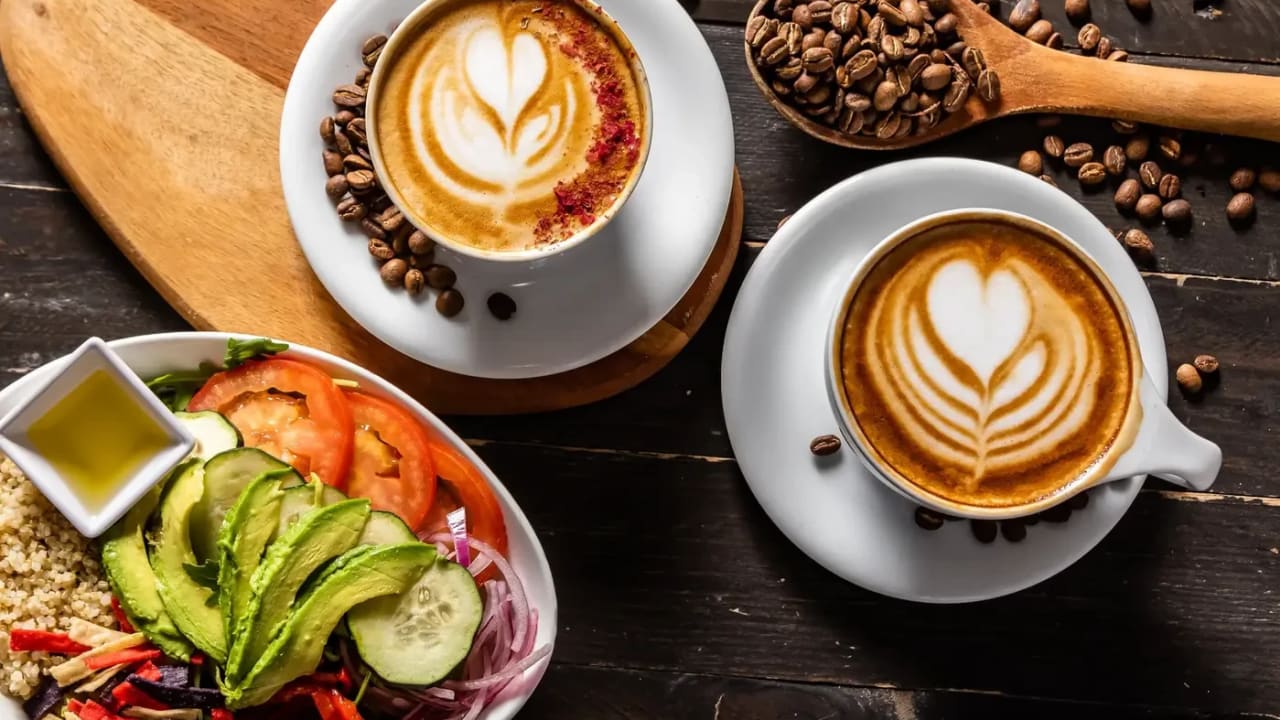
Coffee after a meal, fruit at the end of the meal, water while eating—and chocolate for dessert: For years we were taught that there is a long list of “forbidden” things immediately after eating. But the truth? Most of these rules are stubborn myths that do not always stand up to scientific scrutiny. So what is really allowed, when is it worth being cautious—and how can we adapt habits to our personal health condition, without guilt and without unnecessary drama?
Coffee after a meal
Coffee contains substances that bind to iron and reduce its absorption. Does that mean coffee after a meal is forbidden? Absolutely not.
For those with normal hemoglobin levels and no iron deficiency in tests, there is no problem drinking coffee after a meal. But for those who suffer from iron deficiency, anemia, or borderline hemoglobin, it is better to keep coffee about one to two hours away from main meals, especially meals that contain iron. And if coffee “fills a gap,” helps with alertness, or is simply part of your daily ritual—there is no need to panic, just to know when it is important to be careful.
Fruit after a meal
There is no problem at all. It is important to emphasize: From the body’s perspective, fruits and vegetables are much more similar than commonly thought—both are a source of fiber, fluids, vitamins, and antioxidants. Just as vegetables can be incorporated into a meal, fruits can be incorporated as well: Pear slices in a leaf salad, plums with baked chicken, an apple alongside cheese—everything is legitimate.
Only one thing is important in a diet: Fruit after a meal is considered a portion in itself, and therefore replaces a between-meal snack, not a “free addition.”
Water after/during a meal
There is no problem drinking water during a meal or after it. The body has enough acids and enzymes for digestion, and water does not “dilute” digestion in a way that interferes with a healthy person.
But: Those who suffer from heartburn or reflux—should avoid drinking large amounts during the meal, because a large volume in the stomach may worsen a burning sensation or the return of food to the esophagus.

Chocolate after a meal
Something sweet after a meal is a natural need; it stems from the digestive process itself, and in truth, it is even the most convenient time for the body to deal with something sweet.
After eating, and especially after a combination of carbohydrates and protein, sugar absorption into the body is slower, and then chocolate or something sweet afterward does not cause a sharp spike in blood sugar as it would on an empty stomach.
Chocolate or something sweet at the end of a meal sometimes satisfies a craving and prevents repeated snacking later in the day. In a diet—the quantity is important: One square of chocolate to finish a meal is far preferable to searching for something sweet later.
The bottom line: Most of the rules around “what is forbidden after eating” are myths. Nutrition should be tailored to the health condition, blood tests, and personal feeling—not to a general list of prohibitions.