Prehistoric
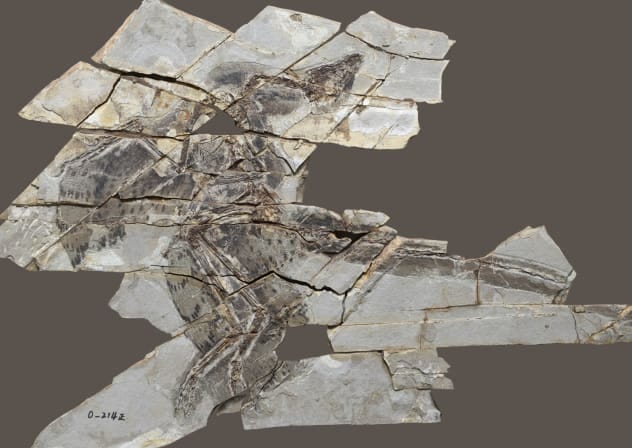
160 million years later: This rare fossil is overturning everything we knew about how birds evolved
Research on the Anchiornis specimen reveals hidden feather structures that contradict old theories on dinosaur flight. Scientists are now re-evaluating how and when animals first took to the skies.

Oldest-known fire-making found in Britain, pushing Neanderthal mastery back 415,000 years

Stone age site in Germany yields Europe's oldest blue pigment, rewriting prehistoric art palette

Scientists reconstruct face of 10,000-year-old prehistoric woman found in Belgian cave
What caused the holes in this prehistoric T-Rex's jawbone? - study
For years, scientists have been stumped as to what caused the golf ball-sized holes in the skull of one of the world's best-known dinosaur fossils.

Evidence of prehistoric hunting discovered by Oxford archaeologists in Arabian desert - study
The discovery has "important implications in terms of the paleoenvironment of the region, faunal dispersals and human cultural connections."

Climate change caused massive waves of evolution in reptiles - study
Reptiles evolved at an alarming rate to suit themselves to changes in climate, Harvard study finds

Plesiosaurs inhabited freshwater in Morocco, researchers find - study
Fossils discovered in Morocco indicate that the ancient marine reptiles were adapted to freshwater conditions and may have spent their entire lives there.

New study challenges old views on what’s ‘primitive’ in mammalian reproduction
It was originally thought that marsupial reproduction was more primitive and that placentals were more evolutionarily advanced. Researchers at UW now assert that placentals actually came first.

Ancient 'demon duck' identified by Australian researchers
The large eggs have been at the center of controversy since researchers first discovered the 50,000-year-old eggshell fragments 40 years ago.

Ancient 'Dragon of Death' flying reptile discovered in Argentina
The new specimen of ancient flying reptile, or pterosaur, measured around 30 feet (9 meters) long and lived 86 million years ago alongside dinosaurs.

Archaeologists discover ancient hunting pits in Stonehenge
An Anglo-Belgian joint study shows hunter-gatherers may have roamed the British Isles some 10,000 years ago.

Collectors in the prehistoric world recycled old stone tools to preserve memory of ancestors
"The act of collecting objects rooted in humans “in more ways than we can even think.”

Human settlement on Arabian Peninsula earlier, less influenced by climate than previously thought
Researchers say their finds indicate that humans were much more adaptable than they have been given credit for.
