Israeli science
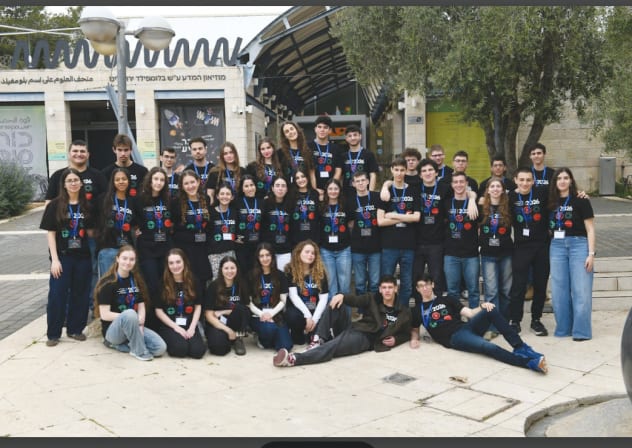
Amid Iran war, 53 of Israel's future scientists showcase projects in Jerusalem contest
‘Courageous, creative, and deeply committed’: The Young Scientists and Developers in Israel returns for its 29th year amid war, as part of National Science Week events.

War trauma can hinder development of children's teeth, study finds

Israeli gas sensor spots ‘mirror’ molecules, opening path to breath-based diagnostics

Research reveals key protein regulates molecule that slows aging, boosts healing - study
Haifa University professor shortens process to identify receptor function
A new computational method developed at Haifa University shortens the usually long process to identify receptors' functions.

Technion faculty members win prestigious EU awards
Two professors from the Technion won a total of $3.7 million in grants awarded by the European Research Council.

Israeli startup introduces tech that can detect coronavirus in cars
The system by Crispify alerts drivers to dangerous pollutants in real-time, and predicts their reappearance in the future, reportedly destroying 99.9% of various viruses, including coronavirus.

Tel Aviv University scientists win 2020 Nature Research Awards
Three professors have been chosen this year to receive the prestigious mentoring award, which is usually given to a different country each year.

Masks are much more likely to disrupt facial perception - study
Ben-Gurion University researchers conduct a recent study that evaluates how masks disrupt facial recognition and perception.

ScienceAbroad to hold first online symposium
Israeli talents living abroad will present their findings to 300 scientists here.

TAU prof. receives rare, unrestricted grant of $2.5 mil
"The Polymaths Award is different. They tell you: 'Here are the resources. Do something completely new, take risks. Investigate wild ideas.'"

Do you need to get tested for COVID-19? A new survey could tell you
The survey, available online in both Hebrew and English, consists of three questions: gender, age and what symptoms (if any) are being experienced.

Israeli, Emirati technology ministers discuss possible joint projects
"The entire world has its eyes on us. Together, we'll show them how this new kind of peace looks like."

National Academy of Inventors grants Israeli prof. senior membership
Professor Noam Eliaz is the first Israeli to be designated as a senior member and was one of just three Israelis to join the academy.
