Israeli science
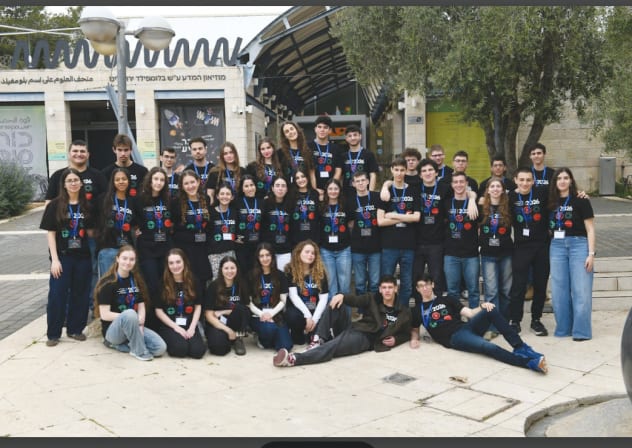
Amid Iran war, 53 of Israel's future scientists showcase projects in Jerusalem contest
‘Courageous, creative, and deeply committed’: The Young Scientists and Developers in Israel returns for its 29th year amid war, as part of National Science Week events.

War trauma can hinder development of children's teeth, study finds

Israeli gas sensor spots ‘mirror’ molecules, opening path to breath-based diagnostics

Research reveals key protein regulates molecule that slows aging, boosts healing - study
Learning about the squill plant
One of the signs we can use to spot the end of summer is the squill plant.

Israeli scientists discover how to reverse cell aging
A team of scientists has found why elderly people are more susceptible to COVID-19 and are working to reverse the aging process of the body’s immune system

Israeli scientists develop 'e-skin' that knows what movements you make
Researchers at the Technion have developed a highly stretchable electronic material and a wearable sensor capable of identifying precise bending and twisting motions.

Shmuel Yitzhaki appointed Dir.-Gen of Institute of Biological Research
Yitzhaki has been serving as acting director-general since Shmuel Shapira stepped down in March.

Israeli team aims to treat neurological disorders with psychedelics
Israeli company Nextage Therapeutics has developed a technology that it believes could refine the use of psychedelic molecules to treat those suffering from depression and other neurological disorder

Israeli team aims to restore sense of touch to those with nerve damage
The device is made out of biocompatible materials that are safe for the human body and should be able to be implanted anywhere once clinical trials are complete.

New nanotechnology allows the human body to generate electric currents
The research into new nanotechnology could pave the way for external energy sources in medical devices to be replaced by green renewable energy, generated by the human body.

Medical cannabis may be effective for young epilepsy patients
Hebrew University team completed the first-ever meta-analysis of pediatric patients treated with medical cannabis

Israeli researchers develop electronic nose to detect diseases, poisons
"It will be possible to disperse the gas sensors over a wide area in the city in order to warn of the presence of dangerous gases and air pollution," says Prof. Raz Yelink, who led the study.

Hebrew University researchers discover the taste of heavy water
While it is not radioactive, heavy water is highly coveted for its unique atomic structure and properties, which allow it to be used in the production of nuclear power and weapons.
