Dinosaur
Fossils of a new species of huge dinosaur Spinosaurus unearthed in Niger
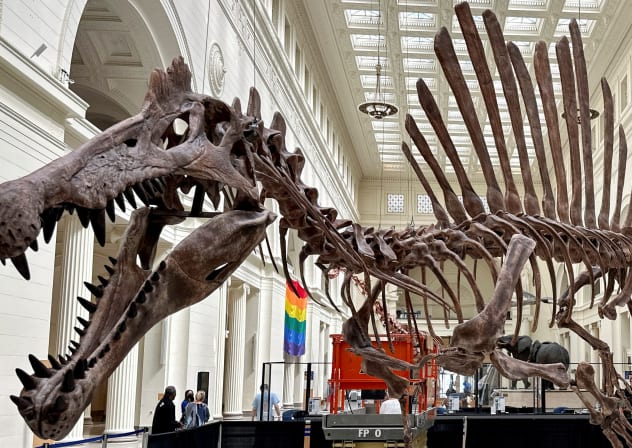
Spinosaurus, the only known semiaquatic dinosaur predator, joins Tyrannosaurus, Giganotosaurus and Carcharodontosaurus among the largest meat-eating dinosaurs.

160 million years later: This rare fossil is overturning everything we knew about how birds evolved

'Medusa,' possible 'dinosaur mummy' discovered in Badlands, transferred for further research

Scientists solve the mystery of the prehistoric 'Burtele Foot'
The king takes flight: New pterosaur 'Elvis' receives scientific name
The pterosaur was nicknamed after the king of rock and roll due to a giant pompadour-like bony crest on its skull.

New dinosaur species discovered in China after fossilized paw found
The fossilized theropod remains are thought to be 121 million years old, placing their origin in the early Cretaceous period.

Achilles neck: Prehistoric reptile's long neck was a weak spot - study
The marine reptile Tanystropheus, which lived in the Triassic era, had a very long neck. But predators were able to take advantage of it to decapitate them.

Scientists discover dinosaur that tried adapting to climate change - study
The dinosaur Iani smithi, named after Janus the Roman god of change, lived at a time when a radically altered climate brought about great changes for the world.
New species of duck-billed dinosaur discovered in Chile - study
The dinosaur, now dubbed Gonkoken nanoi, inhabited the earth 72 million years ago in the Chilean Patagonia.

Dinosaurs could understand other visual perspectives, viewpoints - study
If true, this research challenges a long-accepted belief that higher-level intelligence first originated in mammals long after the dinosaurs went extinct.

South African fossils reveal ancient beast's epic journey to oblivion
The researchers see parallels between the Permian crisis and today's human-induced climate change.

Long-necked dinosaur fossil found by Argentine scientists is one of biggest ever
The dinosaur's bones were so big they caused the van carrying them to a Buenos Aires laboratory to tip over, though no one was injured and the remains were left intact.

T-Rex skeleton sells for more than $6 million at Swiss auction
More than half of the skeleton's bones are original. The rest are replacements made from plaster and epoxy resin casts.

Giant amphibians roamed the Earth before dinosaurs, swam like crocodiles - study
Giant amphibians were once dominant predators up until the rise of dinosaurs in the Triassic Era. This new study detailed how they moved.
