Dinosaur
Fossils of a new species of huge dinosaur Spinosaurus unearthed in Niger
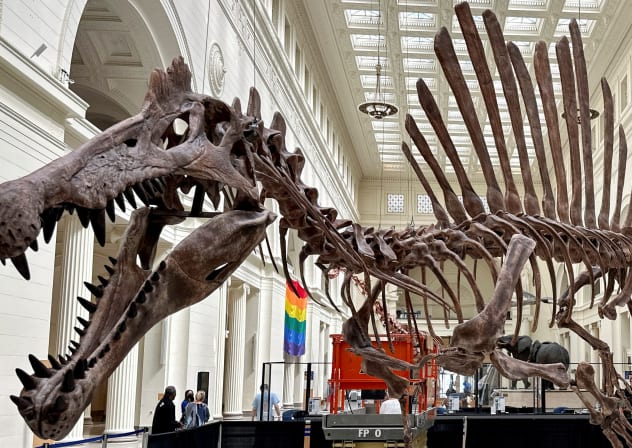
Spinosaurus, the only known semiaquatic dinosaur predator, joins Tyrannosaurus, Giganotosaurus and Carcharodontosaurus among the largest meat-eating dinosaurs.

160 million years later: This rare fossil is overturning everything we knew about how birds evolved

'Medusa,' possible 'dinosaur mummy' discovered in Badlands, transferred for further research

Scientists solve the mystery of the prehistoric 'Burtele Foot'
Pucker up! T. rex, other predatory dinosaurs lizard-like lips - study
This study also applies to other theropod dinosaurs such as the velociraptor.

Rare T-Rex skeleton to go under the hammer in Switzerland
Standing 3.9 meters high and measuring 11.6 meters long, it is only the third T-Rex skeleton to be offered at auction, and the first in Europe.

Oldest known Ichthyosaur remains discovered in Arctic
Scientists discovered the oldest known Ichthyosaur remains. The paleontological find is changing how scientists see the emergence of the species as a whole.

New remains of multiple extinct species excavated on Chilean coast
The discovery included the remains of multiple species of giant sloths.

Record-breaking dinosaur footprint appears on the coast of England - study
Measuring nearly one meter long, the footprint is the largest of its kind found in the English county of Yorkshire.

Titanosaurus' massive nesting sites, fossilized eggs uncovered in central India
The fossil nests are part of one of the largest dinosaur hatcheries in the world, found in central India.

Diverse dinosaur fossils discovered in inhospitable South American valley
The fossilized remains, which consisted of teeth and post-cranial bone pieces, represent a diverse theropod community that lived up until the Cretaceous–Paleogene mass extinction event.

Were dinosaurs already on the way out when asteroid hit? No, says new study
The findings also have implications for the present, to save today's species that are not doing as well as dinosaurs reportedly were at the end of their lives.

What did the earliest dinosaurs eat? - study
The earliest dinosaurs were carnivorous, omnivorous and herbivorous, according to new research.

Could dinosaurs whip tails at supersonic speeds, 200 decibels? No - study
The long-necked diplodocid sauropod dinosaurs were believed to be able to whip their tails at supersonic speeds. A new study explains why that isn't possible.