Dinosaur
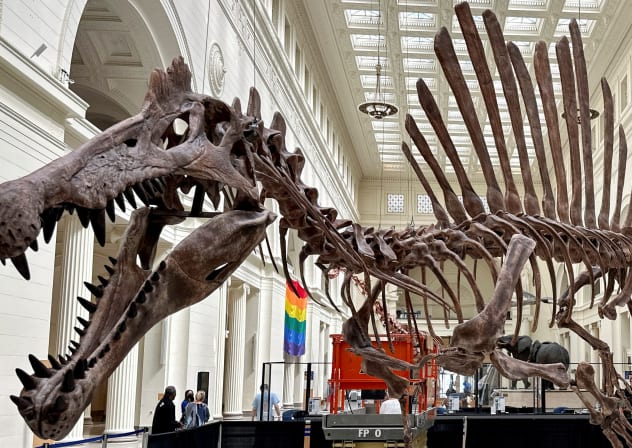
Fossils of a new species of huge dinosaur Spinosaurus unearthed in Niger
Spinosaurus, the only known semiaquatic dinosaur predator, joins Tyrannosaurus, Giganotosaurus and Carcharodontosaurus among the largest meat-eating dinosaurs.

160 million years later: This rare fossil is overturning everything we knew about how birds evolved

'Medusa,' possible 'dinosaur mummy' discovered in Badlands, transferred for further research

Scientists solve the mystery of the prehistoric 'Burtele Foot'
Dinosaurs were not in decline before asteroid impact, new study suggests
New research finds gaps in fossil record, not actual extinction trends, explain apparent dinosaur decline.

Previously unknown dinosaur species discovered in Portugal's Lusitanian Basin
‘This specimen reflects that iguanodonts had a much greater diversity than previously thought,’ said Bruno Silva of Universidade Nova de Lisboa.

Flowering plants, not dinosaurs, drove mammals to ground 72 million years ago
Professor Janis said, "The vegetational habitat was more important for the course of Cretaceous mammalian evolution than any influence from dinosaurs."

Duonychus tsogtbaatari: new two-fingered dinosaur with giant claws discovered in Mongolia
Scientists found this therizinosaur had only two fingers on each hand, with 30-centimeter claws used to grasp branches and feed on leaves.

Rare fossil sheds light on unusual claw-bearing Therizinosaur
A rare fossil unearthed in Mongolia's Gobi Desert has led to the identification of a new dinosaur species Duonychus tsogtbaatari.

From dinosaurs to birds: How cranial kinesis shaped evolution
Cranial kinesis allows modern birds to eat a wider variety of foods and use their beaks as multifunctional tools.

Oldest known ceratopsian dinosaur fossil discovered in Morocco
The femur shows distinctive traits observed exclusively in ceratopsians, confirming their existence in the Middle Jurassic.

Scientists uncover 66 dinosaur footprints on school rock slab in Queensland
“Significant fossils like this can sit unnoticed for years, even in plain sight.”

Discovering the leaf-eating, tree-clinging mammal of the Paleocene
Skeleton shows Mixodectes pungens lived in trees and primarily ate leaves during the Paleocene epoch, highlighting its unique ecological niche after the dinosaurs.

Meet Chadititan calvoi: The Graceful Titanosaur Newly Unveiled in Patagonia
Paleontologists uncovered fossils of a new species of long-necked, plant-eating dinosaur named Chadititan calvoi in northern Patagonia.
