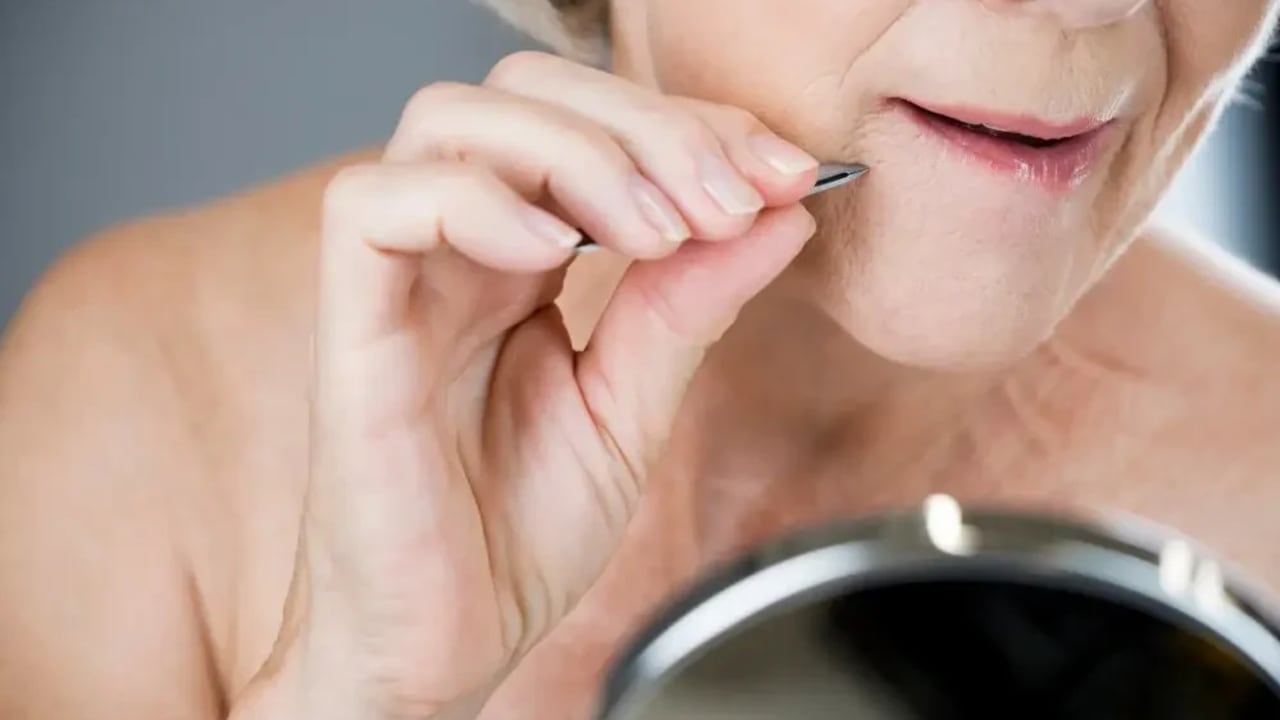
Women of various age ranges dread waking up one morning to discover hair reigning on their chin or elsewhere on the face. When this happens—they usually worry and rush to attack the problem and treat it quickly, but not always in the smartest way.
Facial hair among women is a nuisance and is often very embarrassing, and they hurry to attack the problem with treatments—and not without reason—because facial hair can become an embarrassing nuisance for women. Usually, excess hair on the face for women is found around the upper lip, chin, and sideburns. Since facial skin behaves differently than body skin, every treatment must be much more tailored and specific; therefore, the treatment (not necessarily the hair) must be carefully chosen with a fine-tooth comb, and one must understand its long-term consequences on facial skin.
Shaving or plucking?
The rule about a single hair follicle: Shaving or plucking? Since hair grows back after removal, it has become a kind of obligatory vicious cycle, and it is important to know the price of each removal or plucking. Shaving is the worst of all; afterwards, the hair grows back thicker and stronger, and its growth is faster and harms the skin because gradually the follicle doubles and breaks out from the same follicle.
Threading and tweezing are considered older and more traditional hair removal methods, and are preferable to shaving because their goal is to pull the hair out from the root. However, these methods also have a price that can cause hair to grow in other areas, skin damage during plucking, and smooth skin durability is maintained for two weeks depending on the treated area and hair type. Waxing in the long term may cause swelling of the skin due to excessive pulling, and there is also a chance of pigmentation damage due to this pulling on the skin.

The effect of hormones
Facial hair in women is almost always related to hormones—pregnancy, menopause, and other hormonal changes related to polycystic ovaries, taking birth control pills, the thyroid gland and its balance, and more. Therefore—without targeted treatment to balance the patient’s hormones—any hair removal by any method will be less effective.
Not all facial areas are the same
The area above the lip (the mustache) reacts differently to hair removal than the chin or sideburns. Each area has a different growth cycle and sensitivity—therefore, when removing hair from different facial areas, we must ensure the removal method, frequency, and strength applied during removal are suitable.
Painful or not painful? Not for everyone
The level of pain depends on the color and thickness of the hair; the thickness of the skin also plays a role. It is also known that sensitivity to pain increases in areas approaching the menstrual period, and it is better not to remove hair during these days.
New methods in hair removal
Over the years, lasers and infrared have become devices that reduce hair growth to the point of significantly improving hair cycles. Among the many methods in clinics is the YMAX method, which also aims innovatively to provide a solution for facial hair, which behaves differently from body hair, especially regarding hormonal problems.
For transparency and truth, it is important to say—hair always returns
The results of hair removal treatments are individual to the patient, and some will enjoy an optimal result, where the hair cycle decreases until total disappearance, and some, due to genetics or a dense hair cycle pattern on the face, will have different results tailored to the patient's condition. Even after a full series of treatments, hair can return—especially in women with hormonal changes.
Yafa Maximov is Chairwoman of the Cosmetologists Organization and owner of the Beauty Tech network.