Several weeks ago, I wrote about the great meal we enjoyed at Goldy’s in Bnei Brak. I also mentioned that we went home with a very large bag of goodies from the takeaway section.
Some of it, like the kugels, went into the freezer, while the salads had to be consumed almost as soon as possible.
The potato kugel and the Jerusalem kugel (NIS 24) fit snugly into the freezer as did the stuffed cabbage and the roasted chicken.
There were six salads. The most interesting was called Dubai cauliflower, which was the cooked vegetable mixed with tehina and spices. I’m not sure how it acquired its name, but it was very good (NIS 25 for a container). The other salads were hummus, tehina, beetroot, matbucha (a spicy tomato mix), coleslaw, and variations on eggplant, each priced at NIS 16 for about 200 grams.
In the bakery section, it’s possible to select several different types of challah, including half challah for those who don’t like to waste bread; mezonos rolls, so the consumer doesn’t have to wash and say grace after eating them; and cakes and cookies of every description.
There is a mind-boggling variety of nuts, wines and liqueurs, candy, and row upon row of salads and fruit salads.
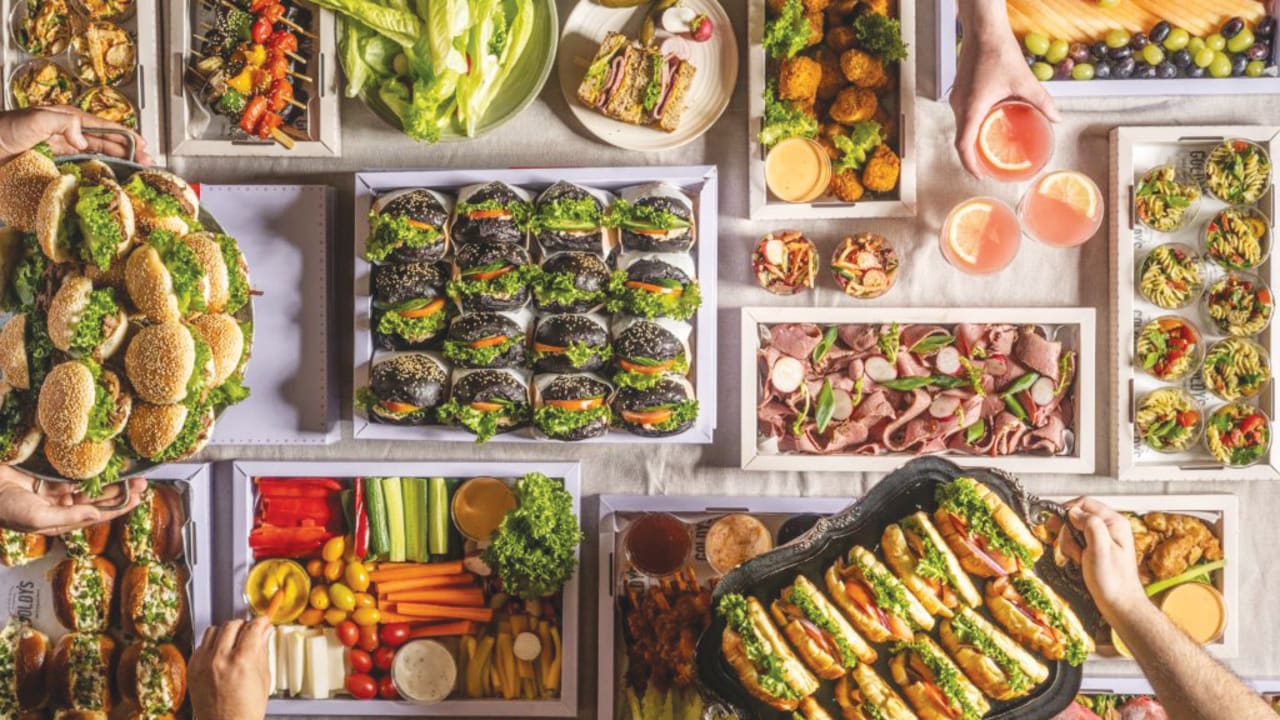
They also do a huge variety of catering trays for parties, receptions, and possibly very large families.

We eventually tasted both the kugels and found them to be exactly as they should be. The potato kugel was crispy on the outside and soft within.
Israel's unique creation
The Jerusalem kugel (kugel Yerushalmi) is a unique creation of Israel. It consists of very thin noodles, eggs, and oil and sugar caramelized, which gives the kugel its distinctive flavor, plus a goodly helping of pepper.
If I may insert a personal memory here: Back in the early 1970s, several of us new immigrants got together for a lesson in how to make kugel Yerushalmi. Our teacher was a lovely Israeli lady who spoke English well, as she had studied at the Evelina de Rothschild School in Jerusalem, where all instruction was in English. The secret of kugel Yerushalmi is to boil the oil and sugar to the exact correct split second of being ready to pour into the cooked noodles. It’s not simple, and I never made it again – partly because it’s so tricky and partly because my husband doesn’t like it.
Finally, at home we enjoyed the stuffed cabbage (holishkes) which had also been lurking in the freezer since our last visit.
Holishkes are cabbage leaves stuffed with mincemeat and rice, traditionally eaten on Sukkot. These were acceptable, but the ratio of meat to rice should have been reversed to give more meat and less rice. Holishkes are fiddly to make, which is why I make them only once a year for Sukkot. It’s a great way to get children to eat their greens.
So if you want to buy cooked food or are having a party, head over to Goldy’s, where hostess trays are available. Prices range from NIS 750 to NIS 1,100, and the platters will feed many guests. The chef responsible for all this great food is Avi Dan.
Goldy’s
Address: 9 Metsada St., Bnei Brak
Tel: (03) 620-0100
Hours: Sun.-Wed. 7 a.m. – midnight
Thurs. 7 a.m. – 1 a.m.
Friday – 7 a.m. – 3 p.m.
Kashrut: Badatz, Eda Haredit
The writer was a guest of the restaurant.