Neurology
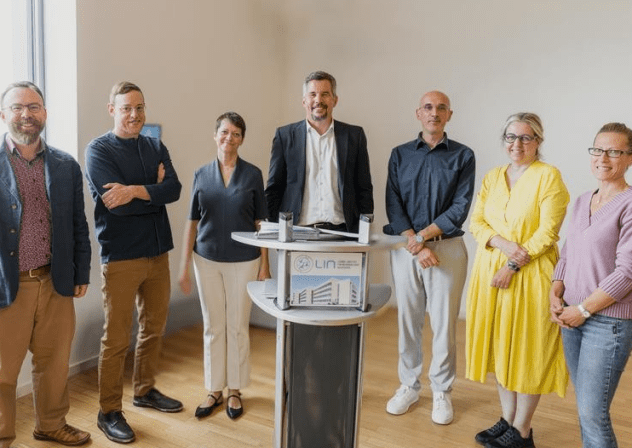
Tel Aviv University, German Institute Expand Brain Research Collaboration
The partnership will focus on electrophysiology, neuroimaging and training for early-career researchers, with joint summer schools planned in Germany and Israel.

How does breathing alter the brain? Inside the science of sighs with a world-leading neuroscientist

Breakthrough in autism research: Brain scans reveal two distinct biological types

'Nothing is inevitable': Veteran journalist Oren Nahari on Israel, history, and battle with ALS
Oren Nahari revealed he has ALS: This is the drug given in Israel as compassionate treatment
Veteran journalist Oren Nahari revealed he has ALS, a severe degenerative neurological disease. How many Israelis are diagnosed each year and what are the chances of a cure in the coming years?

Turtles’ brains shed light on evolutionary developments dating back hundreds of millions of years
The study provides new insights into the functions of ancestral cortices but also raises fundamental questions about how and when key neural computations evolved in turtles.

Neural 'on/off' switch discovery may shed light on sex differences in social behavior
What makes this neural cluster unusual is its binary activity pattern: it is consistently active in females but largely inactive in males, only turning on during major social or reproductive events.

'Zombie' cells may cause common form of epilepsy - study
The researchers found that clearing away damaged but undying brain cells (known as zombie cells) in mouse models of epilepsy reduced the number of seizures and improved the rodents’ memory.
Sheba to inaugurate Roman Abramovich Theranostics and Nuclear Medicine Center
The 4,700-square-meter facility at Tel Hashomer will include an on-site cyclotron and advanced imaging and targeted-treatment units, the medical center said.

ADHD study uncovers measurable, modifiable brain activity patterns in children
Researchers found that ADHD brain activity is not static. In a trial, a subgroup of children with ADHD showed a shift toward a more typical neural profile following intervention.

Israel performs its first brain pacemaker surgery to stop seizures in epilepsy patient
“If it weren’t for the pacemaker implantation, we would have had to remove the area in the brain responsible for the seizures, with all the medical consequences that accompany such a case.”

Midlife weight loss shows metabolic benefits but sparks brain inflammation in BGU - study
“Our findings show that losing weight in midlife is not a simple copy-and-paste of what works in young adulthood,” Alon Zemer said.

Tel Aviv University study opens path to gene therapy for ALS
A new Israeli-led study identifies an RNA-based therapy that may halt ALS progression and regenerate nerve cells.

Scientists unveil first draft of atlas of the developing brain
Among the newly identified brain cell types were some in the neocortex and the striatum region, which controls movement and certain other functions.
