Dna
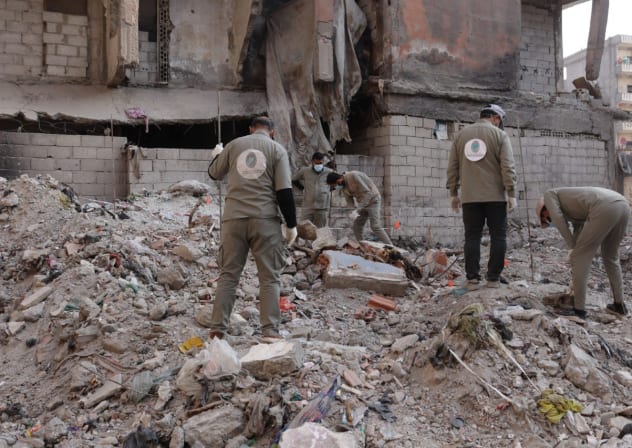
Syria’s first DNA-based identifications offer hope for families of missing persons
The cases offer a possible path towards answers for families across Syria, where tens of thousands of people remain missing after decades of repression under Assad family rule and civil war.

Ancient sheep virus traced through DNA preserved in medieval manuscripts

Tracing roots: Why every Jew should reclaim family histories disrupted by the Holocaust - opinion

‘Smoking gun evidence’: Bronze Age shaman long thought to be male revealed to be female goldworker
Evidence of human sacrifice, inbreeding found at ancient Korean burial complex - study
Additionally, researchers found genetic confirmation that entire families had been sacrificed together as part of sunjang, the ritualistic sacrifice of servants to be buried alongside their superiors

Perpetual Jewish family traits: Jewish genealogy, history explored by Am haZikaron Institute
Using an exact-sciences approach endorsed by a committee of 55 Nobel laureates, Am haZikaron can reveal the unique characteristics of one’s clan that have been preserved for centuries.
Tiny DNA tweak flips biological sex, researchers report
A study reports that a single nucleotide variant in the genome can make an XY individual develop as female and an XX individual develop as male.

Neanderthals who lived in Siberian cave millenia apart were distant relatives, study finds
Further analysis of the genetic similarity showed that Neanderthals in the Altai region likely lived in groups of fewer than 50 people.

Ancient DNA shows people partnered with dogs long before agriculture arose
The findings challenge prevailing domestication timelines in anthropology.

Exploring identity through art at Jerusalem's Museum on the Seam
Two exhibitions at the Museum on the Seam proffer an emotional reality check of the lay of our land.

Space sample reveals all five building blocks of DNA, scientists say
The presence of the nucleobases in the samples reinforces the hypothesis that carbonaceous asteroids contributed to the prebiotic chemical inventory of the early Earth.

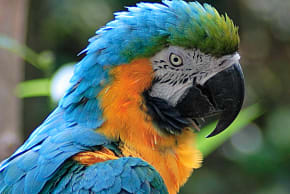
DNA study reveals millenia-old live parrot trade spanning South America
Excavations on Peru's coast reveal pre-Inca parrot husbandry, radiocarbon-dated to 1100-1450, and long-distance transport from the Amazon basin.
Study: Neanderthal-human interbreeding mostly male Neanderthals, female humans
Most people of non-African ancestry carry about 2% Neanderthal DNA, and researchers report a mirror image pattern with more human DNA on the Neanderthal X chromosome.
Meet Britain's oldest Northerner: The ‘Ossick Lass' buried over 11,000 years ago - study
In addition to the Ossick Lass, the remains of at least seven other individuals had also recovered from the cave.
