Archaeological Site
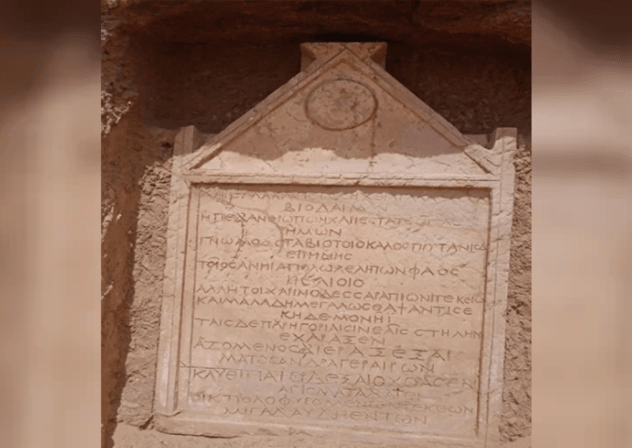
Ancient Greek elegy dedicated to judge found in ancient Egyptian tomb sealed with protection spells
Its 19-lines of ancient Greek text is written in red ink, dedicated to a person named "Pesikhtis," who, according to preliminary study, may have held the position of judge.

Excavations near ancient Turkish port may have found Alexander the Great’s soldiers tombs - report

Noah’s Ark? Researchers claim radar scan reveals 'man-made' structure at Turkey site

Ancient Egyptian fortress uncovers soldiers’ homes, royal inscriptions, and horse burial
How archaeologists used technology to rediscover ancient Egyptian city on the Nile Delta - study
The site holds three prominent mounds, known as Koms A, B, and C, with Kom C selected for investigation due to its history spanning the Predynastic period through the Early Islamic era.

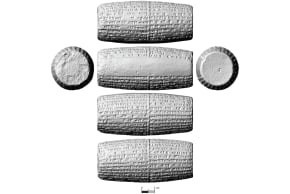
Clay cylinders found in Iraq bear writings of Babylonian king who besieged Jerusalem, study reveals
The translation appears to align with a description of Nebuchadnezzar from the Book of Daniel, which depicts him walking on his palace roof in Babylon while boasting of his construction projects.
Iron Age hoard rewrites history of wagons in Britain, may have been part of royal memorial - study
The collection's careful arrangement is indicative of a “noisy, symbolic acts of deliberate destruction," showing that the Melsonby Hoard was not just a collection of abandoned valuables.

Evidence of lost baptismal rite stage uncovered in Byzantine era church near Kinneret - study
Additional discoveries made a the site included a bronze candelabrum and marble reliquary, both the largest of their kind to ever be found in Israel.

Archaeologists unearth at least five Gaul skeletons buried sitting upright during Paris excavations
Burials such as these are unique, as only about 50 “seated skeletons” have been found across a dozen archaeological sites in Europe.

Stone stele depicting Roman emperor, Egyptian gods found near Karnak temple site in Luxor
The stele was discovered during the three-year-long restoration efforts of a gateway from the time of Ramesses III in Karnak.

Persian-era mass grave of children found during excavations in Israel’s Tel Azekah - study
Simply made pottery jars, beads, copper jewelry, and stone and mortar hammers were discovered within the cistern alongside the remains.
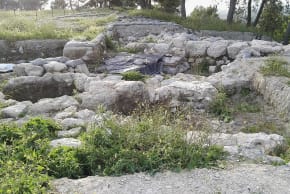
Collection of 7,000-year-old ostrich eggs discovered under sand dunes in southern Israel
The eggs were discovered near the remains of a campfire believed to have been connected to prehistoric desert nomads who collected, cooked, and ate the eggs at the site.

Israel’s 'Stonehenge’ not alone with near 30 similar sites, satellite imagery reveals - study
The newly discovered sites all share a similar design: large circular structures, between approximately 50 to 250 meters in diameter, built with stones taken from local basalt fields.

Roman fort found north of Hadrian’s Wall may have been used to defend against unconquered Scotland
According to GUARD, the fort was constructed on high ground along the Antonine Wall, granting it an unobstructed view of the surrounding area, and intervisible with a much larger fort to the west.
