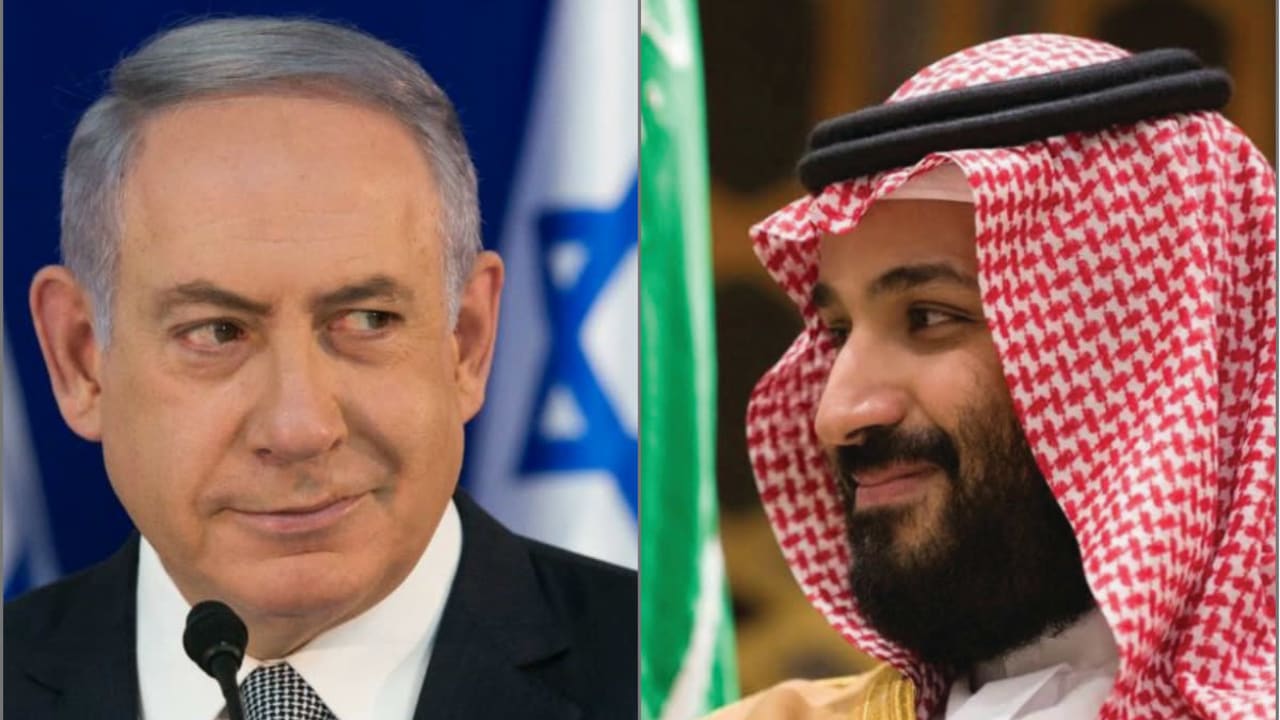
Hamas’s October 7 massacre was not designed to scuttle normalization ties between Israel and Saudi Arabia. It was planned long before talk about diplomatic ties between the two countries gained momentum.
But the attack did disrupt those ties, and from Hamas’s perspective, that was a very welcome side effect.
Before October 7, normalization between Jerusalem and Riyadh appeared to be a question not of if but of when. After the fallout from the attack, Saudi Arabia hardened its position, insisting that there could be no agreement without meaningful movement toward the establishment of a Palestinian state.
The strategic logic driving the two countries together, however, never truly disappeared. Israel and Saudi Arabia still share many of the same enemies, face many of the same threats, and look to the US to help construct a regional framework capable of confronting them.
Ironically, it may be one of the regional wars spawned by October 7 – the Houthis attacking Saudi Arabia in support of Iran in its war with the US – that resuscitates Jerusalem-Riyadh ties.

Organized by CENTCOM, Middle East military commanders, including Israel, meet in Germany
Axios reported Tuesday on a meeting organized by US Central Command among the military commanders of Israel, Saudi Arabia, the UAE, Bahrain, Kuwait, Qatar, Jordan, and Egypt in Germany last week to discuss tensions in the region.
And that was before the Houthis’ push toward Bab el-Mandeb Strait and attacks not only on Saudi oil facilities but also toward Mecca. Saudi air defenses intercepted a drone south of Islam’s holiest city on Tuesday.
There is more than a little irony in Saudi Arabia looking toward Jerusalem for help protecting Mecca. Yet that is where the region’s shifting alliances may now be leading: The country that presents itself as the guardian of Islam’s holiest sites may increasingly need the intelligence, technology, and missile-defense capabilities of the Jewish state to help defend them.
Neither Saudi nor Israeli officials are talking publicly about the meeting in Germany or about any cooperation – intelligence or otherwise – between the two countries. But it beggars belief that no such cooperation is taking place.
Indeed, Saudi Arabia’s immediate security needs may be creating facts on the ground that diplomacy has not yet acknowledged.
Saudi Arabia needs more than defense promises
Even though the Saudis recently signed the Mecca Defense Alliance with Pakistan and Turkey, under the rubric that an attack on one is an attack on all, neither country has exactly rushed to Saudi Arabia’s defense against attacks from an Iranian proxy.
Defense pacts on paper are one thing. The ability to detect an incoming drone, track a missile, share intelligence in real time, and intercept a threat before it hits an oil installation – or approaches Mecca – is something else entirely.
In these areas, Israel has a great deal to offer. Just look to the UAE, where Israel reportedly moved advanced air-defense assets and personnel during the war with Iran.
Even before the meeting in Germany, a recently retired senior official in Israel’s intelligence community said at the MEAD conference in Washington last week that Israeli-Saudi cooperation is “very good.”
Israeli intelligence official says Israel, Saudi Arabia have much in common
The official said the two countries have much in common in the region and expressed hope they would find the common ground needed to reach a normalization accord quickly.
Fighting the Houthis might – if leveraged correctly – provide precisely that common ground. It could give Riyadh a compelling reason to show greater flexibility on its demand for movement toward a Palestinian state before normalizing ties with Israel.
That does not mean Saudi Arabia will suddenly abandon the Palestinian issue. Nor does it mean that secret security cooperation will automatically produce open diplomatic relations. But shared threats have a way of clarifying interests, and interests – more than sentiment – ultimately drive states into new alliances.
That the US convened the meeting in Germany is also consistent with what has been developing in the region for some time.
US intermediates Israeli-Saudi military cooperation
A recently retired senior US military official at the MEAD conference spoke not of direct bilateral Israeli-Saudi military cooperation, but of a US-led architecture that enables countries that may not trust one another – or maintain formal diplomatic relations – cooperate indirectly through Washington.
In this model, Washington collects radar and intelligence information from different countries, processes it through American systems, and redistributes it under separate bilateral agreements.
That arrangement lets countries benefit from one another’s capabilities without publicly acknowledging the cooperation. It provides Saudi Arabia with access to Israeli intelligence and technology while sparing Riyadh, at least for the time being, the political cost of admitting that it is working with Israel.
The US official said every Arab country hostile to Iran wants Israeli cooperation despite the domestic political cost.
In other words, while Ireland won’t use an Israeli-made component in its new government jet that would allow it to land in the fog, the Gulf states are eager for Israeli technology to help protect themselves from Iran and its tentacles.
Arab governments may not be able or willing to acknowledge cooperation with Israel publicly. But they do recognize and are eager to benefit from the country’s intelligence and technological capabilities.
For months, there has been talk about a new regional security architecture. Then came the Mecca agreement, and it appeared that the Saudis were looking elsewhere rather than toward an American-Israeli-based system.
Pakistan, Turkey are not providing Saudi Arabia with the material assistance it needs
But Pakistan and Turkey are not providing Saudi Arabia with the material assistance it needs as it faces off against Iran and its Houthi proxy, and Riyadh is discovering that declarations of solidarity from distant partners are a pale substitute for real-time intelligence and proven defensive capabilities from countries confronting the same enemy.
This new regional security architecture may indeed finally take off, with the Houthis providing the impetus.
It is worth remembering that Israel had deep security cooperation with the UAE long before the Abraham Accords. In fact, one could argue those ties built trust between the two countries and ultimately paved the way for formal diplomatic relations.
The same pattern could now emerge with Saudi Arabia. Quiet cooperation builds familiarity, familiarity builds trust, and trust can eventually make possible what once seemed politically unthinkable.
The Houthi attacks on Saudi Arabia will likely push Israeli-Saudi security cooperation up several notches. Might that, in turn, become the precursor to normalization?