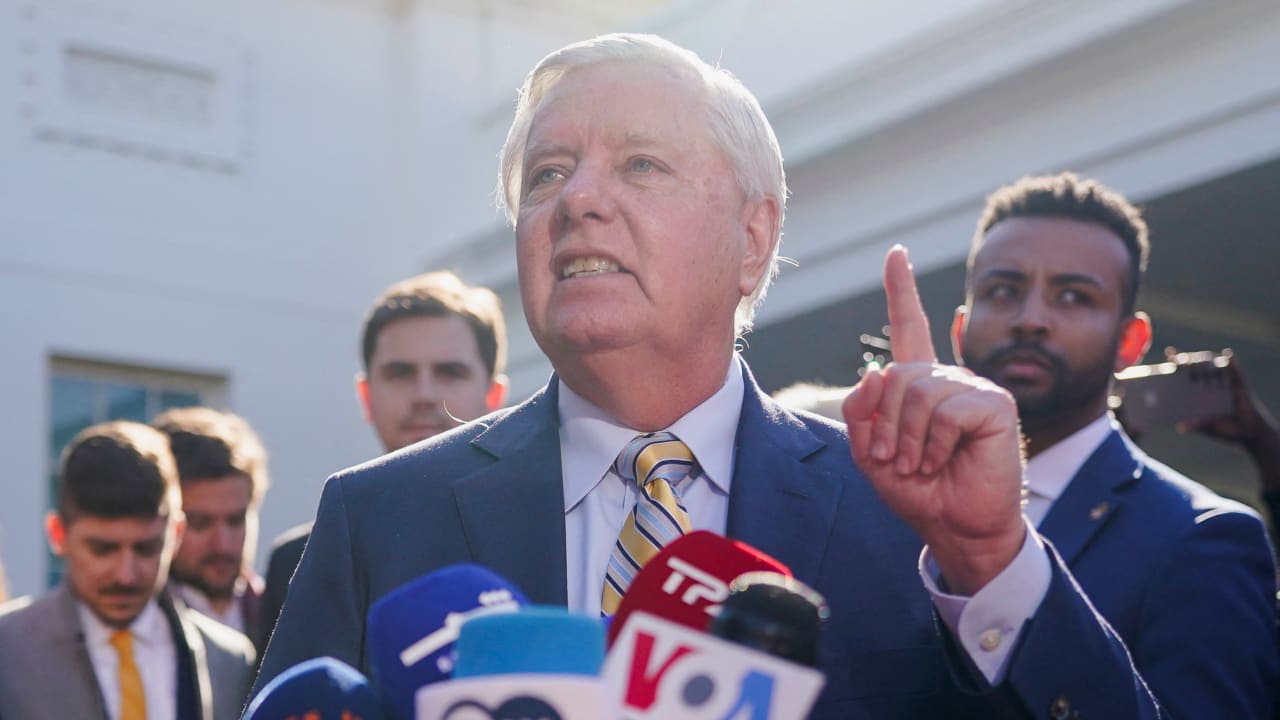
The overnight Sunday US air assault that ravaged Iran’s Fordow, Natanz, and Isfahan nuclear facilities has “dramatically” improved the chances of a historic Saudi-Israel normalization deal and showed that regime change in Tehran remains the only path to lasting regional security, US Sen. Lindsey Graham (R-South Carolina) told The Jerusalem Post.
Speaking minutes after US President Donald Trump confirmed that American warplanes had “obliterated” the three sites, Graham said he had already spoken to Prime Minister Benjamin Netanyahu, who “made it very clear… Israel is not going to live this way anymore,” referring to years spent under the shadow of Iranian missiles and nuclear escalation.
“You’re not going to raise your children in bomb shelters,” Graham quoted the premier as saying. “Israel’s job is not finished.”
‘Regime change comes in two forms’
Graham, one of the Senate’s most vocal Iran hawks, argued that stability can only return to the Middle East if the Islamic Republic is forced to abandon its revolutionary agenda.
“There are two ways,” he said. “Either new people take over who are not terrorists, or the people in charge change their behavior – but the status quo is unacceptable.”

The senator was unsurprised by Trump’s decision, which he said followed failed diplomatic overtures. Tehran “had a chance to engage,” he noted, yet continued to expand its stockpile of enriched uranium and arm regional proxies. The strike, he added, “not only set back their nuclear ambitions; it reset the damage done by our withdrawal from Afghanistan,” restoring US deterrence in the eyes of allies and adversaries alike.
Warning Tehran: ‘Total annihilation’ if US troops hit
While Trump has signaled that Washington will wait to see whether Iran retaliates directly against US forces, Graham insisted America’s interests go beyond protecting its own soldiers.
“A weak Iran is in America’s interest because it allows the region to reset and move toward the light,” he said, predicting that Arab states will now pursue deeper economic and security ties with Jerusalem.
If Iran strikes US targets, however, Graham called for “regime change, total annihilation … take down their oil refineries, put them out of the oil business; put them in the dark.”
Saudi deal ‘back alive, back on the table’
In Graham’s view, the operation has resurrected the long-stalled US-brokered framework for diplomatic ties between Riyadh and Jerusalem. Arab leaders, he said, “are threatened by Iran” and see Washington’s show of force as proof that it remains a reliable partner.
“The chance of a Saudi-Israel deal went dramatically up,” he asserted, though he acknowledged Riyadh still wants tangible progress on Gaza and a defense treaty with Washington that would require Senate approval.
Next steps
Graham urged the administration to ensure Israel has “what it needs” for any follow-up action against Iranian assets and reiterated his skepticism that Tehran will ever renounce its ambition to dominate the region.
“What would America do if even one ballistic missile hit our cities?” he asked. “We would respond incredibly forcefully. Israel can’t afford to do less.”