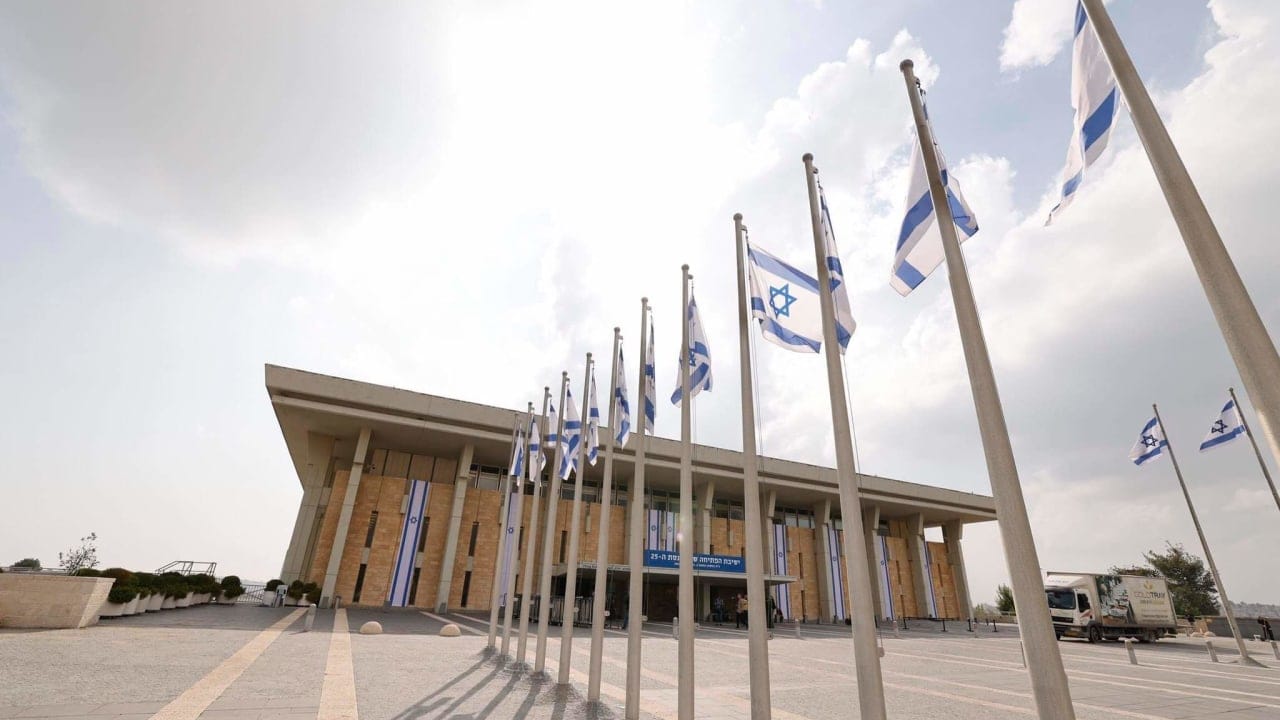
The 2026 state budget will be brought for a first reading in the Knesset on Monday as part of the annual high-stakes process that could trigger early elections.
If approved, the budget will be sent to the Knesset Finance Committee for deliberations and revisions before returning to the plenum for its second and third readings.
If the state budget is not approved in all three readings by the end of March, when the fiscal year closes, the Knesset will automatically dissolve, and elections will be called.
Israel's budget will be NIS 662 billion for 2026
According to the state budget proposal approved by the government, state spending would be NIS 662 billion, excluding debt servicing. The deficit ceiling was set at 3.9% of gross domestic product.
Defense outlays were raised to NIS 112b. ($35.45b.) from an initial NIS 90b.

Before the vote, a discussion on the matter in the plenum is expected to begin on Monday evening.
The budget vote comes amid an ongoing political standoff between the government and the haredi (ultra-Orthodox) parties over the controversial haredi draft bill.
Critics of the draft bill argue that the current outline fails to enforce haredi conscription and serves primarily as a political measure to appease the haredi parties. The IDF has repeatedly said it is in desperate need of more troops.
Prime Minister Benjamin Netanyahu has been without a stable coalition majority since July, following the collapse of negotiations over the haredi conscription legislation, which led haredi parties Shas and United Torah Judaism to exit the government.
Both haredi parties have threatened to withhold support for the state budget unless agreements are reached on the draft law to avoid conscription. They have also threatened to vote against the state budget if the haredi draft bill is not passed beforehand.
The government has reportedly persuaded the haredi parties to support the budget in its first reading, with assurances that the draft legislation will advance soon after.
Estimates within the coalition indicate the budget will be approved with the support of Shas and UTJ, KAN News reported Sunday.
Opposition leader Yair Lapid (Yesh Atid) slammed the government-drafted state budget outline during a press conference at the Knesset last week.
“The government has presented a budget by the corrupt and the shirkers,” he said. “It is a wasteful, negligent budget that will continue to exploit and grind down working people who pay taxes, serve in the reserves, and keep the country alive.”
Lapid criticized funds being transferred to the haredi parties as part of the state budget.
The advancement of the haredi draft bill was postponed from last Thursday’s Knesset session ahead of the state budget vote.
Discussions to move the draft bill forward in the Knesset are scheduled to continue on Tuesday.
The Knesset Foreign Affairs and Defense Committee’s legal adviser has criticized certain sections of the haredi draft bill that are expected to require changes.
Last week, Yesh Atid MK Vladimir Beliak told The Jerusalem Post he believes the state budget will pass its first reading despite the political infighting.
The government will “do everything it can to advance the [draft] exemption law while moving forward with budget discussions in parallel, because they don’t have time,” he said. “They can’t pass a budget without a [draft] exemption law.”
The opposition undoubtedly would vote unanimously against the state budget in the plenum, Beliak said.