
Agriculture Minister Avi Dichter (Likud) must act immediately to fix the deficiencies in the ministry that emerged after the war broke out regarding the lack of proper services to farmers, a report by the State Comptroller and Ombudsman of Israel Office published on Tuesday said.
“During this war, the farmers and agricultural branch have been standing on the very front lines, clinging to the land at the risk of their own lives being forfeit by direct fire, and continuing to work their fields and farms under fire, aided by volunteers,” State Comptroller Matanyahu Englman said.
This is the fifth such report by his office on the Israel-Hamas War. The latest survey took place between January and November 2024, and included the Agricultural Ministry, several other offices, and a roundtable with farmers.
Out of the 1,500 people killed or kidnapped on October 7, 2023, 56 were farmers, 52 were foreign workers, and 13 were students involved in farming.
One such figure is Bipin Joshi, an agriculture student who Hamas kidnapped in Kibbutz Alumim. The last sign of life from Joshi was recorded in November 2023.
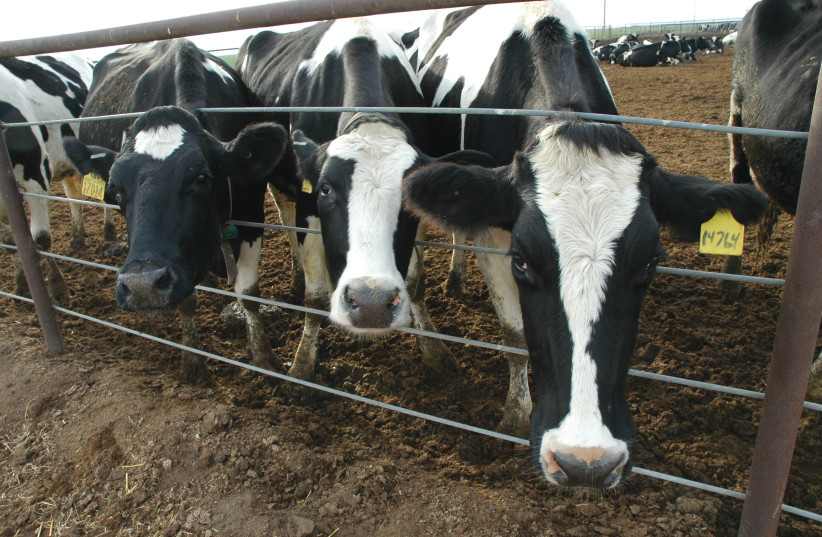
Fifty-two dairy facilities were hit in Hamas’s October 7 attack, with the total damages to local agriculture during the first six months of the war estimated at NIS 670 million.
In the first few months of the war, the sector experienced a drop of 58%, or 21,000, in the foreign workers and the Palestinian workforce.
Additionally, the comptroller found that the drop in local agricultural production in the first six months of the war was about 25%.
“This report points to central deficiencies in the readiness of the Agricultural Ministry and other relevant elements for the emergency situation we found ourselves in, and in the authorities’ response after the war broke out and continued,” Englman said.
He determined that the ministry must complete preparations for a model scenario and an updated emergency response plan to ensure that it can handle both existing and developing threats involving the agricultural sector.
The ministry must also periodically examine the composition of the labor market in the farming sector and implement appropriate and practical solutions to address labor shortages during emergencies.
Ministry must update emergency response plan, ensure integration of existing threats, developments, Englman says
Englman further determined that the National Emergency Management Authority (NEMA), which operates under the Defense Ministry, must ensure coordination for all of these new preparations, and that the ministry mirrors these arrangements in its updates as well.
NEMA must monitor the handling of deficiencies identified in its inspections as well, and it must verify that the shortcomings that were found in the report are corrected in accordance with the timetables it establishes.
In addition, the comptroller noted, the Foreign Affairs Ministry, in cooperation with the Agricultural Ministry, the production boards, and representatives of the farmers, must act to implement the existing bilateral agreements for the recruitment of foreign workers.
These reports come as the State Comptroller’s Office has gone head-to-head against both the IDF Public Defense Office and Attorney-General Gali Baharav-Miara, the latter of whom represents the position that the most appropriate method of investigation into the failures of October 7 is a state commission of inquiry.
According to Baharav-Miara, a separate but parallel investigation could harm both hers and the defense office’s credibility.
Englman has countered this argument by insisting that if such a state commission of inquiry were established, his office could cooperate with it to establish boundaries, adding that time was of the essence.