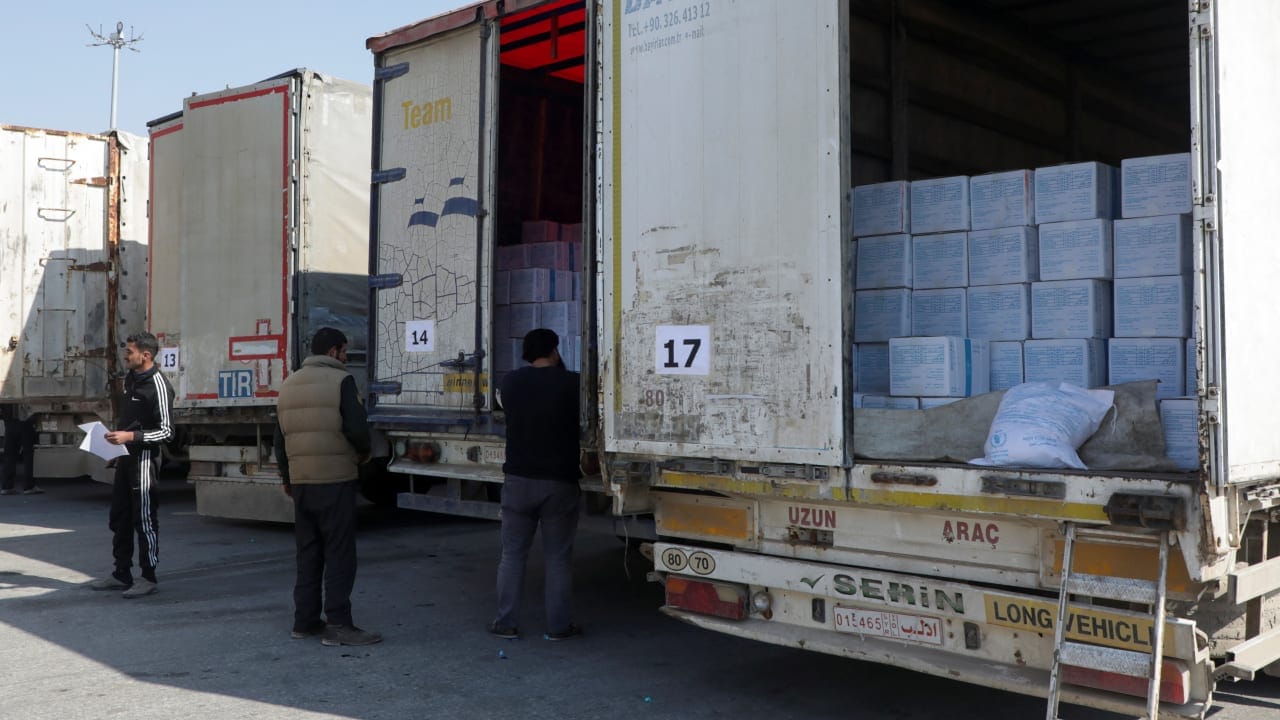
World Food Programme Executive Director Luke Lindberg warned on Monday that shipping chokepoints linked to wars in the Middle East and Ukraine could raise the agency's costs by $727 million by mid-2027, threatening food aid for 7.3 million more people.
Lindberg, whom US President Donald Trump nominated and the United Nations appointed in September to head the world's largest humanitarian agency, called for new efforts to safeguard humanitarian shipments of Ukrainian and Russian grain through the Black Sea, modeled on a UN-brokered initiative that was in effect from 2022 to 2023.
Lindberg told the UN Security Council that constraints on food exports and farming inputs passing through the Strait of Hormuz, the Bab al-Mandeb Strait and the Black Sea were compounded by climate shocks like El Nino.
Situation in Black Sea increases risk of famine in Sudan, Somalia
"It's an unthinkable scenario, and it could not come at a worse time," said Lindberg, a former US agriculture official, urging diplomats to focus on trying to find rapid solutions to ensure some 10 million tons of Ukrainian and Russian grain that were already in silos reached people in need.
He said 266 million people globally were already suffering from acute hunger and there was a risk of famine in parts of Sudan, South Sudan, and Somalia.

Lindberg told Reuters in an interview that it was critical to resolve the situation in the Black Sea, one of the world's breadbasket regions whose grains were vital to countries like Somalia and Yemen, which imports 90% of its food.
He urged diplomats to work on a humanitarian corridor similar to the Black Sea Grain Initiative, a UN-brokered deal agreed in July 2022 that allowed the safe export of nearly 33 million metric tons of Ukrainian grain. Russia withdrew from the agreement in 2023, complaining that its own food and fertilizer exports faced serious obstacles.
'Untenable' to have excess of grain in some areas, starvation in others
Lindberg told Reuters that any revived agreement would have to cover both Russian and Ukrainian exports to win agreement.
"It's untenable to have full grain silos in Ukraine and Poland and the region, and then you have empty stomachs in other parts of the world ... If a diplomatic solution can be reached, we stand ready to move grain from both Russia and Ukraine," he said.
The WFP head added Black Sea food shipments were down sharply this year, with 63% fewer wheat and maize vessels moving through the Bosphorus as of mid-October than at the same point in 2025. Over 300 attacks had been recorded and at least 40 crew members had been killed, he said.
That meant some 10 million tons of Russian and Ukrainian wheat might not reach global markets this year — enough to feed 44 million people, he said.
Wars are driving WFP costs up
The food price index of the UN's Food and Agriculture Organization had hit a near four-year high this September, wheat prices were up almost 10% from January, and higher energy and transport costs had increased grocery prices, especially in import-dependent and food-insecure countries, Lindberg said.
Food yields will likely also be lower next season, given constraints in global fertilizer supplies, of which 30% flow through the Strait of Hormuz, he added.
The wars were taking a direct toll on WFP's humanitarian operations and sharply increasing its costs, he said. The WFP has already lowered its target to provide food assistance to 91 million people in 2027 from 110 million people this year, but higher costs could drive that number even lower, he said.
The agency's total costs last year were nearly $12.2 billion, so $727 million in additional costs by mid-2027 would mark an increase of nearly 6%. That number could rise further unless current conditions changed, the agency said.