
By the time Parkinson's disease, one of the most common neurological disorders is diagnosed, the progression of the disease cannot be reversed, leaving doctors with one option: to treat the symptoms. However, a Hebrew University of Jerusalem research team has discovered a potential way to diagnose the disease up to 20 years prior using what may seem an unusual method: investigating and understanding the physiological process behind constipation.
"Consider a 55 to 60-year-old patient suffering from constipation," Goldberg said. "We may someday design a test based on the neural changes we discovered to determine whether there is a neural factor at play which could hint to Parkinson’s."
How does Parkinson's work?
Dopamine cells cease to reach the brain, leading to the loss of cells.
The number of cells that are lost in the process is massive by the time the disease is usually diagnosed, which is why recovery is so difficult. This leads to visible motor symptoms in the patient that indicate the presence of the disease.
Constipation is one of the few non-motor symptoms of Parkinson's. It is actually quite common, and can be a lead indicator of the disease if it is analyzed as such early – as early as 20 years.
The hypothesis is based on the discovery of Lewy bodies, tiny deposits of protein waste within brain cells. The discovery was headed by Dr. Friedrich Lewy in 1912.
In the early 2000s, researchers analyzed the path that the Lewy bodies take in the brains of Parkinson's patients. Though nothing conclusive came of it, they suggested that the buildup of the protein waste wasn't occurring in random places in the brain, but rather in intentional ones, in places that control the healthy functioning of body parts.
Particularly, they saw that one of the first places the Lewy bodies were found in was the area that controls gastrointestinal movement, potentially explaining connection.
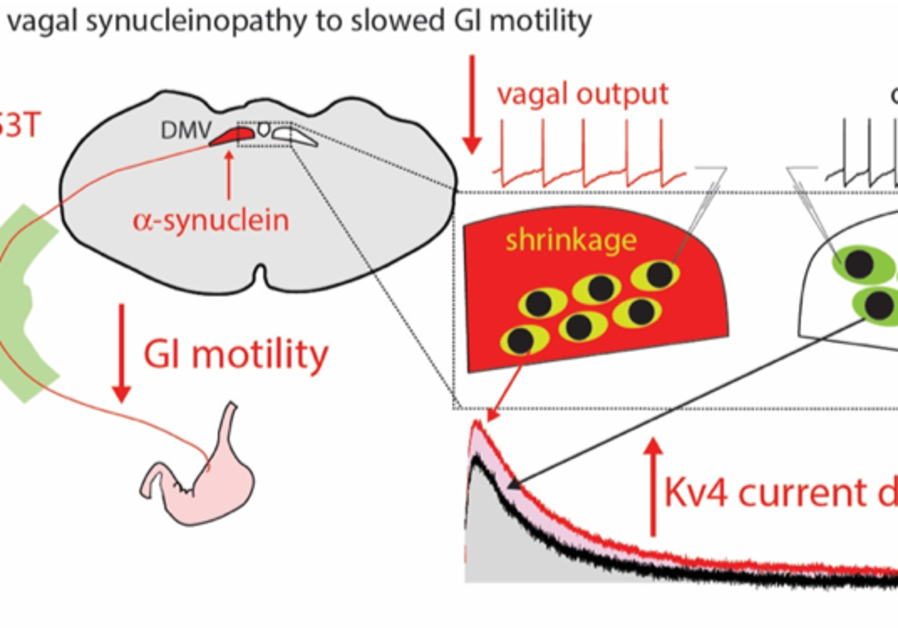
They found that by over-expressing the protein, the electrical activity of the brain cells slowed down – the cells literally shrunk. They were then able to link this to human brains in the early stages of Parkinson's.