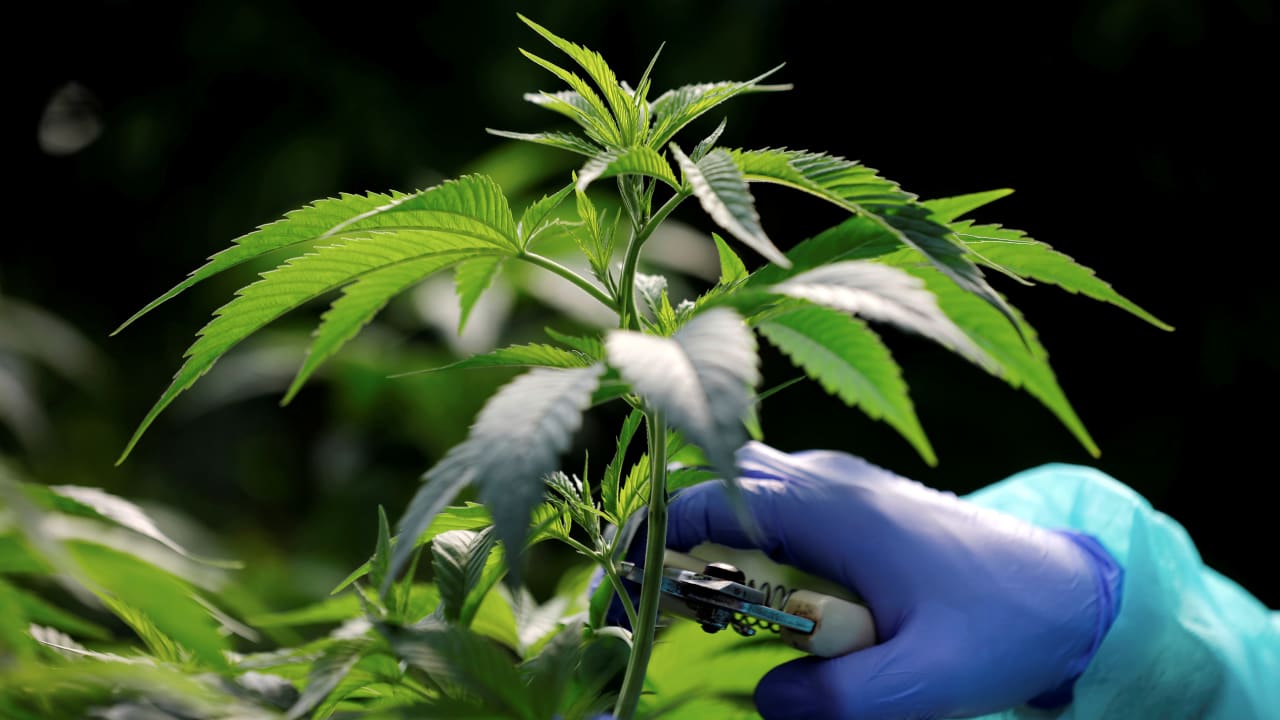
Israel's once surging medical cannabis program has recorded its first decline in patient numbers after more than a decade of rapid expansion, according to a new peer-reviewed study of Health Ministry data.
The analysis, by Israeli researcher and Ariel University Professor Joshua Aviram and published in the Journal of Cannabis Research, tracked every license and prescription issued between 2011 and March 2025 and found that patient numbers are now falling even as doses rise and treatment concentrates on chronic pain and PTSD patients.
In April 2011, just 3,097 Israelis held a medical cannabis license. By January 2024, that figure had reached 140,483 active licenses, an increase of about 4,437 percent, as the state gradually expanded eligibility and allowed more physicians to prescribe.
After the most recent reform, which in April 2024 shifted many indications from the Health Ministry's Medical Cannabis Unit (IMCU) to Israel's four health funds, the combined number of active licenses and HMO prescriptions fell by about 7.5 percent to roughly 129,900 patients by March 2025. That rolled numbers back to levels last seen in late 2023, the study found.
Aviram argues that the decline does not reflect a sudden improvement in Israelis' health. Instead, he links it to stricter HMO gatekeeping, "transition frictions" as patients move between systems, and the post-investigation non-renewal of irregular licenses.
At the same time, the reform has made the system harder to track. Many diagnoses and prescriptions now sit inside the internal databases of the health funds, creating what Aviram describes as serious blind spots in national reporting on who receives cannabis and for which conditions.

Chronic pain and PTSD dominate licenses
By March 2025, chronic non-cancer pain accounted for about 63 percent of all active medical cannabis licenses, up from 53 percent in December 2020. Post-traumatic stress disorder was the second most common diagnosis, rising from about 9 percent to 17 percent over the same period, an increase of roughly 89 percent.
Other indications that once figured prominently in Israel's early medical cannabis program, such as cancer-related symptoms, Crohn's disease, Parkinson's, Tourette's, and epilepsy, now appear far less frequently in the national reports. Many of these conditions were moved into the health funds' internal systems after the April 2024 reform, further limiting visibility at the national level.
Where sex was reported, the gender balance of the system has barely shifted. Between August 2024 and March 2025, about 62 percent of medical cannabis patients were men and 38 percent were women, even as the total number of licenses fluctuated.
The imbalance raises questions about who gains access under Israel's rules. According to the study, many approved indications, such as combat-related PTSD, skew heavily male, while conditions that disproportionately affect women, including fibromyalgia and endometriosis, are not approved as standalone indications for medical cannabis.
Patients are receiving higher doses
The study highlights a steady move toward higher monthly doses over the past four years. On average, Israelis with a medical cannabis license now receive about 40 grams per month, equivalent to roughly four standard 10-gram units.
Between 2021 and 2025, the share of patients receiving 20 grams a month fell from 32 percent to 17 percent, and those on 30 grams dropped from 28 percent to 17 percent. Forty grams remained the single most common dose, consistently accounting for around 22 to 25 percent of licenses.
Higher dose categories grew sharply. The proportion of patients on 50 grams per month more than doubled, rising by about 108 percent, while those on 60 grams per month grew by around 117 percent, even as very high allowances of 100 grams and above became rare after IMCU efforts to clamp down on them.
Flower dominates over oils
If regulators hoped that patients would gradually shift toward oils and other non-smoked formulations, Aviram's analysis suggests the opposite. In August 2019, cannabis flower accounted for about 78 percent of approved products, with oils and extracts making up the remaining 22 percent.
By March 2025, flower had climbed to more than 94 percent of approved products, while oil's share fell to about 5 percent. The study notes that flower-based products accounted for over 94 percent of usage by 2025, even though clinical guidelines often recommend non-smoked routes of administration.
Inhaler cartridges barely register in the national data, making up about 0.5 percent of total grams approved. Because each cartridge uses very little cannabis, the number of patients using inhalers may be higher than the raw volume suggests.
The study estimates that Israel's legal medical cannabis market reached a peak in January 2024, when the total monthly allowance for patients hit 5,447 kilograms, up from 1,708 kilograms in August 2019. Based on prevailing prices, Aviram calculates that this translates into an annual market worth between $252 million and $684 million for IMCU-regulated products alone.
Imports have become a central pillar of that market. According to the study, imported cannabis flower reached a high of about 4,446 kilograms in December 2024, equivalent to almost 89 percent of the volume of domestically grown flower in the same month, and feeding a fierce debate over saturation and the viability of local growers.
Israel was one of the first countries in the world to create a national medical cannabis framework, with initial approval in 1992 and formal licensing in the 2000s. Regulators later sought to "medicalize" the system by moving from flat fee licenses to pharmacy-based, per-product pricing and by expanding the pool of physicians authorized to prescribe.
According to Aviram, these steps dramatically widened access, driving the rise in total patients, higher doses, and the shift toward chronic pain and PTSD as dominant indications. The latest reform, however, has moved many responsibilities into the health funds, which now control entry into the system, monitoring, and renewals.
National reporting has become patchier as a result, with gaps in diagnoses, prescription numbers, and exact patient counts. "Recent decentralization efforts have introduced new challenges related to oversight and data transparency," Aviram writes, adding that current trends plausibly reflect stricter HMO gatekeeping, transition frictions, and the non-renewal of irregular licenses rather than a simple drop in medical need.