
Evidence of what may be the world’s oldest documented cremation, dating back approximately 100,000 years, was found by archaeologists in Ethiopia’s Afar Rift, according to a new study published in the Proceedings of the National Academy of Sciences (PNAS).
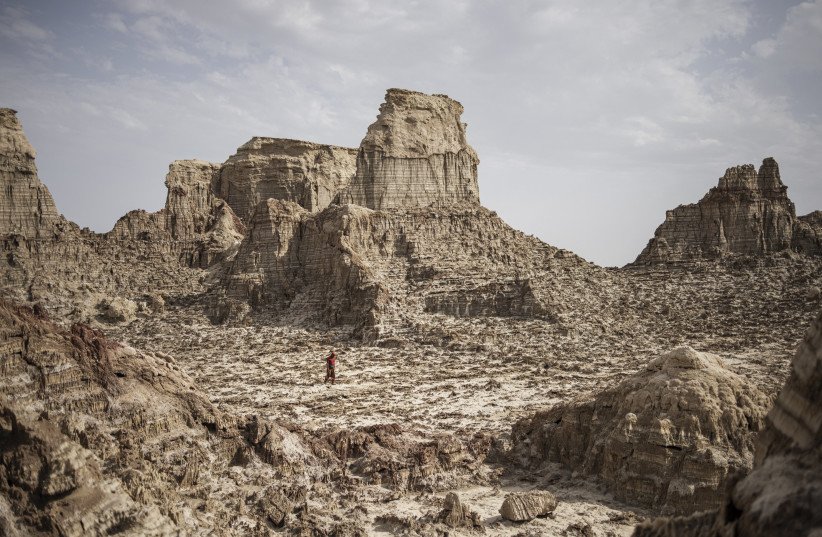
The burnt bone fragments were one of three Homo sapien fossils discovered in the sediment of the Faro Daba beds in the Dawaitoli Formation. There, erosion has slowly been revealing previously buried Stone Age artifacts.
Initial inspection of the fragments revealed evidence of intense heat, including "extensive cracking, charring, discoloration, and fragmentation,” according to the study, pointing toward what would be considered today as an “intentional cremation involving fire intensities exceeding what is observed in most bushfires."
However, the study urged caution regarding this theory, given the extensive evidence of “intensive burning documented at this very archaeological locality.”
One of the other two Homo sapien fossils, also dating back 100,000 years, include "the most complete adult human skeleton from the African Middle Stone Age” belonging to a large-bodied male.
While the remains bear evidence of termite damage, there is no clear indication of scavenging, making researchers consider the possibility that the burial may not have been intentional.
The third skeletal fossil, however, contains a clear indication of having been scavenged by large predators around the time of death, including “ancient pitting, tooth scores, and fractures."
Stone tools, animal fossils also discovered at the site
Also discovered at the site were thousands of stone tools, pieces of charcoal, and the fossilized bones of large rodents, monkeys, hoofed-animals, carnivores, and bovids (members of the cattle family).
However, “no butchery-related, or unambiguously humanly induced bone modifications were found," the study noted. "Only the expected rodent gnawing, insect, and carnivore damage that are normal in such depositional settings."
“We predict that the continued integration of ongoing actualistic investigations of the modern Middle Awash geology and biology will continue to contextualize the geological, paleobiological, and archaeological traces at Halibee,” the researchers concluded.
In the same way, findings from “the Middle Pleistocene evidence lying directly below the Halibee member will contribute to understanding how behaviors, anatomies, and environments of the Middle Awash inhabitants changed across deep time.”