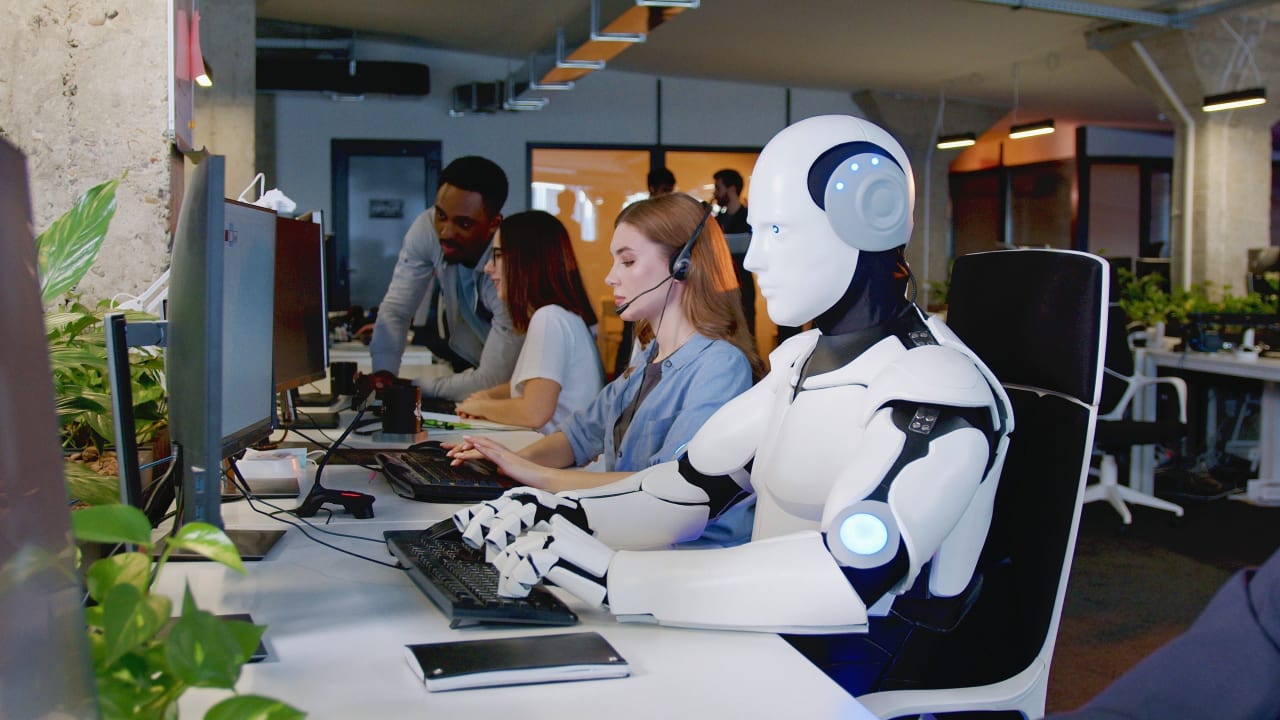
A newly documented strain linked to rapid AI adoption is reshaping work, error rates, and retention. In a survey of 1,488 US workers, researchers identified a syndrome called “AI brain fry” or “brain burnout.” Roughly one in seven reported symptoms such as mental fatigue, difficulty focusing, mental fog, a “buzzing” feeling, slower decision-making, headaches, and reduced original thinking, according to CBS News.
The risk spikes for intensive users, especially early adopters juggling or overseeing multiple AI tools or agents. Workers reporting this condition show a 33% increase in decision fatigue, make 11% more minor errors and 39% more major errors, and are more likely to consider leaving; 34% intend to resign, compared with 25% among those not experiencing it.
To-do lists expanded
Productivity initially rises with one to three tools, then drops once the stack grows beyond three. Many employees say AI expands to-do lists by adding drafts, options, and analyses to review. Tasks shift toward verifying, editing, and debugging machine output. Workers report more time spent fact-checking, iterating prompts, learning new tools, and attending training and strategy meetings.
Developers using coding assistants may complete initial tasks faster. But studies have not always accounted for code quality, bug rates, and debugging time. Experienced developers often benefit more than novices, and some users produce lower-quality code. Researchers warn that heavy dependence can reduce critical thinking and memory retention, dulling attention, problem-solving, and curiosity.
Reduced activity in executive control
Heavy multitaskers who switch among AI-enhanced apps show reduced activity in brain regions linked to executive control. Neuroscientists have observed heightened dopamine responses among users of AI-driven apps, raising concerns about desensitized reward pathways and fatigue. Many describe longer task lists, less sleep, and a persistent hum of cognitive static.
The term “brain rot” has gained traction to label mental fog, reduced attention span, and a sense of deterioration. Some employees feel new exhaustion from AI-enabled workflows. Perfectionists struggle to stop iterating when the system always offers another version. Simple tactics, like setting hard deadlines for oneself and for AI outputs, can help break the cycle and improve quality.
Most workplace AI acts as output machines rather than cognitive systems that integrate into decision-making. They speed content generation without guiding attention, offloading memory, or framing decisions to reduce mental load. In high-responsibility settings, enterprises need AI that scaffolds memory, manages attention, and supports decisions, or oversight itself becomes a source of fatigue.
Monitoring and incident-response tooling shows the problem. Many systems trigger notifications whenever thresholds are crossed but fail to distinguish what truly requires human intervention, driving alert fatigue. High-performing teams tend to have fewer, more actionable alerts and better mean time to resolution. Less than 1% of enterprises have achieved truly autonomous remediation. Nearly everyone still relies on humans to respond to every alert, compounded by fear-driven rules, microservice sprawl, copy-pasted thresholds, and weak alert lifecycle management.
Popular platforms aggregate and deduplicate notifications but generally do not perform root-cause analysis or remediation. There is no mainstream open-source solution that unifies detection, AI-powered diagnosis, and automated fixes in one package. This gap is spurring auto-remediation-first workflows. One example is clearing old logs to resolve a high-disk-usage alert automatically, a task that otherwise can consume 15–30 minutes of engineer time.
A pattern emerges: AI can reduce drudgery while increasing cognitive friction. Decision fatigue climbs, mistakes proliferate, and intentions to quit grow among those most affected. Workers face a new verification tax as fluent AI answers encourage skipping cross-checks. “AI cannot make meaning of things,” one finance director said after a day “back and forth with AI, reframing ideas, synthesizing data... I couldn’t even comprehend if what I had created even made sense... just couldn’t do anything else and had to revisit the next day,” according to Axios.
High stakes
Users should not outsource judgment to machines. Some companies use AI to replace roles, leaving remaining employees with longer hours. Others are rethinking implementation so the technology augments rather than overwhelms. Early recommendations include limiting concurrent tools to the sweet spot, designing systems that guide attention and memory, and setting explicit boundaries to prevent endless iteration.
The stakes extend beyond daily productivity. Leaders worry that AI accelerates misinformation more than prior platforms, and high-profile figures warn that poorly governed systems could be more dangerous than legacy technologies. Researchers studying how models learn caution that exposure to low-quality, sensational content can degrade an AI’s reasoning and long-context skills, with effects that persist even after retraining. Those warnings mirror concerns about human cognition under digital overload. The value of AI depends on whether it lightens mental load or adds to it, and the dividing line is how teams design, pace, and verify it—and whether they keep human judgment at the center.
This article was produced with the assistance of a news exploration technology.