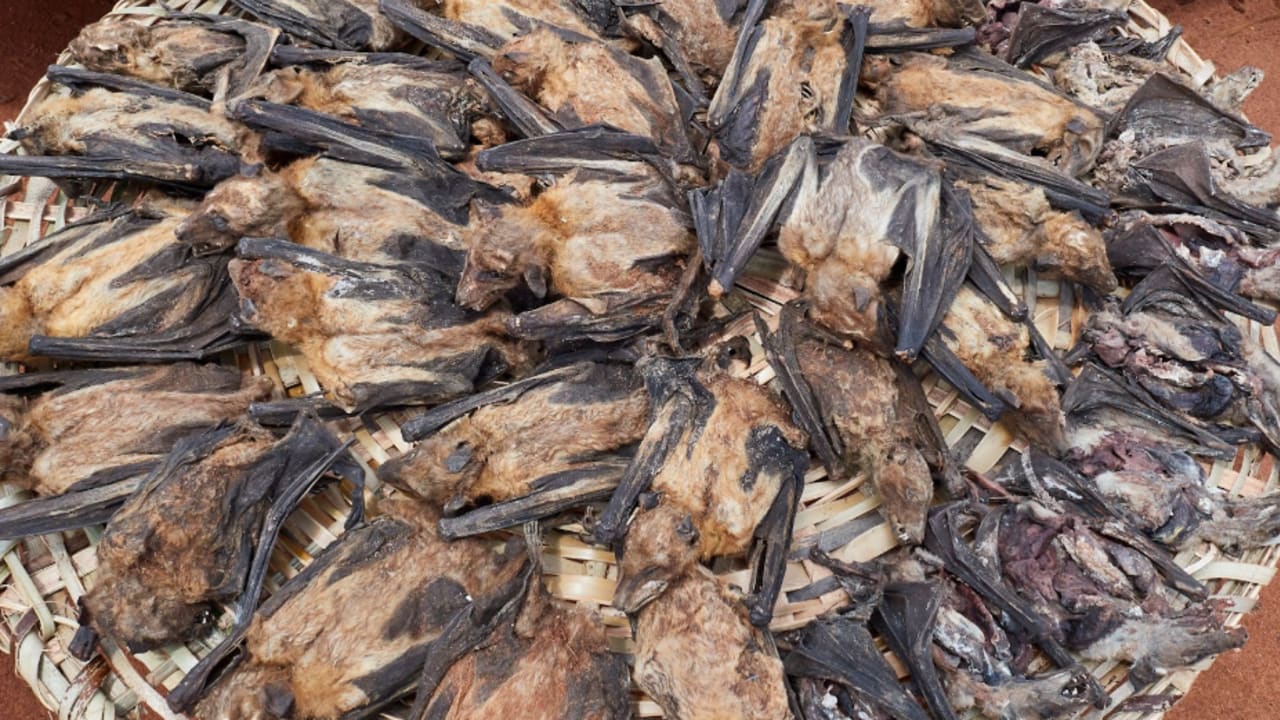
Scientists discovered 22 new viruses in bats from Yunnan province, China, raising serious concerns among public health and virology experts. Among these, two newly identified henipaviruses alarmed researchers due to their close genetic similarity to the deadly Nipah and Hendra viruses, reported the Mirror.
The study, published in the journal PLOS Pathogens, analyzed the kidneys of 142 bats from ten different species, marking a shift from the typical focus on feces in bat virus studies. Researchers believe that examining internal organs like the kidneys, which play a role in virus elimination through urine, could uncover new pathways for transmission.
Experts note that Nipah and Hendra viruses have the potential to infect humans and have mortality rates reaching up to 75%. Past outbreaks in Malaysia, Bangladesh, and Australia demonstrated their deadly potential in both humans and animals, with the World Health Organization estimating a case-fatality rate of 40-70 percent for the Nipah virus.
Two of the newly identified henipaviruses were named Yunnan bat henipavirus 1 and 2. These viruses were found in fruit bats captured near orchards close to human villages in Yunnan province, creating a high-risk scenario for zoonotic transmission.
"The danger of these new viruses can only be understood with more laboratory work. There are also other viruses that are close relatives of Nipah and Hendra but do not pose a threat," said Dr. Alison Peel, a veterinarian and wildlife disease ecologist, emphasizing the need to focus on scientific processes rather than panic.
Bats often live in orchards and fields, where their urine can contaminate fruits or water sources, increasing the risk of health crises and spillover to humans and farm animals.
The newly discovered henipaviruses share 52-75 percent of their genetic information with Nipah and Hendra viruses, raising concerns about their potential to infect humans and other animal species.
The study's authors said, "These findings broaden our understanding of the bat kidney infectome, underscore critical zoonotic threats, and highlight the need for comprehensive, full-spectrum microbial analyses of previously understudied organs to better assess spillover risks from bat populations," according to the Mirror.
"This discovery further confirms the diversity of bat viruses in general and of the genus Henipavirus in particular," said Linfa Wang, a professor at the Duke-NUS Medical School in Singapore, according to Folha de S.Paulo. He added, "We need to watch closely, but we should not be overly concerned at this moment."
One of the authors of the study declined to speak in detail, indicating by email to Bloomberg that "the topic is quite sensitive" due to how politicized the issue of viruses originating in China has become, according to Folha de S.Paulo.
Experts expressed concerns about the potential for these viruses to jump to humans or animals. However, it is still too early to know how dangerous the newly identified viruses may be, and scientists still need to find out whether these viruses can infect humans.
Currently, there is no drug or vaccine available to treat either Hendra or Nipah viruses, and no cases of infection from these newly discovered viruses were reported, according to Tele1.
The research highlights how much we still do not know about microbes carried by bats, expanding our understanding of the microbial biodiversity hosted by bats and the potential threats it represents.
"The risk of the emergence of a serious infectious disease transmissible to humans or livestock is real," reported SciencePost, adding that "international collaboration in science, public health, and ecology is more necessary than ever."
Bats are considered natural hosts for some of the world's most dangerous pathogens, including those linked to diseases like Ebola, SARS, MERS, and COVID-19. The proximity between bat carriers and human communities significantly increases the risk of transmission, raising the probability of new viruses emerging and triggering outbreaks, especially in rural areas where bats roost near villages and orchards.
Researchers emphasized the urgency of better monitoring these natural reservoirs of diseases potentially transmissible to humans and livestock. "These findings highlight critical zoonotic threats," they stated, adding that the potential for such viruses to infect humans or farm animals needs urgent attention.
Assisted by a news-analysis system.