Awash in grievance, our “gotcha” culture drowns out gratitude. The domineering, loudmouth cranks refuse to give thanks. Social media and mainstream media gripe machines feed a sky-is-falling hysteria. Left and Right, in Israel and abroad, haredi (ultra-Orthodox) and secular, too many politicians – they’re not leaders – prefer finger-pointing to problem-solving.
Fortunately, Rosh Hashanah ushers in our annual mass gratitude-fest. Now is our opportunity to reset, individually and collectively.
Admittedly, it’s hard – especially as Israelis and Americans stomach divisive election campaigns, the British endure their seventh prime minister in 10 years, and Australians still mourn the 15 slaughtered in Bondi Beach. Post by post, agitators feed the technological beast of boorishness, riling up so many.
In Israel, from the Right, Sara Netanyahu, mobilizing her husband’s disciples, cannot even thank Yair Golan for bravely saving Supernova music festival-goers on October 7.

“You claim you were fighting on October 7,” she sneered. “You were already there early in the morning, already dressed and ready, at a very, very early hour, when others did not know, such as the prime minister.”
Meanwhile, Golan is as infamous as some haredi rabbis for slighting our holy soldiers, who deserve appreciation, not excoriation. Golan babbled: “A sane country does not fight civilians, does not kill children as a hobby, and does not aim to expel populations.”
What’s wrong with the IDF leadership?
It’s unnerving how many alienated Israeli generals denounce their country so treacherously. The New York Times recently quoted retired commanders decrying “settler violence.”
Ephraim Sneh, the former brigadier general and health minister, called it “ethnic cleansing.” More outrageously, the retired chief-of-staff and defense minister, Moshe “Boogie” Ya’alon, ranted: “Mein Kampf in reverse. The master race is us.” And Asaf Agmon, a former Air Force general, snorted: “Once a society behaves this way, that society is doomed.”
Many of us, myself included, have blasted Israeli terrorism and this government’s unconscionable indulgence of violence by certain settlers – without launching such inaccurate, offensive insults.
I fear: “Once even a society’s leaders talk this way, that society is doomed.”
Clearly these demagogues have much chest-beating to do this Yom Kippur. But before atoning, they should absorb Rosh Hashanah’s refreshing teaching – especially in our modern Jewish state filled with so many gratitude-givers trumping the grievance junkies.
In English, the words broadcast a physicality. “Grievance” traces back to “gravis,” Latin for heavy or weighty. “Gratitude” comes from “gratus,” meaning pleasing, as in a state of comfort.
By contrast, in Hebrew, “hitmarmerut” evokes internal bitterness, a pinched, soured spirit, while “todah,” transcending mere thanks, admits our dependence on others’ kindness and God’s beneficence. The rabbinic phrase for ingrate, “kafooey tovah,” good-rejecter, describes what these nattering nabobs of negativism do.
Maimonides and other Jewish philosophers celebrate gratitude as a pathway to good character trailblazed by humility and faith – in one’s parents and the Lord.
Positive sensibility
Rosh Hashanah orchestrates this moral reawakening through modesty and fidelity. Jews wake up, wanting to start the new year right, by saying the eye-opening morning prayer Modeh Ani, which thanks God for restoring our soul.
Then, the liturgy keeps repeating Hayom Harat Olam – “on this day You, God, created the universe.” The Malhuyot (Sovereignty) service broadcasts radical gratitude and utter faith. Exorcising grievance, anger, self-pity, and self-indulgence, we acknowledge God’s greatness by appreciating this world.
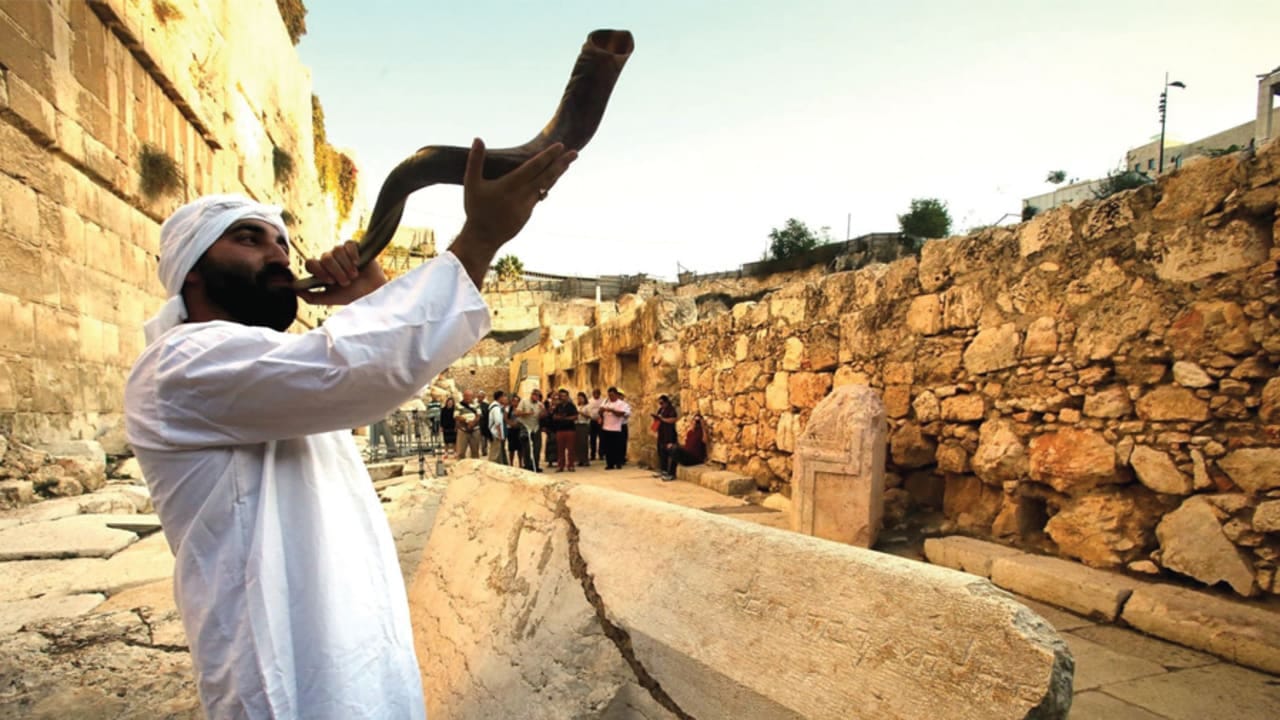
And when we finally hear the shofar this year, on Sunday, those majestic sounds piercing our profound silence will help reset us spiritually and emotionally. Expelling our anger and frustrations, we will embrace a new appreciation for life, for nature, for others, and for our rich Jewish civilization.
“Our goal should be to live life in radical amazement,” Rabbi Abraham Joshua Heschel taught. When we wake every morning, we should “look at the world in a way that takes nothing for granted. Everything is phenomenal; everything is incredible; never treat life casually. To be spiritual is to be amazed.”
Gratitude is ingrained in Zionist culture, too. In 1920, AD Gordon, the Labor Zionist philosopher, said: “What we want is to create a new life, a life of our own, fed by our own life-forces, in our own language.”
Remarkably, we did it!
“In Israel, in order to be a realist,” David Ben-Gurion noted, “you must believe in miracles.” Golda Meir agreed, insisting, “Zionism and pessimism are not compatible.”
And in his 1966 Nobel Lecture, SY Agnon uncorked a flowing fountain of appreciation and sanctification, explaining: “Our sages of blessed memory have said that we must not enjoy any pleasure in this world without reciting a blessing.”
Agnon also refused to be an ingrate “toward my enemies,” knowing that their “hatred… was also a blessing,” making him sharper, stronger, prouder.
Today, from bus stop to bus stop, so many stickers honoring the fallen since October 7 echo this positive sensibility. These young people, whose lives were cut short prematurely, nevertheless lived these old-new Jewish and Zionist values.
Staff Sgt. Adi Leon, age 20: “Say thank you for what you have; it isn’t obvious (lo muvan me’eilav).”
Sgt. First Class Joseph Avner Doran, 26: “Enter every place with a smile and leave it with gratitude.”
Sgt. First Class Elkana Vizel, 35: “Don’t look back at what could have been. Look forward to what can be achieved.”
And Sgt. First Class Shira Haya Suslik, 19: “Choose to see the good in everything.”
They got it. They lived it. They died for us. Now we – and our leaders – owe it to them to follow their golden gratitude-strewn path.
The writer is a distinguished scholar of North American history at McGill University and a senior research fellow at the Jewish People Policy Institute. He is the author of nine books on presidential history and nine books on modern Zionism, including To Resist the Academic Intifada: Letters to My Students on Defending the Zionist Dream, as well as his latest e-book, The Essential Guide to the US-Israel Partnership: the 250th Anniversary Edition.