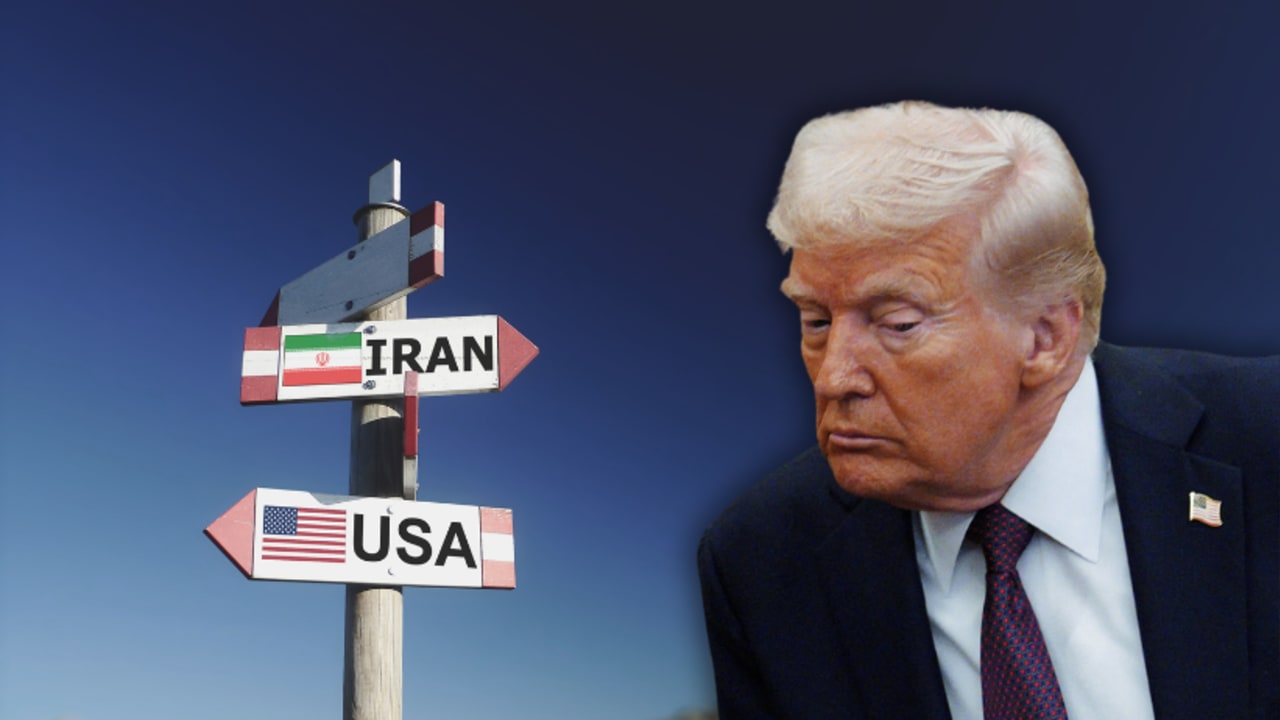
There are moments when a president must choose between what is politically safe and what he believes is right for the security of his nation. Donald Trump has faced that moment with Iran, and I believe Americans should recognize the courage it required.
For nearly half a century, Iran has threatened the US and Israel, sponsored terrorism, armed Hezbollah and Hamas, attacked American interests, taken Americans hostage, built ballistic missiles and pursued a nuclear capability. Presidents came and went. Administrations changed. Sanctions were imposed. Agreements were negotiated. Promises were made. Yet Iran kept marching toward the same objective.
Then Trump decided that enough was enough.
A threat the US could no longer ignore
I have watched American presidents deal with Iran for decades. Ronald Reagan used American military power against Iran in the Persian Gulf, but even Reagan did not fully confront and dismantle the Iranian threat. No previous president has been willing to confront Iran’s nuclear and military ambitions with the determination we are seeing from Trump.
For decades, Iran learned to interpret American restraint as weakness. It learned that it could threaten Israel, fund terrorism, attack American interests and advance its nuclear ambitions while Washington continued searching for another diplomatic formula.

Trump changed that calculation.
Operation Epic Fury represented something America had too often been unwilling to demonstrate: that US power would actually be used to confront the Iranian nuclear and military threat.
This is what peace through strength means. It does not mean America wants war. It means America’s enemies must understand that aggression has consequences. Diplomacy is strongest when it is backed by credible strength.
The midterm test
What makes Trump’s decision even more remarkable is the timing. The midterm elections are approaching, Republicans face a difficult political environment, and the conflict has created economic and political pressure for the administration.
A conventional politician would have every reason to wait. Wait until after the election. Delay the difficult decision. Seek another temporary agreement. Pass the problem to the next president.
But national security cannot be governed by a political calendar. A nuclear weapon does not become less dangerous because Americans are going to the polls.
The question is whether Trump has concluded that preventing a nuclear Iran is worth the political cost.
If he has, then he is facing one of those rare moments when political survival collides with conviction. History occasionally gives leaders a choice between protecting their political future and protecting the future of their country. Those moments define presidencies.
What is the cost of doing nothing?
Iran is not simply another geopolitical rival. It is a regime that has spent decades building a terrorist network, threatening Israel, attacking American interests, and pursuing capabilities that could fundamentally alter the balance of power in the Middle East.
Trump has spent his political life proving that he is willing to absorb extraordinary criticism and pressure. Those who believe political pressure alone will force him to retreat from Iran may be making the same mistake they have made about him repeatedly.
For 47 years, Iran has played the long game with American presidents. Trump appears determined to change that.
History will render the verdict
The coming months will determine whether this strategy succeeds. History will judge the tactics, the costs and the consequences, as it should. But history will also ask whether the president of the United States had the courage to act when Iran’s nuclear ambitions represented an extraordinary danger, even when acting carried political risk.
Trump could have waited. He could have handed the Iranian problem to another president.
Instead, he acted.
Israel has warned the world for decades that a nuclear Iran cannot be treated as an academic problem. For Israel, it is existential. For America, the Iranian threat is also about the security of our allies, our soldiers and the free world.
Thank you, Trump, for refusing to allow Iran to dictate America’s foreign policy. Thank you for recognizing that the US cannot spend another 50 years managing the same threat.
Most of all, thank you for demonstrating that the presidency is bigger than the next election.
History will render the verdict. But today, the US should say: Thank you, Donald Trump.
The writer has written 120 books and is a #1 New York Times bestselling author. He is the founder of the Friends of Zion Museum in Jerusalem, the ten Boom Museum in Holland, and Churches United with Israel, the largest Christian Zionist network in America, with more than 30 million followers.