As an Iranian journalist in close contact with people across Iran, I have witnessed a reality often overlooked by outside observers.
Through conversations with Iranians from different regions and backgrounds, people who do not know one another, I have repeatedly encountered a growing trust in Israel. This sentiment is shaped not by external campaigns, but by years of experience with the Islamic Republic’s repression, regional aggression, and the consequences of its policies.
Many Iranians view Israel as the only actor with the determination and strategic clarity to confront the core of the regime’s power, targeting not only military capabilities and nuclear ambitions but also the leadership and networks behind them.
They see Israel’s approach as fundamentally different from powers that can leave the region: a strategy focused on confronting threats at their source.
This deep trust is a strategic asset for the Jewish state that must be continuously protected, defended, and nurtured against deliberate campaigns of subversion.

Today, this priceless capital of mutual trust faces a sophisticated threat – not just from the overt propaganda machines in Tehran, but from reckless media narratives that inadvertently serve the Islamic Republic’s strategic goals.
A recent, highly controversial narrative advanced by reports in The New York Times and Haaretz claims that Israeli intelligence once contemplated or actively maneuvered to bring Mahmoud Ahmadinejad to power as an alternative to the current setup of the Islamic Republic. This dangerous scenario is fundamentally flawed.
More importantly, it acts as a devastating psychological operation that directly targets the trust ordinary Iranians place in the State of Israel.
To suggest that Jerusalem would favor elevating one of Iran’s most brutal oppressors as a viable alternative is an insult to the Iranian people. It is a narrative that risks fracturing a strategic friendship that has survived decades of clerical dictatorship.
To understand why this narrative is so damaging, one must look at who Mahmoud Ahmadinejad truly is to the Iranian nation. He is not a standard political figure; he is a symbol of domestic terror and democratic betrayal.
In 2009, Ahmadinejad “won” re-election through a blatantly rigged and fraudulent vote. This political farce was orchestrated by the Islamic Revolutionary Guard Corps (IRGC) mafia with the absolute backing of Supreme Leader Ali Khamenei.
When millions of ordinary Iranians poured into the streets during the Green Movement, demanding “Where is my vote?” the regime responded with savage, bloody suppression. Thousands of peaceful protesters were beaten, imprisoned, tortured, and killed. Ahmadinejad was the smiling face of that murderous crackdown.
He is a deeply despised figure among the vast majority of Iranians, who view his tenure as the dark era when the IRGC completely hijacked the state’s economy, politics, and social fabric. Furthermore, Ahmadinejad’s global infamy rests heavily on his grotesque denial of the Holocaust.
By hosting international conferences of Holocaust deniers and spewing vile antisemitic rhetoric, he sought to isolate Iran and position the country as the vanguard of global antisemitism. This behavior added immense fuel to the rage of the Iranian people.
The citizens of Iran, who view themselves as proud inheritors of a culture defined by tolerance, were deeply ashamed of this state-sponsored bigotry. Iranians are friends of the Jewish people. They saw Ahmadinejad’s antics for what they were: a desperate attempt by an illegitimate regime to legitimize itself by weaponizing hatred.
Therefore, when reports surface suggesting Israel wanted to bring this tyrant to power as an alternative, the Iranian public is left asking a painful question: How could Israel, the nation built as a sanctuary for Holocaust survivors, ever wish to empower a Holocaust denier?
How could Jerusalem wish to elevate a man under whose watch the IRGC solidified its total iron grip over Iran?
The answer is simple: Israel would not. The narrative is a toxic distortion. However, the mere existence of these media reports plays directly into the hands of the Islamic Republic’s hard core.
The ruling clerics in Tehran are terrified of the profound affection and trust that exists between the Iranians and Israel. They recognize that this grassroots friendship represents a massive existential threat to their ideological legitimacy. If the Iranian people view Israel not as an enemy, but as a historic ally, the regime’s foundational pillar of “Death to Israel” completely crumbles.
Consequently, the Islamic Republic’s overt and covert agents are working overtime to damage this trust by manufacturing elaborate conspiracy theories.
Keeping the trust between ordinary Iranians and Israel
In recent regional conflicts, the regime’s propaganda machine aggressively weaponized a highly sensitive historical trauma. They spread systematic rumors claiming that Israel planned to use Kurdish separatist forces from outside the borders to invade western Iran.
This line of propaganda is a calculated psychological trap designed to trigger memories of the painful period immediately following the 1979 revolution, when armed separatist Kurdish factions occupied and besieged cities in Western Iran, pushing the nation to the brink of balkanization.
Crucially, this psychological warfare causes the greatest outrage among Iran’s patriotic Kurdish majority. These patriotic Kurds fought against the separatists after 1979, sacrificing their lives to keep Iran whole.
Historically, Iran’s Kurdish population has been a bedrock of Iranian national identity and cultural heritage, consistently rejecting the regime’s attempts to question their loyalty to Iran’s territorial integrity.
By manufacturing accusations of territorial division, spreading rumors about a Kurdish-led invasion, and validating absurd theories about Israel trying to bring Ahmadinejad back to power as an alternative, the regime is directing a multi-part psychological script.
These are not separate events; they are coordinated scenes of a singular narrative born entirely out of the Islamic Republic’s absolute terror of the deep trust between ordinary Iranians and Israel.
This systemic irresponsibility is precisely why Haaretz has completely lost its credibility among the Iranian public. The paper has built a dangerous track record of publishing politically motivated theories that actively harm the Iranian opposition while providing propaganda victories to the regime in Tehran.
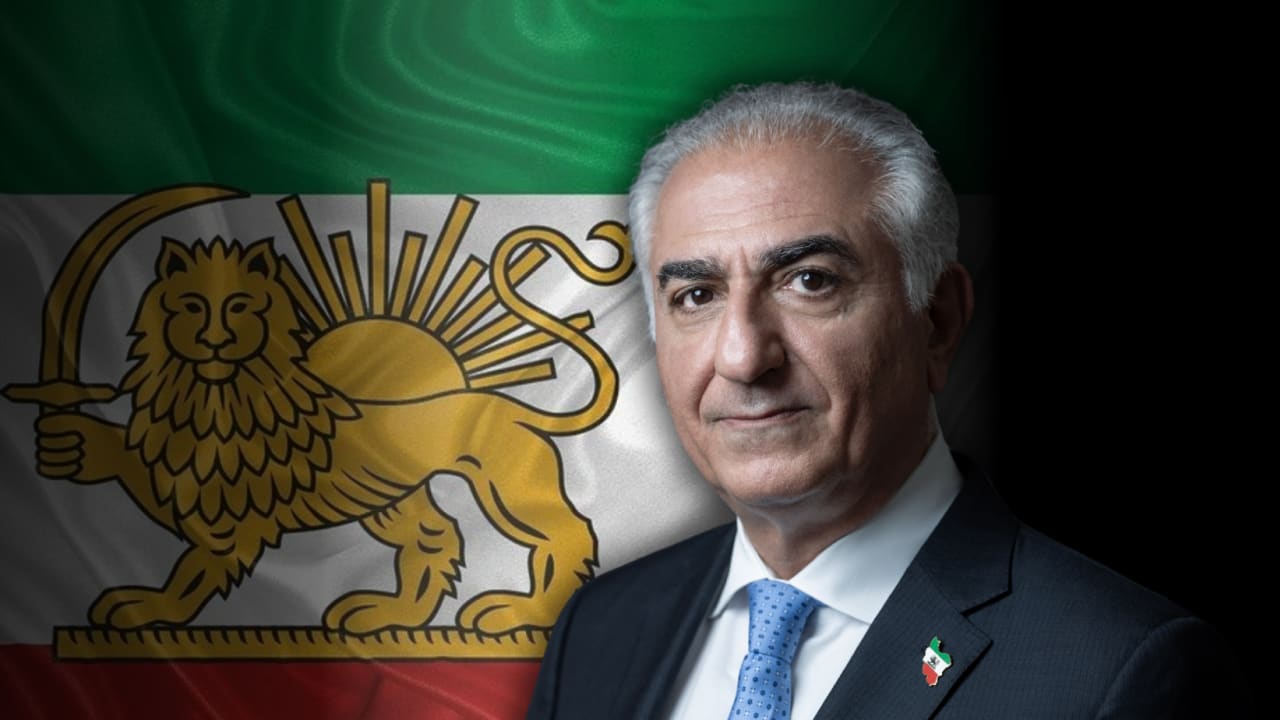
A glaring example occurred when Haaretz ran a so-called “investigation” claiming that the massive online support for Iran’s Crown Prince, Reza Pahlavi, was merely an artificial network of Israeli-funded bots. The reality on the ground shattered this media narrative.
On January 8 and 9, 2026, following a direct call to action by Pahlavi, millions of brave Iranians defied the regime and flooded the streets across Iran. The historic scale of those protests proved that the Iranian people’s desire for a secular, democratic future is a powerful, organic grassroots reality, not a digital illusion created by computers.
By dismissing millions of real, living freedom fighters as mere “bots,” Haaretz did not just exhibit terrible journalism; it actively endangered dissidents. The Islamic Republic eagerly seized on the Haaretz report, broadcasting it on state television and using it as a pretext to arrest, torture, and extract forced confessions from pro-democracy activists on charges of foreign espionage.
This is the very same Haaretz whose reckless reporting during domestic political disputes, such as its sensationalized and irrepressible coverage of Israeli military pilots refusing to serve in March 2023, sent dangerous signals of weakness to Jerusalem’s adversaries.
Given the extensive gleeful coverage of Haaretz reports on regime media, many Iranians believe these irresponsible actions directly emboldened the Islamic Republic and its proxies, leading them to believe that Israel was fractured from within, which ultimately helped incite the horrors of the October 7 attacks.
When media outlets play domestic politics with national security and international alliances, the consequences are measured in human lives.
The path to a peaceful Middle East relies entirely on the inevitable collapse of the Islamic Republic and the rebirth of a free, democratic Iran. Israeli media and strategic analysts must remain fiercely vigilant against narratives that alienate their greatest geopolitical asset.
They must write and analyze with a clear, unwavering understanding: the Iranian nation and the Israeli nation have no better, truer friends in the region than each other.
The friendship between our peoples is biblical, tracing its roots back to Cyrus the Great. It is a timeless alliance that no modern media distortion can erase.
Free Iranians and Israelis must stand together, ensuring that the cornerstone of tomorrow’s peace is never sacrificed for sensationalist headlines.
The writer is communications director to Prince Reza Pahlavi, and an Iranian journalist who previously served as editor-in-chief of news at Manoto TV, a UK-based Persian-language television network.