
While Israel and America bombarded Iran, US President Donald Trump barraged the world with words. It’s a fascinating leadership technique. The most garrulous president in American history has built a massive audience of equally obsessed friends and foes, when the world has never been so wired, so tuned in, so addicted to the ever-shortened news cycle’s fascism.
All the noise – political and otherwise – drives so many people crazy. About 74% of Americans are sweating their nation’s future, with young adults suffering “climate-anxiety” too. Therapists reported in 2024 that 44% of their clients shifted “outside-in,” fixating on politics, ignoring childhood disappointments, broken relationships, and more personal matters. And even thousands of miles from our missile launches and bomb shelters, this Iran War’s insta-coverage and political blustering magnifies the global stress-out.
In this age of instant gratification, the speed with which everyone decreed who won or lost has been stunning. On March 18, the historian Timothy Snyder blasted Trump, saying “He took the greatest military force in world history,” and “lost a war to a middle power in a week.” Even now, three weeks later, anyone saying “won” or “lost” – past tense – as the conflict continues, is propagandizing. We’re barely in the fifth inning of a contest that could go into extra innings.
Moreover, we historians know that, while some wars end fast, and some end decisively, first, they must end – and then it can take years before the true winners emerge. Unless the Iranian regime falls within three months of the war’s definitive conclusion – or during it – Trump-haters and Trump-lovers, Zionists and anti-Zionists, jihadi apologists and Persian freedom-fighters, could spend decades debating just who won.
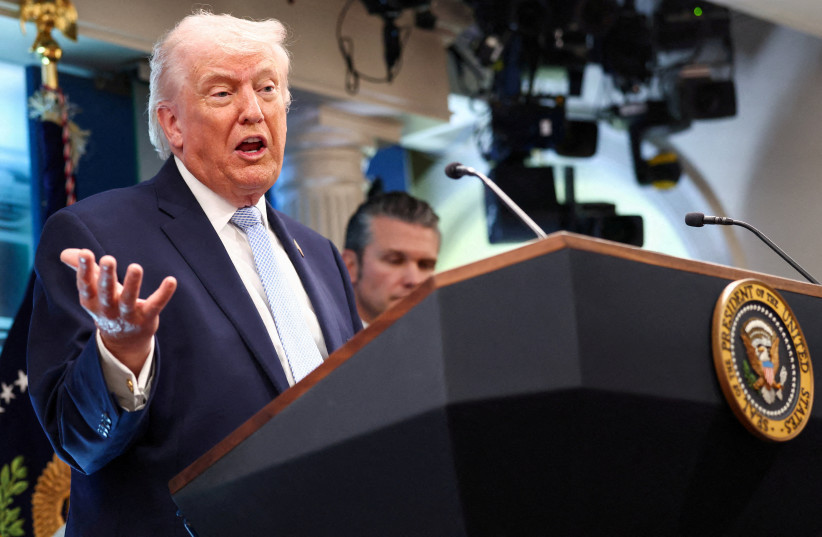
Statements reframing the situation
Trump was no fool in his April 1 address, when warning that “American involvement in World War I lasted one year, seven months, and five days. World War II lasted for three years, eight months, and 25 days. The Korean War lasted for three years, one month, and two days… We are in this military operation, so powerful, so brilliant, against one of the most powerful countries, for 32 days.”
Characteristically, Trump couldn’t resist choreographing his own victory dance, immediately adding: “And the country has been eviscerated and essentially is really no longer a threat. They were the bully of the Middle East, but they’re the bully no longer.”
Such statements are easier to justify than premature “won” or “lost” pronouncements. Even if Iran’s regime survives, the way Israel crushed its proxies, and the way America and Israel degraded Iran’s military hardware, while killing its leaders, probably ended its role as the land-based death star coordinating global jihad.
Trump's history lesson triggers speculation about how CNN or The New York Times would have covered America’s successful wars. In August 1776, general George Washington lost the Battle of Long Island. The Continental Army survived by skulking across Long Island Sound. Modern journalists would have branded Washington “a loser,” destined for obscurity.
Yet 13 years later, that retreating general became President Washington of a victorious USA. Similarly, the North, and Abraham Lincoln, looked doomed as the Civil War began, only to triumph in 1865. And in 1942, after the Japanese attacked Pearl Harbor, America kept losing, with 75,000 soldiers surrendering after the crushing Battle of Bataan.
Trump's strategy of chaos
Another source of conscious, cultivated anxiety comes from Trump’s delight in being America’s most unsystematic, seat-of-the-pants, unpredictable president. He threatens to wipe out Iran’s civilization – while defending Iranians. He posts an image of himself as Jesus Trumpist, then mocks the Pope. Every time this president speaks – or tweets – it’s like the latest IPO: Boom? Bust? Who knows?
Occasionally, the chaos works to his advantage. In an April 8 phone interview with Liz Landers a White House correspondent for PBS News Hour, Trump insisted: “I have to be unpredictable. That’s why we’re winning. What do they want me to do? Tell them exactly when and where I will attack?”
Operationally, Trump is spot-on. Last week, he best demonstrated his approach. He suddenly sprang a ceasefire, which, in Israel, felt cowardly. He designated MAGA’s leading war skeptic, Vice President JD Vance, to negotiate with the Iranians.
Iranian propagandists, American social media influencers, Trump-haters, and mainstream media headline-writers used similar words, deeming Trump “humiliated,” “flailing,” and “reckless.” The Washington Post sneered: “If Iran is ‘defeated,’ why can’t the preeminent global superpower open a waterway that’s about 30 miles wide?”
Then – boom! – surprise. As of this writing, 15 American warships are blockading the Strait of Hormuz and strangling Iran’s economy.
Still, existentially, Trump’s unpredictability comes at great cost. Before the war, and subsequently, he repeatedly shifted rationales for attacking. That inconsistency helps his critics judge him by the most critical (meaning ambitious) scorecard he dictated. It also confused many Americans, leaving them unsure why they are fighting, even though this most-necessary war is crushing an anti-American, anti-Western, nuclear-hungry, jihadist, genocidal regime.
Israelis suffer from a similar leadership muck.
Last June, when the 12 Day War with Iran ended, while recognizing that the Iranian regime wasn’t totally neutralized, a global consensus nevertheless applauded Trump for ending the war in a timely manner.
This current follow-up war pulverized the regime much more intensely. However, it may ultimately be considered less successful, because amid the shifting justifications, expectations rocketed – and, as the saying goes, “expectation is the root of all heartache.”
Every soldier knows wars are unpredictable. When fighting, liberal-democratic leaders must be pugnacious enough to inspire, unpredictable enough to intimidate, transparent enough to inform, and disciplined enough to encourage, neither overselling nor under-performing – and making sure to win!
The writer is an American presidential historian and Zionist activist born in Queens, living in Jerusalem. Last year, he published To Resist the Academic Intifada: Letters to My Students on Defending the Zionist Dream and The Essential Guide to October 7th and its Aftermath. His latest e-book, The Essential Guide to Zionism, Anti-Zionism, Antisemitism and Jew-hatred, was published recently; it can be downloaded from the Jewish People Policy Institute’s website.