Let me begin with a simple clarification: when I write, I write as myself, not as any publication, not as any institution. My views do not represent the official position of The Jerusalem Post or any other outlet that publishes my work. They represent me: a student of Rabbi Jonathan Sacks, a Modern Orthodox Jew, and a proud Black African and Ethiopian Jew from one of the most ancient Jewish communities in the world.
And it is precisely from that identity, from that lived experience, that I ask a difficult question: Who does Israel belong to?
I believe in an Israel where every Jew, religious or secular, Black or white, Ashkenazi, Sephardi, Mizrahi, Ethiopian, and every loyal citizen of the state is treated with equal dignity. Not as a slogan, but as a governing principle.
Rabbi Sacks taught that the foundation of Jewish ethics is the idea that every human being is created in the image of God. If that principle does not guide public policy, then it becomes a sentence we quote, not a value we live.
This is why leadership matters, not only in security decisions, but in tone, in responsibility, and in the moral example set for a nation under pressure.

Consider the public discourse we are normalizing when senior figures associated with government circles are reported to have used words like “baboons” or “retarded Moroccan,” we are told this is an isolated incident, an individual mistake. Perhaps. But leadership is not measured by how we explain such moments; it is measured by how we prevent them and by the culture we allow to grow around us.
Israel today is not only under threat, but it is also under strain. Every night, children across this country run to bomb shelters at the sound of sirens. I know this not as an observer, but as a father of four young children. I carried them, half asleep and terrified, into shelters in the middle of the night. Many of these children do this without their fathers at home, because those fathers are serving on the front lines, protecting the country.
Where, then, is the national response to these children?
Where is the investment in child-centered shelter infrastructure? Where are the therapeutic services for trauma, the systems designed not just to defend bodies, but to protect minds?
We speak often about national security, but rarely about the emotional security of a generation growing up under sirens. At the same time, Israel is engaged in an ongoing war that demands manpower, unity, and shared responsibility. And yet, we continue to tolerate a system in which large numbers of able-bodied adults do not participate in national service, while those who do serve often at great personal and family cost carry the burden alone. It is not just.
A serious government must ask: how can we justify allocating vast public resources to those who do not contribute to national service, while reservist families struggle, while children absorb trauma, and while the country calls for unity? And responsibility must be shared.
There is another dimension to this question of belonging that we do not confront honestly enough. For decades, Ethiopian Jews have waited, sometimes more than 30 years, for the chance to make Aliyah. Families remain separated. Communities remain in limbo.
At the same time, Jews from other parts of the world continue to arrive through more efficient processes. Why? I will not answer that question for the reader. But I will say this: a nation that claims to be the homeland of all Jews must ensure that this promise is not experienced differently depending on where a Jew comes from or what color their skin is.
This matters not only internally, but globally. Israel is often falsely accused of being a “white apartheid state.” Our enemies use this narrative to isolate us. But sometimes, without intending to, we give them material to work with. Representation matters. Leadership matters. The faces we present to the world matter.
Israel needs more international voices, spokespeople, diplomats, and public intellectuals from diverse Jewish communities, including Black African Ethiopian Jews, who can speak with authenticity to the broader world, not as tokens, but as qualified professionals who reflect the full reality of the Jewish people.
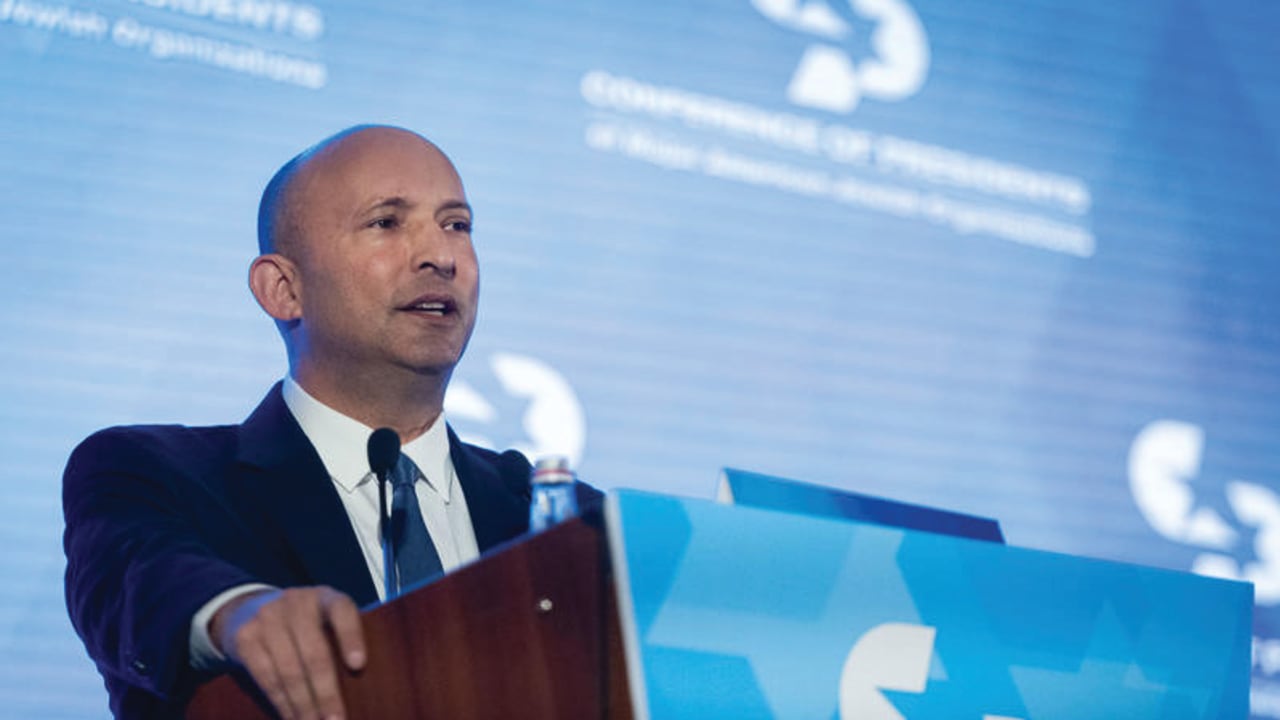
This is not public relations. It is strategic clarity. Which brings me to why I support a different vision of leadership, one I associate with Naftali Bennett. Not because any leader is perfect. But because I believe Israel needs a government that understands the connection between security and social cohesion, between economic reality and moral responsibility, between strength and dignity. A government that seeks to serve all citizens, not segments, not sectors, not political bases, but the nation.
The question “Who does Israel belong to?” should have a simple answer: it belongs to all of us. But that answer must be made real through policy, through fairness, through shared responsibility, and through leadership that unites rather than divides.
Israel was not created to be a state for one type of Jew. It was created as a home for people that has always been diverse, always been global, and always been bound together not by uniformity, but by covenant.
If we allow division, inequality, and selective responsibility to define us, then we risk weakening not only our society but the very idea of Israel itself. The future of this country will not be decided only on the battlefield. It will be decided in how we treat one another, how we distribute responsibility, and how we define belonging.
The writer is an international educator, community activist, and diplomacy expert. He has served in New York City as an investigation officer for the Supreme and Family Courts and the Israel Police and represented the Israeli Knesset in international public affairs. He holds a doctorate in International Educational Leadership from Yeshiva University, New York.