Over many years of engaging in unofficial dialogue with Palestinians, Israelis, and regional actors, I have come to a simple but critical conclusion: Before starting a war, responsible leaders must ask themselves how it will end. And the answer must ultimately be political and achieved through diplomacy.
Wars are easy to begin. They are much harder to end.
History repeatedly demonstrates that military campaigns launched without a clear political endgame rarely produce stability. Instead, they leave destruction, trauma, and unresolved grievances that eventually force the same political conversations that could have taken place before the fighting began.
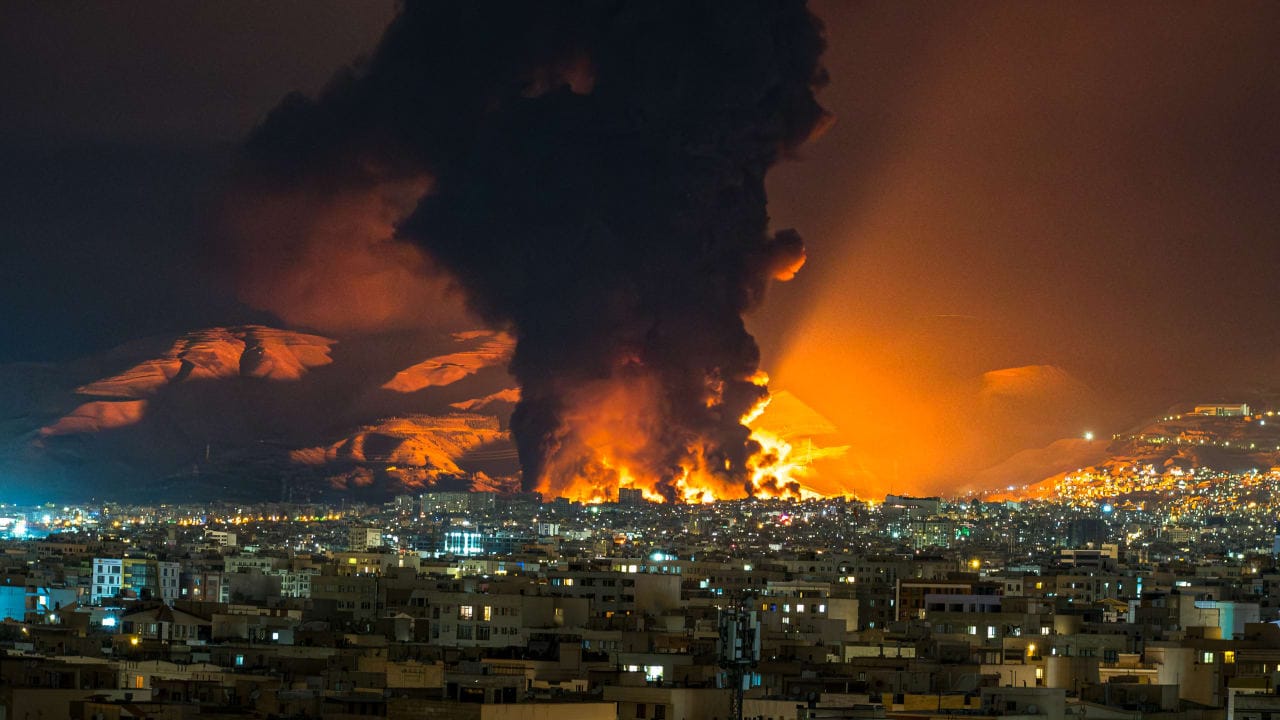
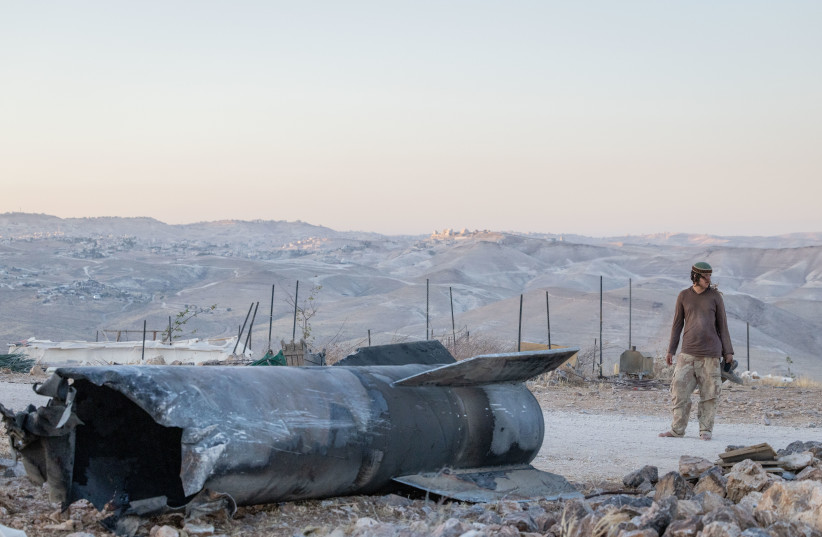
Today’s confrontation between Israel and Iran, together with the ongoing conflict with Hezbollah, raises exactly this question. Military operations can achieve tactical successes. Missiles can be intercepted. Infrastructure can be destroyed. Commanders can be eliminated.
But none of these actions answer the most important strategic question: What political reality will exist after the guns fall silent? If the political situation after the war looks exactly like it did before the war, or worse, the region will have paid an enormous price for very little strategic gain.
Wars sometimes create moments of strategic transformation. When the dust settles, they can open political doors that previously seemed locked. The challenge for Israel, the United States, and the Arab world today is to recognize that such a moment may now be emerging.
The confrontation with Iran and its network of regional proxies has accelerated a significant shift in the Middle East. A growing number of Arab states increasingly see their security interests aligning with Israel’s in confronting Iran’s regional ambitions, missile capabilities, and the destabilizing influence of armed proxy organizations such as Hezbollah, Hamas, and other militias.
Countries such as Saudi Arabia, the United Arab Emirates, Bahrain, Jordan, Egypt, and others are confronting the same strategic reality: The region cannot achieve long-term stability while Iran projects power through armed non-state actors and destabilizing military capabilities.
This shared concern has already led to unprecedented levels of quiet security coordination and intelligence cooperation. It has also strengthened the logic behind an emerging regional security architecture linking Israel, moderate Arab states, and the US in a cooperative defense framework.
But regional defense cooperation cannot be built on military logic alone. For Arab governments, normalization with Israel and participation in a regional security framework is not only a strategic calculation; it is also a political issue connected to the Palestinian question. Arab leaders understand that their ability to deepen relations with Israel in a visible and durable way depends on credible progress toward resolving the Israeli-Palestinian conflict. This is the reality Israeli leaders must confront.
For more than a decade, Prime Minister Benjamin Netanyahu has consistently acted in ways that weaken the possibility of a two-state solution. Settlement expansion, the political marginalization of moderate Palestinian leadership, and the absence of any serious diplomatic initiative have all contributed to the erosion of the political horizon necessary for peace. In doing so, Israel has undermined not only prospects for resolving the conflict but also its own ability to build broader strategic partnerships in the region.
The wars with Iran and Hezbollah have nonetheless created a potential strategic opening for Israel that could fundamentally transform its place in the Middle East. Israel could move from a position of partial regional isolation to full integration within a cooperative regional security and economic system. But that transformation will not occur without addressing the Palestinian issue.
For many Israelis today, the idea of a Palestinian state seems remote or unrealistic. Years of violence, failed negotiations, and deep mistrust have eroded confidence in the peace process. The trauma of the October 7 attacks and the devastating war that followed in Gaza have further hardened public attitudes.
Yet the absence of a political solution does not produce stability. The alternative to a negotiated political framework is not the disappearance of the conflict. It is its permanent continuation. As long as millions of Palestinians live without political sovereignty and national self-determination, the conflict will continue to generate cycles of violence, radicalization, and instability that ultimately undermine Israel’s long-term security and international standing.
The two-state solution remains the only framework capable of reconciling Israel’s legitimate need for security and national self-determination with the Palestinians’ equally legitimate aspiration for independence and dignity.
Even in the midst of the current war, voices from the region are warning about the dangers of allowing military escalation to replace political strategy. In a recent joint statement, Iranian and Israeli peace activists condemned the war and warned that escalating military confrontation will deepen insecurity across the region. They pointed to the ideological hostility of the Iranian regime toward Israel and the US as a major driver of confrontation, while also criticizing the decision by Israeli and American leaders to resort to war without exhausting diplomatic options or clearly defining political objectives.
Their message was simple: Wars justified by claims of imminent threats often deepen instability rather than resolve it, and political transformation within Iran cannot be imposed from outside but must come from Iranian society itself. Their call was for an immediate end to hostilities and a renewed commitment to diplomacy, international law, and political solutions.
The US and key Arab states possess considerable leverage in shaping Israel’s strategic choices. Security guarantees, regional defense integration, normalization agreements, and large-scale economic cooperation initiatives could dramatically reshape Israel’s regional position. Israel could become a central pillar of a new Middle Eastern security and economic architecture.
But those incentives will not materialize without a credible political commitment regarding the future of Palestine. This is something Israeli political parties in the opposition need to pay attention to: Israel is not required to reach an immediate final-status agreement. It does require establishing a clear political horizon: a credible, internationally supported pathway toward the emergence of a demilitarized Palestinian state living peacefully alongside Israel.
Such a framework would require strong security arrangements, phased implementation, and international guarantees. It would also demand serious reforms within Palestinian political institutions and a determined effort to ensure that armed groups committed to violence do not control Palestinian governance.
None of this will be easy. But the alternative is far worse.
The Middle East has seen too many wars begin without serious thinking about the political order that must follow them. Lebanon’s civil war, the Iraq War, the Syrian catastrophe, and repeated Gaza wars all demonstrate the same painful lesson: Military victories without political frameworks rarely produce lasting stability.
Israel’s confrontation with Iran and Hezbollah should not follow that pattern. Instead, it could become the catalyst for a broader regional transformation – one that includes collective defense cooperation, expanded normalization between Israel and Arab states, and a genuine political process leading toward Israeli-Palestinian peace.
During the decades that I have sat in quiet rooms with Palestinians, Israelis, and others in the region discussing how this conflict might finally end, I have seen that even bitter enemies often understand the outlines of the solution long before their leaders are ready to act.
The parameters of Israeli-Palestinian peace have been known for many years. The real question has never been what the solution looks like. The question has always been whether leaders have the courage to move toward it. Wars should never begin without a vision of the peace that must follow them.
That vision is long overdue.