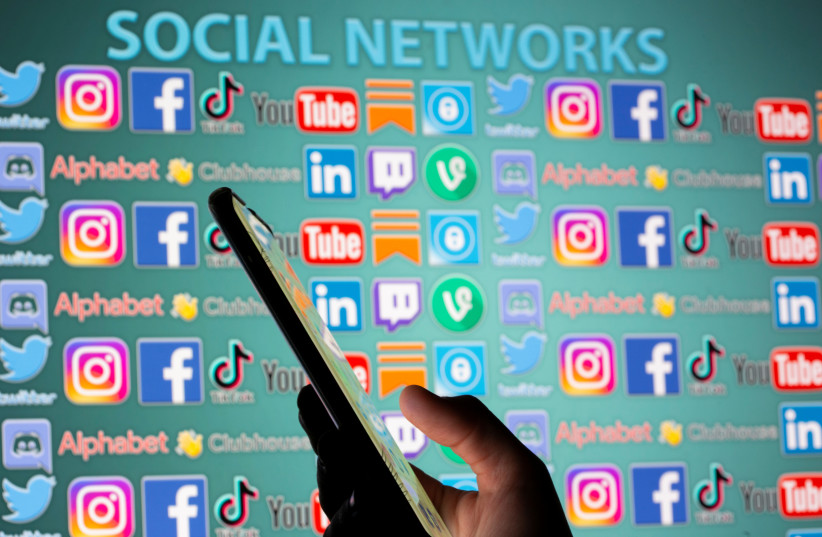
The steepest increase was on Facebook, with a 193% increase, while the overall level of open Jew-hatred, quantitatively, remained highest on X (formerly, Twitter). The surge in antisemitism online highlighted the failure of the social media platform to robustly invest in appropriate technologies meant to automatically flag, de-amplify, and remove violent, pro-terror and hateful content.
It underscored the reality that the weaknesses of these platforms were now a matter of national security for any Western democracy under threat of terrorism, as they could be exploited as an amplifier of psychological terror beyond the flashpoint of first attack. Perhaps most disturbing of all was the appearance of an online narrative aimed at denying that these well-documented atrocities ever happened.
CyberWell’s most recent online antisemitism alert unpacked October 7 denial and distortion and exposed the unprecedented traction that this modern-day Holocaust denial is gaining via social media platforms. The report is based on an initial dataset of just 313 verified examples of October 7 denial collected from Facebook, Instagram, X, TikTok, and YouTube, posted as early as October 8 and accumulating over 25 million views. Some of the top antisemitic posts we identified continued to be shared months after the initial content was posted.
Despite CyberWell reporting all of this content to the respective platforms, only 6% of the initial dataset was removed within the first week of being flagged – far below the average rate of removal of reported online antisemitism, about 32% in 2023 according to CyberWell’s data.
Social media platforms are failing to remove this denial conspiracy, despite its violating the platforms’ policies, namely, violent event denial which is applied to content denying the Holocaust or school shootings like Sandy Hook.
The leading October 7 denial and distortion sub-narratives that CyberWell identified were: a) that no rape occurred during the massacre; b) that Israel was the true culprit behind the atrocities; and c) that Israel is profiting from the events of October 7. The mass dissemination of these conspiracies are being parroted as common knowledge by many of the anti-Israel protesters and those Democrats threatening to withhold their support for President Joe Biden in the next US election – perhaps one of the reasons that Biden has transitioned from the champion of Israel’s right to defend itself into a political game of arm-twisting Israel to recognize a Palestinian state.
These are some of the consequences of letting antisemitic conspiracy theories become normalized at scale– what QAnon did to fuel the rage of those who participated in the January 6 insurrection at the Capitol, October 7 denial and misinformation about the current war in Gaza have emboldened protesters to storm Capitol Hill and Grand Central Station. These protesters are confident that they are right, and social media platforms are telling them as much in a consistent feedback loop.
When weighing effective strategies to fight the current wave of Jew-hatred, consistently demanding social media accountability – ensuring that digital policy compliance and content moderation in practice accurately account for classic and modern forms of antisemitism – is crucial not only for the safety of the Jewish people but for the State of Israel as well.■
Tal-Or Cohen Montemayor is the founder and executive director of CyberWell, an Israeli tech nonprofit creating solutions to address antisemitism in the digital era, which works with social media platforms to drive the enforcement and improvement of hate speech policies.