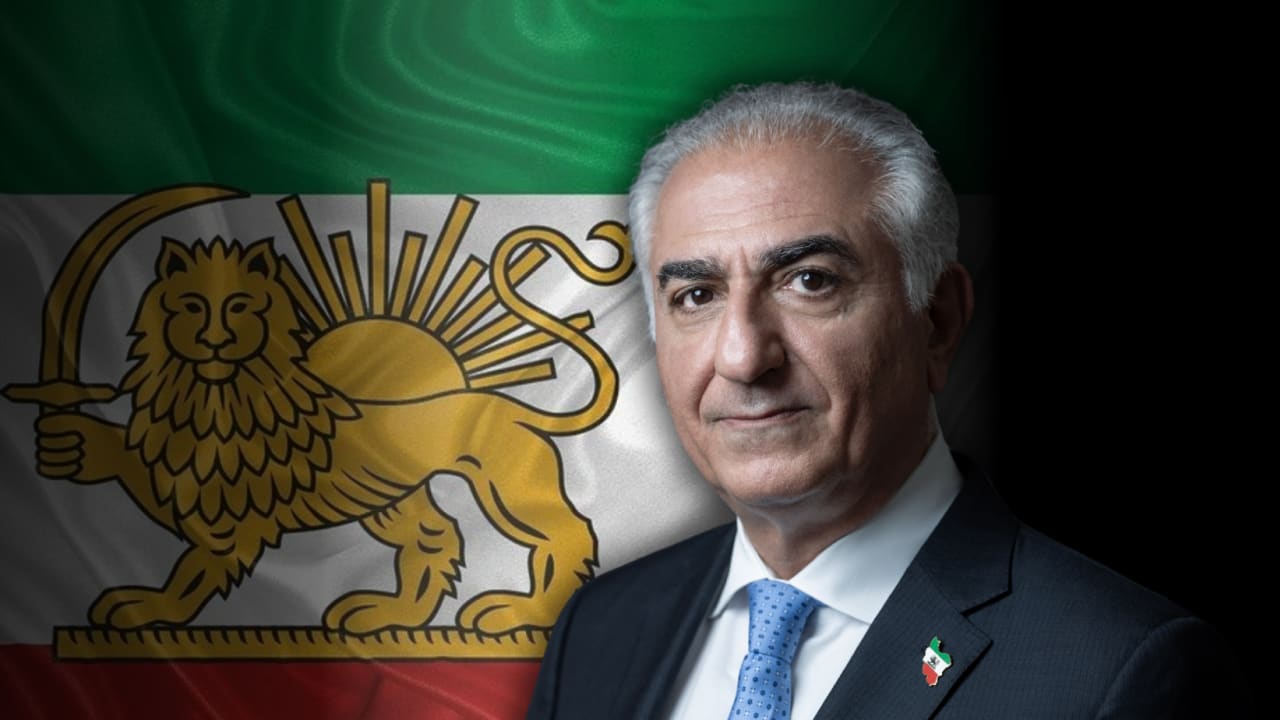
Iran’s Crown Prince Reza Pahlavi has watched from afar for weeks as his country has burned and Iranians have been massacred in their thousands. From the beginning of the protests, which erupted nationwide on December 28, the people have been calling his name and that of his family – “Javid Shah” (Long Live the Shah) and “Pahlavi barmigardeh” (Pahlavi will return).
From his exile in the United States, he has emerged as the unified leader of the demonstrations, both because he has a plan and because the people demand him.
“In late December and early January, the Iranian people had already bravely taken to the streets as they have so many times before, braver than ever,” he told The Jerusalem Post this week. “They called on me for leadership and for direction. The regime was weaker than ever, the people more united than ever, and so I called for coordinated action on January 8 and 9, and millions took to the streets.
“It was an escalation of our fight for liberty, and the regime escalated its violence,” he added, arguing that “now is the time for the international community to help them.”
His call for aid from the international community comes amid growing frustration from Iranians that US President Donald Trump and Israeli Prime Minister Benjamin Netanyahu have yet to take any military action against the Islamic Republic, despite several assurances.

Trump announced that an additional “armada” of US military vessels is sailing towards Iran during a speech given in Iowa on Tuesday evening, which comes after the USS Abraham Lincoln group, including other US warships, destroyers, and fighter aircraft, had reached CENTCOM waters in the Indian Ocean.
Pahlavi insisted that Iran’s future must ultimately be decided by Iranians, but said the world has a direct strategic interest in helping them bring the regime down.
Iran’s future will be decided by the Iranian people
“My position has been consistent for over four decades: Iran’s future will be decided by the Iranian people themselves,” he wrote. “They are the boots on the ground needed to end this regime.”
But, he argued, the protests are not only a national struggle.
“They are not just fighting for themselves, they are fighting to free the world from this criminal regime,” he said, adding that “not just for humanitarian needs but out of strategic necessity, the world must act to help them.”
Since January 8 and 9, Tehran has become increasingly dependent on the Islamic Revolutionary Guards Corps’ (IRGC) domestic repression infrastructure to survive. The internet and mobile cell signal have been cut or reduced for 20 days, leaving many Iranians struggling to tell the world what is happening. There have been reports of massacres, including beheadings, the indiscriminate shooting of live ammunition into crowds, and buildings set alight with people inside.
“The situation on the ground has indeed changed, both in scale and viciousness of the repression,” Pahlavi said of the escalating situation, alleging the regime is “shutting down communications, and relying entirely on the IRGC’s repressive machinery to survive.”
The regime has killed at least 43,000 Iranians since protests began, according to the International Center for Human Rights, with estimates of over 330,000 injured and over 30,000 arrested. Many of the injuries have been caused by exploding pellets shot deliberately into protesters’ eyes, leaving many blinded.
There have been reports emerging from Iran of the regime holding protesters’ bodies hostage unless family members pay exorbitant sums to get the bodies back.
“Think about that,” the crown prince said of the casualty figures. “More than twenty-nine times the number killed on October 7 and eleven times as many killed on 9/11.”
While such figures are extremely difficult to independently verify from outside Iran amid communication shutdowns, there is no doubt that thousands have been killed and Pahlavi argues the scale of alleged killing underlines his central demand - degrading the regime’s coercive capacity.
“Action to defend civilians and to degrade the regime’s coercive power is welcome and exactly what the Iranian people are calling for,” he said.
Pahlavi, who outlined his approach at a recent press conference in Washington, DC, stated that “targeted measures against the IRGC’s leadership, command-and-control, and infrastructure that direct mass repression and violence” are the way to bring about the end of the regime.
The prince and his team have been working for months with defectors from the regime and potential defectors, and insist the numbers are rising.
The Prince's purpose is clear
“The purpose is clear: protect civilians, reduce repression, and level the playing field for Iranians to reorganize, mobilize, and finally defeat this evil regime,” he told the Post.
The thrust of his argument is that international pressure, particularly when aimed at the IRGC’s leadership and operation nervous system, would reduce the regime’s ability to crush demonstrations long enough for organized opposition to deepen inside Iran.
Asked why he believes this uprising has crossed a threshold that previous protest waves, such as those in 2009, 2019, and 2022, did not, Pahlavi argued the movement has shifted from economic anger or election fraud to a genuine rejection of the Islamic Republic system, and that, for the first time, an alternative is being voiced with national clarity.
“What we are seeing now is fundamentally different,” he said. “The Islamic Republic is at its weakest point, and Iranians are on the streets not only because of economic hardship, but because they are rejecting the entire system.
“For the first time in 46 years, the demand is clear, national, and unmistakable: an end to this criminal regime, and a transition to democracy with a clear alternative,” he added.
He pointed to what he called new “ingredients” now taking shape, including public courage and cracks within the apparatus meant to suppress it.
“We are beginning to see other signs, including increasing signs of defections, including refusal to show up to work and repress the people,” he explained.
Pahlavi also framed the international environment as different this time and explicitly contrasted the behavior of previous American presidents during those earlier protest movements with Trump’s offer of help.
“[Iranians] remember Presidents Obama and Biden throwing them under the bus,” he said, adding that Iranians “took courage in the words of President Trump” and believe him “to be a man of his word who will act.”
“The question is,” he added, “will the world act soon enough to save more lives?”
FOR PAHLAVI, the calls on the streets of his family’s name are not merely nostalgia for a bygone era, but a blueprint for a free and prosperous Iran.

“What people are responding to is not nostalgia,” he told the Post. “Many of those chanting were born decades after my father left Iran — they have no personal memory of my father.”
“What they are expressing is rejection of the Islamic Republic and a longing for dignity, national identity, and a normal future that my father represented,” he said, arguing that it also constitutes “a responsibility… placed on my shoulders,” which he has accepted “as a national and patriotic duty.”
He drew on that symbolism from the Pahlavi era, now invoked as shorthand for modernization. Simultaneously looking to the past to build the future.
“Iranians have come to recognize that the goal of the Pahlavi era was modernization: infrastructure, education, land reform, healthcare, and equal rights for women,” he elucidated, adding that “Iran was ahead of its time… until a revolution hijacked the country and reversed that progress.”
He said he is “deeply thankful” to those chanting his name, calling it “a national rallying symbol… and a bridge to a democratic transition.”
“To me, this is not about seeking power,” he added. “It is about carrying a responsibility placed on my shoulders by a nation that wants reassurance that change will not lead to chaos.”
Pahlavi also sought to preempt the claim that his prominence could preempt the democratic process.
“I have always said the Iranian people will decide the future system of government through a free constitutional process and genuinely free elections,” the royal explained. “Some support a constitutional monarchy, others a republic, and all must have the right to present their vision and let the people decide.”
“All Iranian citizens will be treated equally before the law and have equal say at the ballot box,” he added.
“My role is not to tip the scales toward any outcome,” he stated. “I will remain impartial so that the process is real and trusted.”
Regarding opposition fragmentation, Pahlavi pointed to the Munich National Cooperation Conference, which he convened last July, as an attempt to create a shared framework across ideological and ethnic lines. It was attended by more than 500 regime opponents across the political spectrum.
“At the Munich National Cooperation Conference, we brought together the democratic opposition across ideology, ethnicity, and political tradition,” Pahlavi said. “Right and left, republican and monarchist, ethnic groups and civil society leaders agreed on a shared framework for action.”
That framework, he said, is based on “clear principles: Iran’s territorial integrity, individual liberty and equality, and the Iranian people’s right to determine the future secular democratic form of their government.”
“We are united because we have national unity,” he added. “We have seen it from the streets of Iran to the streets of most every major city in the world.”
The crown prince also stated that he is ready to answer the people’s calls and is preparing to return to Iran, and that he is ready to attempt it even before the regime falls.
“My team and I are actively making the necessary preparations for my return,” he told the Post. “I am prepared to do this even before this regime falls to be alongside my compatriots for the final battle,” evoking the calls of the demonstrators.
A promised an orderly transition
“Then I will ensure an orderly transition, protect Iran’s territorial integrity, and guide the country to the ballot box,” he said.

He described that “orderly transition” as “an emergency phase in the first 180 days to secure continuity of services and security, then stabilization to keep the country functioning and restore confidence, followed by a constitutional process and national elections.”
This is all part of his and his team’s Emergency Phase transition plan of their Iran Prosperity Project.
On February 11, the Islamic Republic will mark 47 years since it began its reign of subjugation. But it seems the Iranian people have looked to the past to help build their future. He might not be deliberately seeking power, but he has a plan, and the name they are calling is Reza Pahlavi’s. For those outside Iran trying to see in, it looks more like a restoration than a revolution.