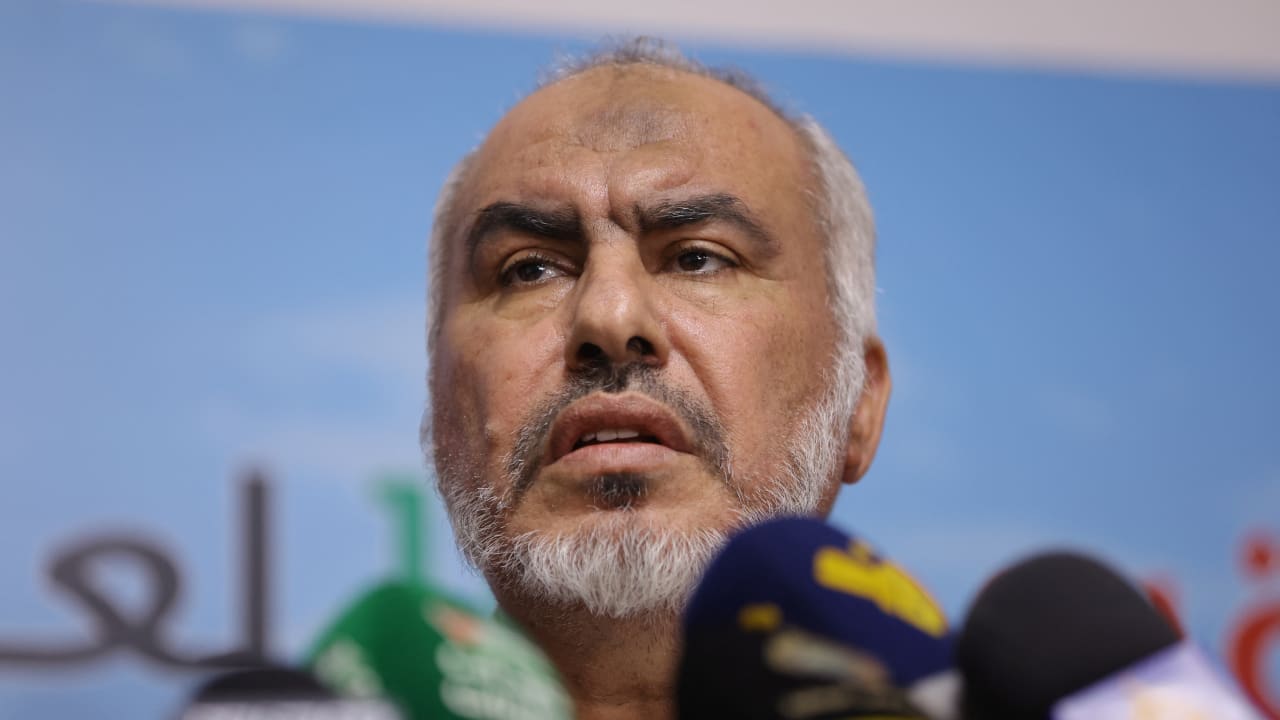
Hamas leader Ghazi Hamad appeared for the first time on in an interview, since the Israeli strike on Hamas members in Doha on September 9. He appeared on Wednesday, September 18, on Al Jazeera.
Hamad is considered to be one of the six remaining key Hamas leaders who were at the meeting in Doha, Qatar, during the Israeli airstrike. It is unclear whether any of the leaders were killed or wounded.
Qatar buried those killed in the attack, including one Qatari. However, the names of those killed and what became of the Hamas leaders who were apparently in the same building have not been fully revealed.
Rumors have swirled since the attack that the Hamas leaders survived. However, there has not been much evidence regarding their survival. That doesn’t mean they didn’t survive. It is assumed they are lying low.
Clearly, Hamad is now not lying low.

“We were sitting to discuss the American proposal to end the war,” he said in the interview. “Less than an hour later, we heard explosions and immediately understood it was an assassination attempt. As residents of Gaza, we recognize those sounds. We tried to flee as quickly as possible, and we succeeded.”
France24 in Arabic reported that “according to sources close to Hamas, Hamad was one of six Hamas leaders who were meeting in Doha inside a building targeted by Israel in the strike, along with Khalil al-Hayya, Khaled Meshaal, Zaher Jabarin, Basem Naim, and Taher al-Nunu.”
Why did Ghazi Hamad appear first?
Now, the question is: “Why is Hamad the one who has appeared first. It is likely because he has been seen as a key negotiator in the past and possibly a more “moderate” member of Hamas. “Moderate” in this context is merely a term because all of Hamas backed the October 7 attack, and the leaders have said they will carry out more genocidal attacks.
Nevertheless, Hamad is known to have played a role in the negotiations in the past, including more than a decade ago, when Gilad Schalit was held in Gaza between 2006 and 2011.
The messaging in showing Hamad is to indicate that a Hamas leader has survived who might be flexible regarding a deal.
However, Doha and Hamas likely believe the strike was intended to derail a deal. Many questions remain now about the push for a deal.
US Secretary of State Marco Rubio noted that the United States wants to end the war and see all the hostages returned to Israel in one handover. The US also wants to rebuild Gaza.
There are concerns that as Israel’s operation in Gaza City, Gideon’s Chariots, grows, the window for a deal could close for weeks or months.
In Israel, supporters of the hostages have continued to call for a deal and an end to the war.
The 48 hostages have been left in Gaza for 711 days. Israel’s Channel 12 reported on a meeting in London with US Special Envoy to the Middle East Steve Witkoff, in which an effort to return to talks with Hamas may be brought up.
There are also reports that Hamas is facing pressure as the IDF increases its campaign in Gaza City. This might push Hamas back to talks.
Qatar has rallied Arab countries to support it in the wake of the strike. The appearance of Hamad is meant as a message. The message is that Hamas still has leaders and that they also may continue to be an address for talks.