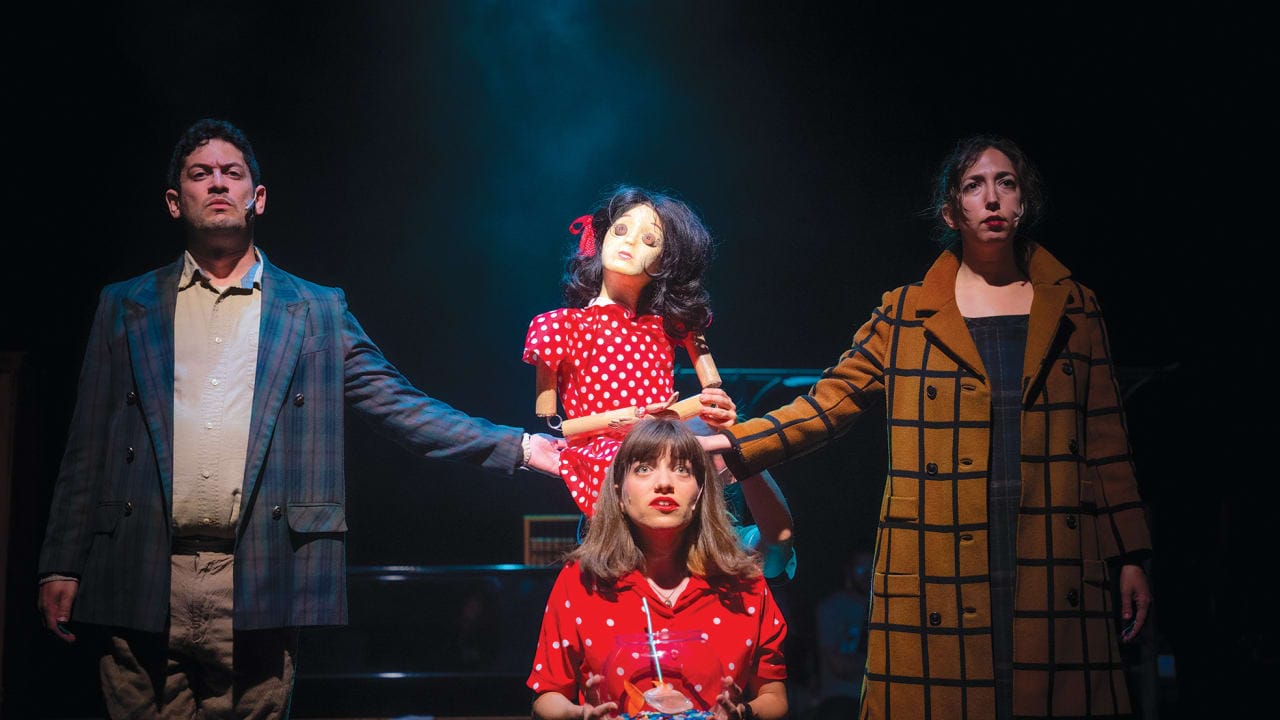

I was fortunate to attend the play Amélie on opening night, as it was almost immediately canceled due to the attack on Iran. Hopefully, it will be rescheduled later this summer.
In one memorable scene in the movie Amélie, the heroine turns around to look at the faces of the people sitting behind her in a movie theater. Unaware of this moment – since I only rewatched the film after the show – I did the same, turning to view the faces in the packed rows behind me in the Menora 3 theater hall, all of them apparently gripped by Starcatcher’s theatrical adaptation of the film.
The 2001 movie upon which the play is based is the highest-grossing French-language film ever released in the US, with box office sales of $33 million. Although watching the film is not essential, it will help you follow the slightly convoluted plot of this sweet musical.
What is the plot of Amélie?
It may, for example, prepare you for the opening song about a fly, which left me confused for several minutes until I finally got into the swing of things. The rest of the show was mostly smooth sailing, though I occasionally had to glance up at the Hebrew surtitles to understand what was being said – especially given the use of French accents, which were not always easy to decipher.
That aside, I spent an enjoyable evening in the company of delightfully odd characters, with musical numbers that ranged from pleasant to compelling and melodically soaring.

Our leading lady is Amélie (Tamar Arnon), a shy, idiosyncratic young Frenchwoman who touches the lives of those around her in weird and wonderful ways, all while growing up and finding love. Arnon, in a polka-dot dress and green shoes, gave an outstanding performance. Her acting was convincing, her voice enchanting and lovely. We can forgive the fact that her French accent vanished during her singing – maintaining it would have been no easy feat, and not even necessarily the right theatrical choice.
The rest of the cast also gave strong performances. Their acting felt natural and convincing, which is not always the case in community theater. I appreciated the use of recurring motifs and phrases that created continuity throughout; for example, “Everyone’s connected, though they might not know it’s true,” and the metaphor of “a trail of breadcrumbs.”
The recurrence of Zeno’s paradox – suggesting that we can never actually reach a destination because we are always halving the distance – beautifully captured Amélie’s struggle to bridge the emotional chasm between her and her beloved Nino (Amihai Kipnis). Caught between attraction and fear, she leads him on a merry chase, and their unsuccessful efforts to connect felt like a secular version of The Song of Songs.
Having seen Starcatcher’s Alice by Heart, I wasn’t surprised at the highly creative use of props and dance – a small doll in a polka-dot dress represents the child Amélie, hands become two hilarious elderly folk, and much more. The constant motion and inventive stagecraft kept things lively over the 2.5 hours of the show. Comic lines such as “I’ll name this fig Figaro,” the frenzied antics of the gnome, and an unexpected cameo by a veteran British pop music icon (I won’t spoil the surprise) added much entertainment value.
Comparing the two shows, Alice by Heart had more weight and historical/emotional intensity, but Amélie is unique and fresh, with moving moments. It is certainly lighter fare for those wanting to escape our current realities. The play contains (in passing) an attempted suicide along with a few subtle adult-themed moments, but I noticed children in the audience, and they seemed to be enjoying it as well.
To be informed of the new dates, subscribe to Starcatcher’s newsletter or check the website starcatcherjlm.com.