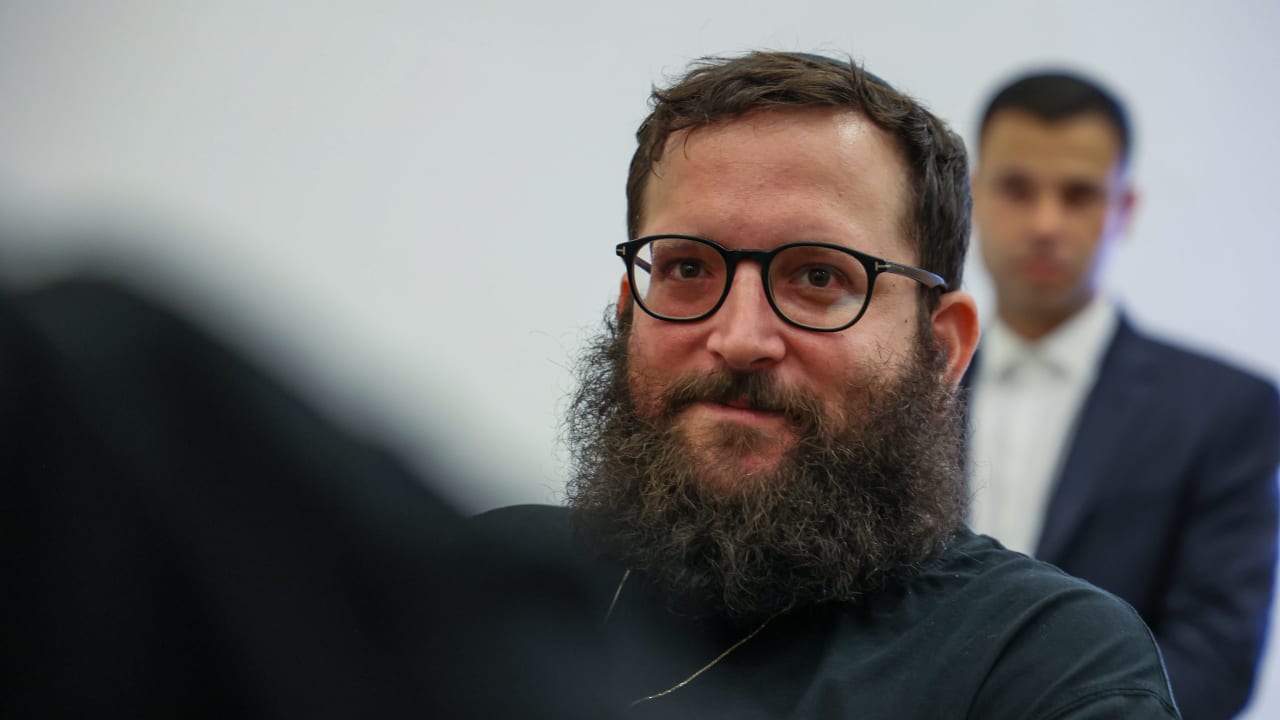
The Central District Court in Lod on Sunday extended restrictive conditions on Prime Minister Benjamin Netanyahu’s senior adviser, Yonatan Urich, for an additional 60 days, accepting a police appeal in the ongoing investigation into the leak of classified intelligence to the German newspaper Bild.
Senior Judge Yaakov Spasser ruled that Urich will remain barred from working at the Prime Minister’s Office and from employment at the company Perception, and will be subject to a no-contact order with individuals connected to the affair based on an updated list that was submitted by police. The decision also extends a travel ban, maintains existing financial guarantees, and requires Urich to appear for questioning upon demand.
Spasser’s ruling reverses a January 15 decision by Rishon Lezion Magistrate’s Court President Judge Menachem Mizrahi, who had declined to extend most of the restrictions and criticized the evidentiary basis and proportionality of the police request.
In his decision, Spasser said he did not share the magistrate court’s conclusions, faulting the lower court for conducting an analysis akin to that applied to post-indictment proceedings, rather than the “reasonable suspicion” threshold applicable at the investigative stage of this case.
Spasser wrote that the case materials before him indicated not only the existence of reasonable suspicion, but that its strength was “significantly higher than required at this stage.”

The judge also rejected the claim that the investigation is effectively complete simply because Urich has received a notice of suspicion and is moving toward a pre-indictment hearing, noting that investigators may still take additional steps and question further witnesses before a decision on charges is made.
Police had sought to extend the restrictions, arguing that Urich’s return to the PMO would risk contaminating a sensitive investigation involving classified material and multiple potential witnesses, and pointing to suspicions including unlawful possession and dissemination of a state secret and destruction of evidence.
Spasser accepted the state’s argument that the PMO is the alleged “arena” of parts of the conduct under investigation and that, at this stage, Urich cannot be returned to what the court described as a uniquely sensitive environment, both to prevent recurrence and to reduce the possibility of interference.
Urich and Bild leak affair
The investigation stems from the September 2024 leak of a classified IDF intelligence assessment concerning Hamas’s negotiating posture, which was published by the German newspaper Bild without authorization and without approval from Israel’s military censor.
Israeli authorities suspect that the document was removed from Military Intelligence and circulated outside authorized channels, and are examining whether it was disseminated to influence public and political discourse during the war, as well as how it was handled within the Prime Minister’s Office before and after publication.
Investigators are probing a chain of events involving former Prime Minister’s Office spokesman Eli Feldstein, reservist Ari Rosenfeld, and senior PMO officials, including questions of unlawful possession of classified material, obstruction of justice, and the destruction of evidence. The investigation has focused in part on internal communications, decision-making hierarchies within the PMO, and whether aides acted to coordinate responses or limit exposure once the leak became public.
Under Spasser’s ruling, the restrictive conditions are extended for 60 days, beginning January 4, meaning Urich will remain distanced from the Prime Minister’s Office through early March unless altered by a further court decision.