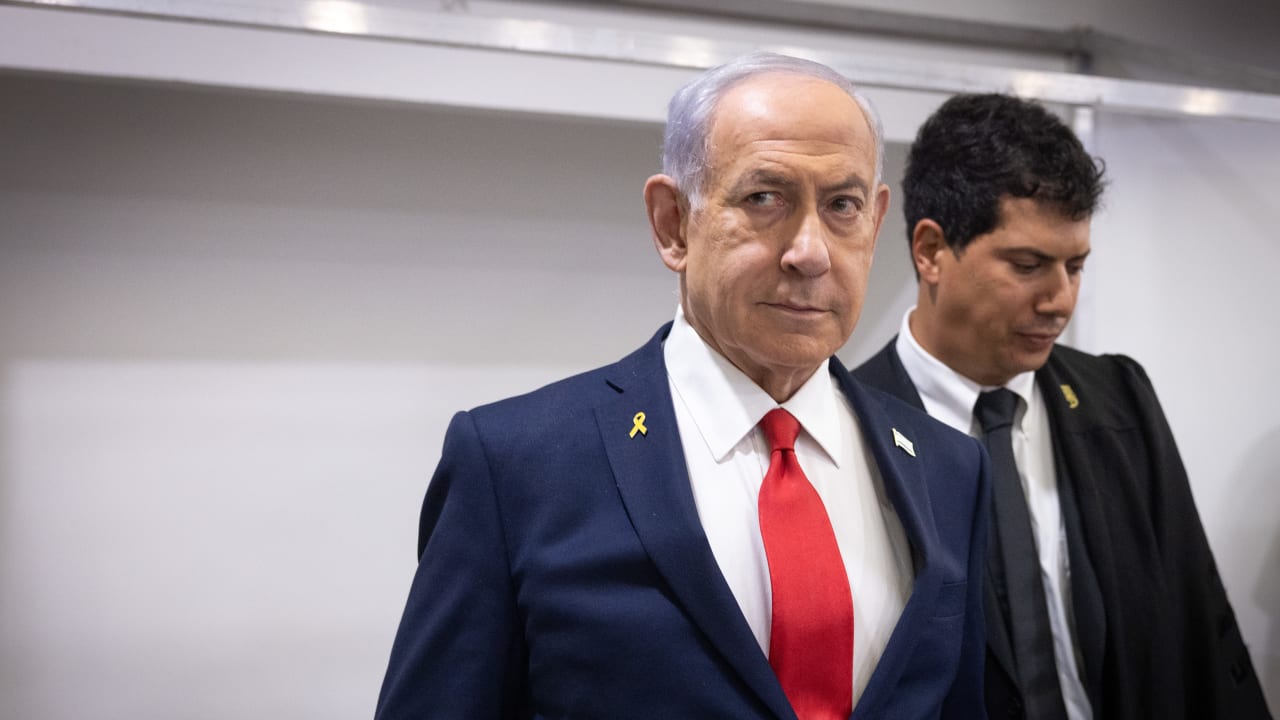
Prime Minister Benjamin Netanyahu’s cross-examination in Case 4000 formally ended Tuesday, bringing to a close a major phase of his testimony in the public corruption trial and shifting prosecutors’ questioning to Case 2000, the media bribery case centered on his dealings with Yediot Aharonot publisher Arnon “Noni” Mozes.
Netanyahu has testified for more than 80 hearing days and is now in the final stretch of his testimony, with prosecutors estimating that several additional full days remain before a short redirect examination by his defense. He has not yet responded to President Isaac Herzog’s offer to mediate plea bargain talks.
Tuesday’s hearing opened with the final exchanges in Case 4000, the Bezeq-Walla affair, in which Netanyahu is charged with bribery, fraud, and breach of trust. Prosecutor Yehudit Tirosh pressed Netanyahu on what he knew ahead of the police investigation and whether he prepared for it with attorneys.
Netanyahu said he did not remember the relevant dates and rejected the prosecution’s framing, saying, “The entire investigation is not credible,” and accusing investigators of trying to topple a prime minister.
Tirosh argued that material from Case 2000 was relevant evidence in Case 4000, shortly before the cross-examination in the latter case officially concluded.
Case 2000: fraud and breach of trust
The prosecution then moved to Case 2000, in which Netanyahu is charged with fraud and breach of trust, and Mozes is charged with offering and promising a bribe.

According to the indictment, Netanyahu and Mozes, despite a long-running rivalry, held a series of meetings in 2008-2009, 2013, and 2014, in which they discussed mutual interests: improved coverage of Netanyahu and his family in Yediot Aharonot group outlets, and restrictions on Israel Hayom, Yediot’s main competitor, which would have had significant economic value for Mozes and his media group. Both defendants deny the charges.
Prosecutor Yonatan Tadmor began by questioning Netanyahu about the power he attributed to Yediot Aharonot and Mozes during the relevant years.
Netanyahu acknowledged that Yediot had significant political and media influence “in those years,” and said Mozes had power over the paper’s political line. But he sought to qualify that influence, arguing that Mozes could shape coverage only within the ideological “DNA” of the newsroom and could not simply reverse the paper’s orientation.
“Noni, when he wants, controls everything there is,” Netanyahu said at one point, while later adding that Mozes was not “all-powerful.”
The line of questioning went to the heart of Case 2000: whether Netanyahu believed Mozes could materially shift coverage in his favor, and whether discussions around Israel Hayom formed part of a corrupt exchange.
Tadmor confronted Netanyahu with his own earlier descriptions of Mozes as a uniquely powerful figure, including Netanyahu’s characterization of him during police questioning as “the coalition chairman.”
Mozes - a political rival with 'strong power'
Netanyahu said Mozes was a political rival with “strong power,” but denied that their conversations amounted to a deal. He said he spoke with Mozes, as he did with other publishers, about media coverage, politics, and the press landscape, and that such conversations were not unusual for a political figure.
The questioning then turned to Israel Hayom, founded by Sheldon Adelson and his wife Miriam, and its effect on Yediot Aharonot.
Netanyahu said he understood that Yediot and others viewed the free daily as a competitor, and that claims about dumping and market distortion were arguments worth checking. However, he repeatedly rejected the prosecution’s suggestion that he tried to help Mozes block Israel Hayom’s weekend edition in exchange for better coverage.
“I had no authority and did not try to influence Sheldon,” Netanyahu said, adding that Adelson was “the most opinionated person I ever met.”
Netanyahu said Mozes was concerned about whether Israel Hayom would launch a weekend edition, and that he checked the matter and conveyed that it was not expected to do so at the time. He said the move ultimately happened later and insisted that there was no arrangement.
“He hoped for that, and I hoped for balanced coverage,” Netanyahu said. “It was not a deal. There was no such thing.”
During the hearing, sealed envelopes were brought into the courtroom twice for Netanyahu. After the second envelope, he immediately asked to halt the hearing. The judges granted the request, and proceedings resumed about half an hour later.
Netanyahu’s criminal trial includes three cases.
In Case 1000, he is accused of fraud and breach of trust over allegations that he received gifts from wealthy businessmen. In Case 2000, prosecutors allege he discussed a media-benefits arrangement with Mozes.
In Case 4000, prosecutors allege that Netanyahu advanced regulatory benefits for Bezeq while seeking favorable coverage from Walla, then controlled by Bezeq owner Shaul Elovitch. Netanyahu denies wrongdoing in all three cases.