
National-Religious men have become increasingly overrepresented in IDF reserve service during the Israel-Hamas War, while secular participation has declined and haredi (ultra-Orthodox) men have remained almost entirely absent, according to an Israel Democracy Institute (IDI) analysis.
The analysis, which was conducted by IDI researchers Dr. Ariel Finkelstein and Roe Kenneth Portal on Central Bureau of Statistics Labor Force Survey data from 2023 to 2025, found that the distribution of reservists changed dramatically throughout the war.
The analysis found that National-Religious men increased their reserve service substantially from the start of the war until 2025, while the participation of secular men decreased the most of any group, even though they still make up the second largest group of reservists on an average monthly basis.
Haredim were nearly completely absent from service relative to their population, with only 0.3% taking part in reserve duty.
Participation in reserve duty fell year by year across all groups.
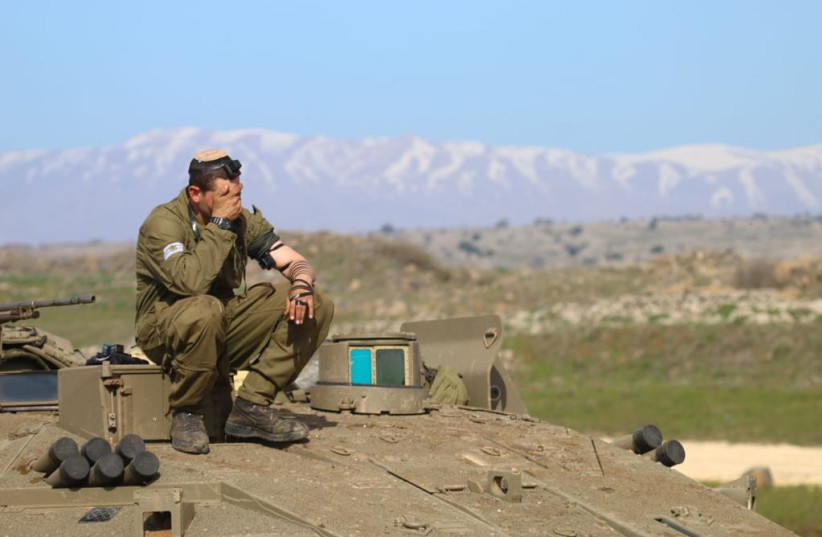
National-Religious men found extremely likely to take on reserve duty
Among National-Religious men, 31% served in the reserves, despite Israel’s National-Religious population making up 15% of Israel’s demographics – more than twice the amount relative to their population.
Across 2025, on average, 4.1% of National-Religious men served each month, compared to 2.6% of their traditional counterparts and 1.7% of secular men, and 0.3% of haredim.
This is a stark difference in comparison to the months immediately after the October 7 massacre, when 15.2% of National-religious men served in an average month, 11.2% of traditional men, and 11.2% of secular men.
Women's IDF reserves participation rate
Between 2023 and 2024, women served at considerably lower rates than men, while accounting for approximately 13.5% of all reservists, on average, in any given month. According to the analysis, this contradicts other reports suggesting women made up around 18%-22% of the reserves during this period.
Secular and traditional women were overrepresented in relation to their populations, with 2.0% of secular women and 1.6% of traditional women serving on a monthly basis in 2023-2024.
National-Religious women served at a smaller proportion in comparison to the secular population – at just 0.7%.
High-tech, business, and public sectors
The hi-tech sector had the highest percentage of workers leaving the workforce for reserve duty in 2023 at 16.5%, compared with just under 15% in business and 9.4% in the public sector.
These numbers showed a major shift by 2025, with hi-tech employees participating at the lowest rate of the three sectors at 2.3%, compared to business at 3.1% and the public sector at 2.6%.
National-Religious men living in rural areas were more likely to participate than those living in cities; however, there is little difference by locality when comparing rural and urban secular men.