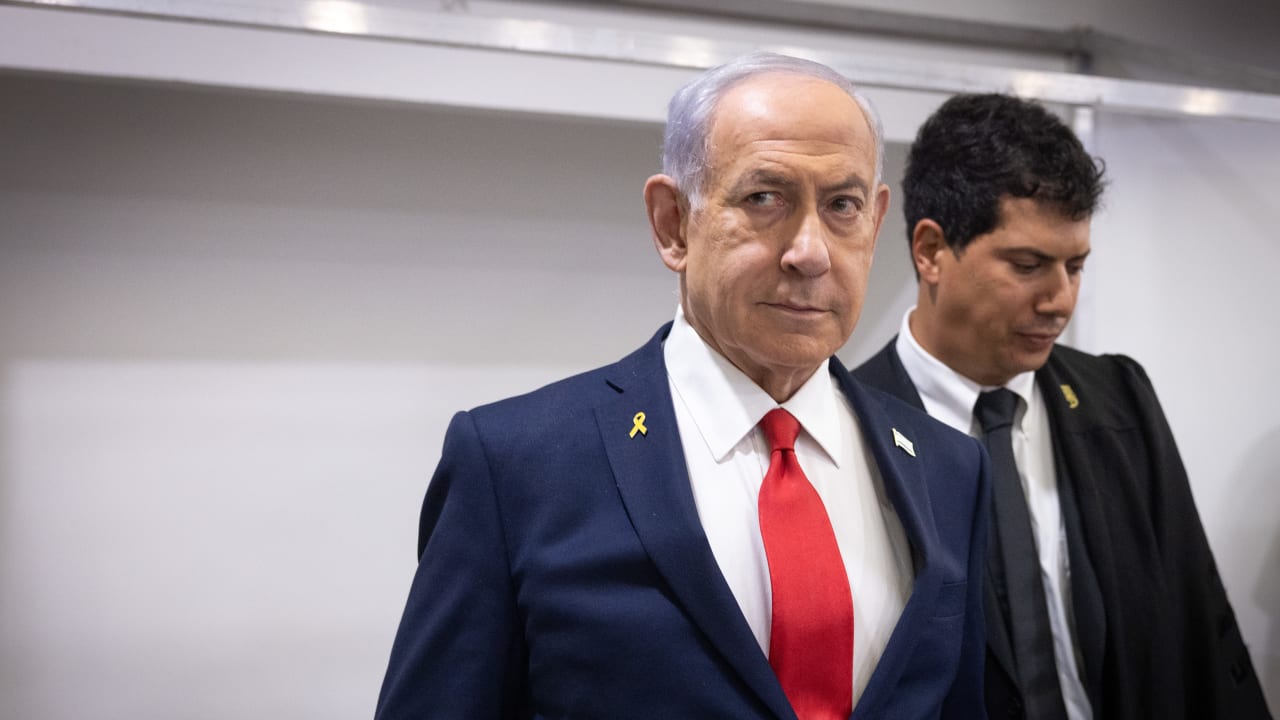
The questioning of Prime Minister Benjamin Netanyahu by prosecutor Yehudit Tirosh over his relationship with Bezeq owner Shaul Elovitch, and the alleged coordination of favorable coverage on the Walla news site, was picked up again at the Tel Aviv District Court on Monday morning.
The hearing will last only until 12 p.m., due to an “urgent diplomatic meeting” that Netanyahu warned the court about on Sunday, and the judges approved the schedule change.
The case in question is 4000, in which Netanyahu is charged with bribery for allegedly advancing regulatory benefits for Bezeq in exchange for editorial influence over Walla, specifically regarding coverage. Case 4000 joins 1000 and 2000 in the indictment against the prime minister, the trial for which began in 2020.
Tirosh pressed Netanyahu on why he personally intervened multiple times regarding coverage on the Walla news site if, as he claims, his true goal was shaping its broader editorial orientation rather than seeking isolated, favorable articles.
Netanyahu argued that while he focused on creating a more “diverse” media environment, he never refrained from routine conversations with journalists about coverage. He insisted his exchanges with Elovitch were limited and largely ineffective, saying he tried to influence the site’s direction but concluded it was pointless. To illustrate this, he emphasized that across four years, he made only 17 personal requests, which he described as “nothing.”

Netanyahu receives systemic positive coverage from Walla, prosecution claims
The exchange goes to the prosecution’s core argument: that Netanyahu sought and received systematic positive coverage from Walla in exchange for regulatory benefits to Bezeq and Elovitch. Netanyahu, in contrast, frames his interactions as sporadic, marginal, and unrelated to any quid pro quo.
Tirosh proceeded to question Netanyahu about his interactions with Israel Hayom owner Sheldon Adelson, noting an apparent contradiction: Netanyahu had acknowledged making specific requests to media figures - but then claimed he did not make “specific” requests.
Netanyahu clarified on Monday that he sometimes raised particular coverage issues with Adelson or former Israel Hayom editor Amos Regev, but insisted those were secondary to his broader goal of strengthening right-wing media. He portrayed Israel Hayom as “weak,” “pale,” and lacking influence, and said he pushed Adelson to make it more aggressive and impactful.
Tirosh suggested that Netanyahu’s real priority was aligning messaging with his political needs, not just ideological orientation. Netanyahu did not dispute this directly; instead, he framed his efforts as a push for a “functional revolution” in the right-wing media landscape - even urging Adelson to acquire smaller outlets like Channel 20 to achieve it.
What this does for the prosecution's narrative is show that Netanyahu routinely sought to shape media coverage for political benefit, reinforcing the alleged pattern regarding his relationship with Walla.