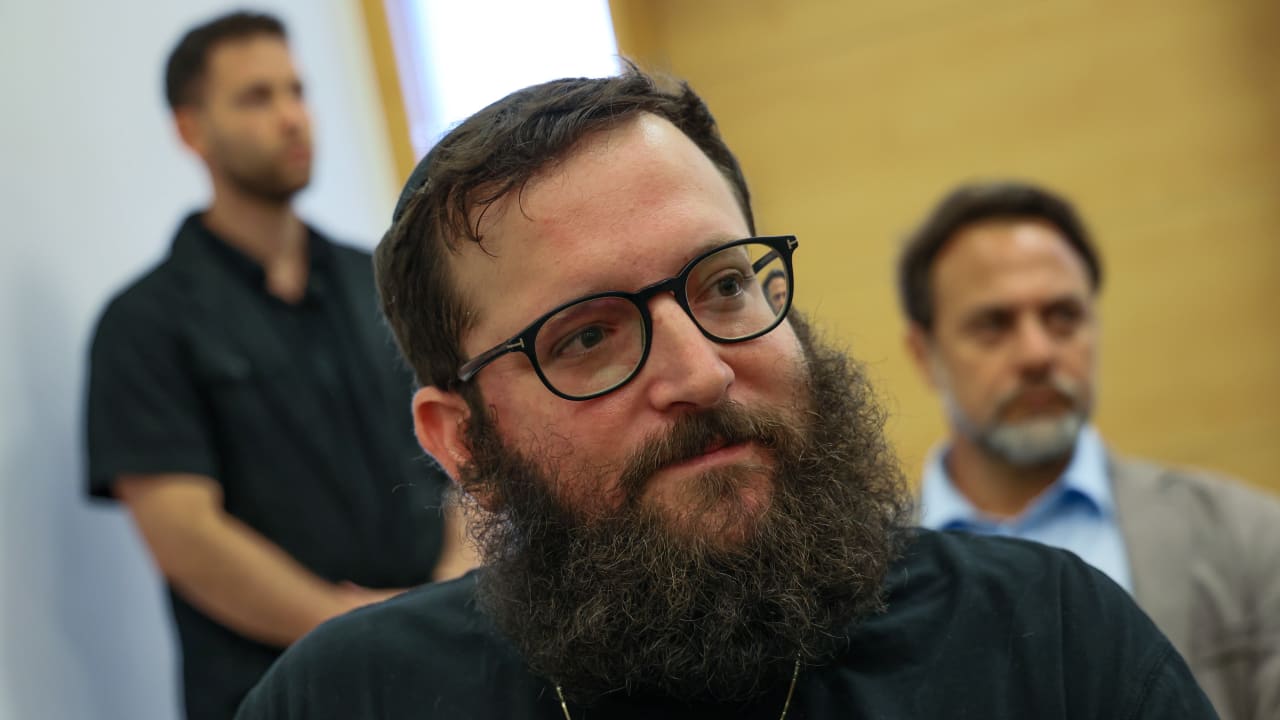
Yonatan Urich, one of the lead suspects in the investigations into Qatari influences on figures close to Prime Minister Benjamin Netanyahu, appealed through his defense attorneys to the Supreme Court on Sunday to allow him to return to his places of employment: The Prime Minister's Office and the Perception company, also connected to the investigations.
About two-and-a-half weeks ago (September 18), Lod District Court Judge Amit Michles accepted the appeal by Israel Police to keep Urich under restrictive measures - including an occupation ban - for 60 days, until early November. Urich serves as an aide to the prime minister.
The week before, Rishon Lezion Magistrate’s Court Judge Menahem Mizrahi ordered that the restrictions be lifted; police then appealed to the District Court. The other conditions levied on Urich are a contact ban on anyone connected to the case and a travel ban outside of Israel.
Urich’s team has argued that the police’s narrative is inconsistent and that the treatment by the justice system of Urich is unwarranted, while police have countered with what it said is proof of grave actions against state security. This has been the play through several rounds through the legal circuit.
Urich's lawyers, attorneys Amit Hadad and Noa Milstein, argued that the reason they appealed to the HCJ was that the case touches on fundamental issues, which have not yet been resolved in jurisprudence.

“The HCJ is being asked to fix a fundamental legal miscarriage of justice. Urich's justified right to return to his employment alongside the prime minister cannot be violated without evidence, without justification, and without legal cause,” wrote Urich's attorneys, Amit Hadad and Noa Milstein, in the Sunday appeal.
They added that the decision by the District Court - which has taken place in this format several times already - “created a faulty and dangerous precedent: Enforcing an occupation ban on a suspect - not a defendant - without any evidentiary and factual basis.”
The investigation concerns alleged Qatari influences over figures close to the prime minister, people who operated public relations campaigns for the Gulf state while working in close proximity to major Israeli decision makers.
Qatar World Cup center of scandal
Allegedly, this revolved around the 2022 World Cup, which took place in Qatar, a campaign to warm up the Israeli public to a state that has sponsored the terrorist group - Hamas - which has sworn to destroy the Jewish State.
Per reports, streams of funds through third parties made this possible, but stakes in the operations rose when Hamas launched the October 7 cross-border massacre attack, the war broke out in Gaza, and Qatar became one of the main negotiators for ceasefire talks.
Urich and former PMO military spokesman Eli Feldstein were arrested in March in connection with two related cases: “Qatargate” and “Bild.”
Investigations against Feldstein by the police and the Israel Security Agency, Shin Bet, were initiated in November 2024. In the “Bild” case, Urich allegedly orchestrated - while Feldstein executed - the illegal leaking of a classified document from the IDF reflecting Hamas's impressions of the successes of its efforts to influence the Israeli public opinion, specifically regarding hostage talks.
Feldstein allegedly leaked the document to the German tabloid Bild, after permission for its publication was denied by the military censor.
The documents were eventually published, allegedly to sway public opinion on the hostage negotiations. This was around August 2024, when six hostages were killed by their Hamas captors in a tunnel in Rafah: Hersh Goldberg-Polin, Almog Sarusi, Eden Yerushalmi, Ori Danino, Carmel Gat, and Alex Lobanov.