
The school year ending this month was one of the saddest that Israeli children have known. Aside from
September and the new year holidays, it stood entirely in the shadow of war. Students experienced tension and
anxiety, activities were canceled, long-awaited trips postponed, and tens of thousands were exposed to the
loss and injury of friends and relatives.
Those who bore the heaviest burden were the children living in the North and around Gaza. For them, anxiety
wasn’t an abstract issue but a physical and daily reality–whether it’s the residents of Gaza border
communities, who returned to their communities but suffer from relentless alarms and rocket attacks, or near
20,000 children from the North who are still not back in their homes.
The response provided by the government to the displaced over the past year was far from perfect. Children
were uprooted from their routines, cramped in small hotel rooms for months, suffered from a lack of
educational infrastructure, enrichment activities, and psychological support. Fortunately, local authorities
showed exceptional leadership and, together with civil society organizations, filled the void left by the
government, accompanying the displaced wherever they found refuge.
Hundreds of educators and welfare workers rushed to Eilat and the Dead Sea, to Tiberias and Tel Aviv, to
assist. With their help, we managed to reach the end of this school year. But temporary solutions have worn
thin, and now a systemic response is required, especially for the residents of the North.
Even now, in the eighth month of the conflict, the country lacks a coherent plan and answers for the displaced
from the North. The Ministry of Education announced it is preparing for the opening of the school year as
usual, but the data revealed that the public has completely lost trust in leadership, and the figures speak
volumes: in Kiryat Shmona, only a third of students registered for high school, and for kindergartens,
slightly more than half. In Metulla, only a quarter of elementary and kindergarten students are registered.
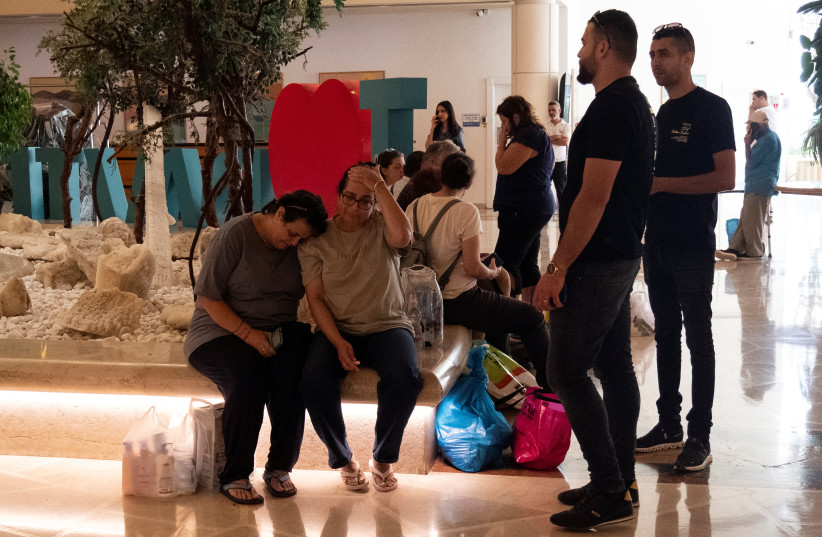
These are staggering numbers. Public discourse focuses on pressure on parents and the abandonment of entire
regions, but I want to focus on the children themselves. There are communities whose residents have scattered
across the country – from Eilat to Tiberias. This is the situation for the residents of Kiryat Shmona, for
example.
There are families that moved from temporary accommodation sites – like hotels – to permanent
apartments in other settlements. The children had to repeatedly adapt to a new environment, to different
classmates, different teachers, and different academic levels.
AT THE Yeladenu resilience centers we operated in Eilat and the Dead Sea, we encountered children who withdrew
into themselves, disconnected from their hobbies and interests, showed signs of tension, anger, or depression.
No one can give these children back the year they lost, and many of them will experience a sad and difficult
summer break. Now, imagine the impact on a girl or boy who has gone through all this and still doesn’t know
where they will study next year, and with whom.
The State of Israel cannot continue to leave the residents of the North – especially the children of the North
– in limbo. Government ministries broadcast ambiguity and conflicting messages, driven by political
considerations and a lack of leadership.
Local authorities are asked to prepare for every possible situation.
Parents are told they must enroll their children in their original schools, but there’s no set date for
return, and no one is willing to commit to it.
20,000 children stuck between the cracks
There are 20,000 children who are caught in this limbo: kindergarten students who were supposed to be excited
about moving up to first grade, elementary school students who are lagging behind in reading, writing, and
math – some of them still from the time of the pandemic. Middle and high school students, whose sensitivity to
social matters is now higher than ever before in their lives. Do we really understand what it means for a 14
or 13-year-old to disconnect from their close friends, especially during such a period of dramatic tension and
anxiety?
We met in the resilience center we opened in Tiberias children to fulfill the need for certainty. They need to
know where and with whom the school year will open for them. This is the minimum of leadership required from
the Ministry of Education and the entire government right now, even if declarations of this kind may carry a
political price – whether it’s a promise to return to the original communities or an acknowledgment that there
is no chance of it happening. Without a solution, the price paid by thousands of children will be much higher.
The writer is an Israeli social entrepreneur, founder of the Zionism 2000 and Sheatufim associations, and
leader of the Resilience for Our Children initiative.