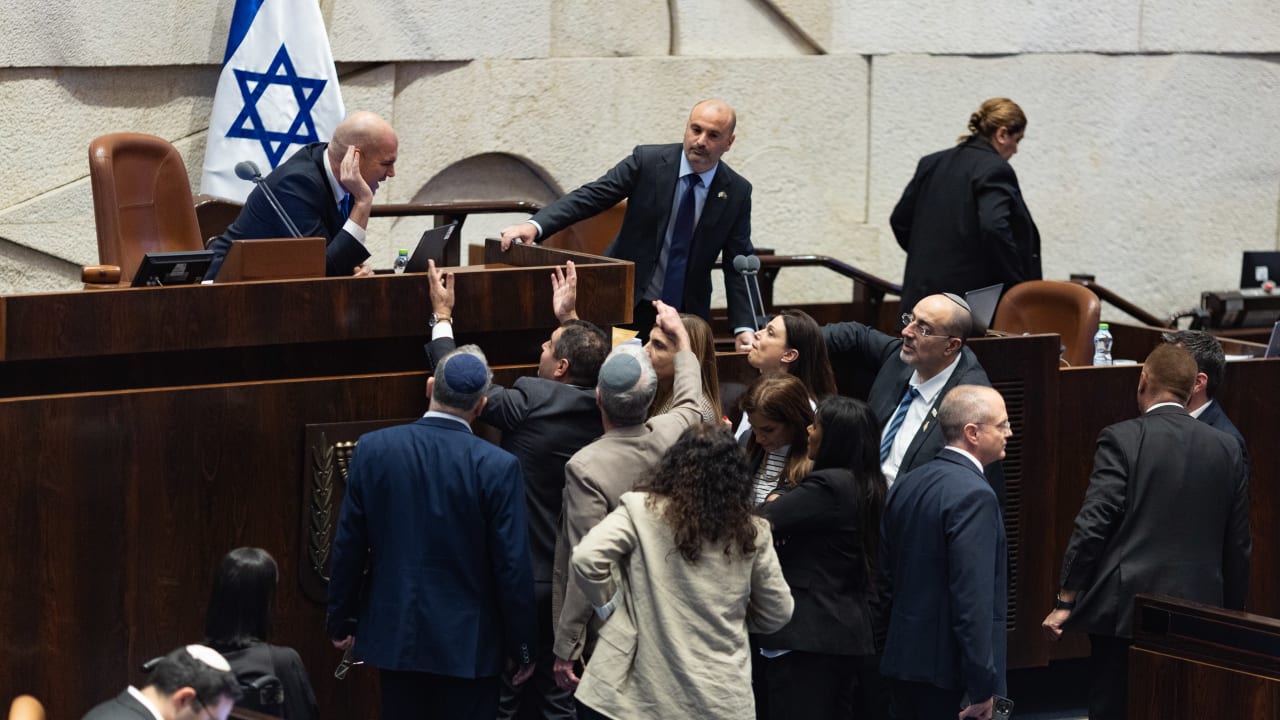
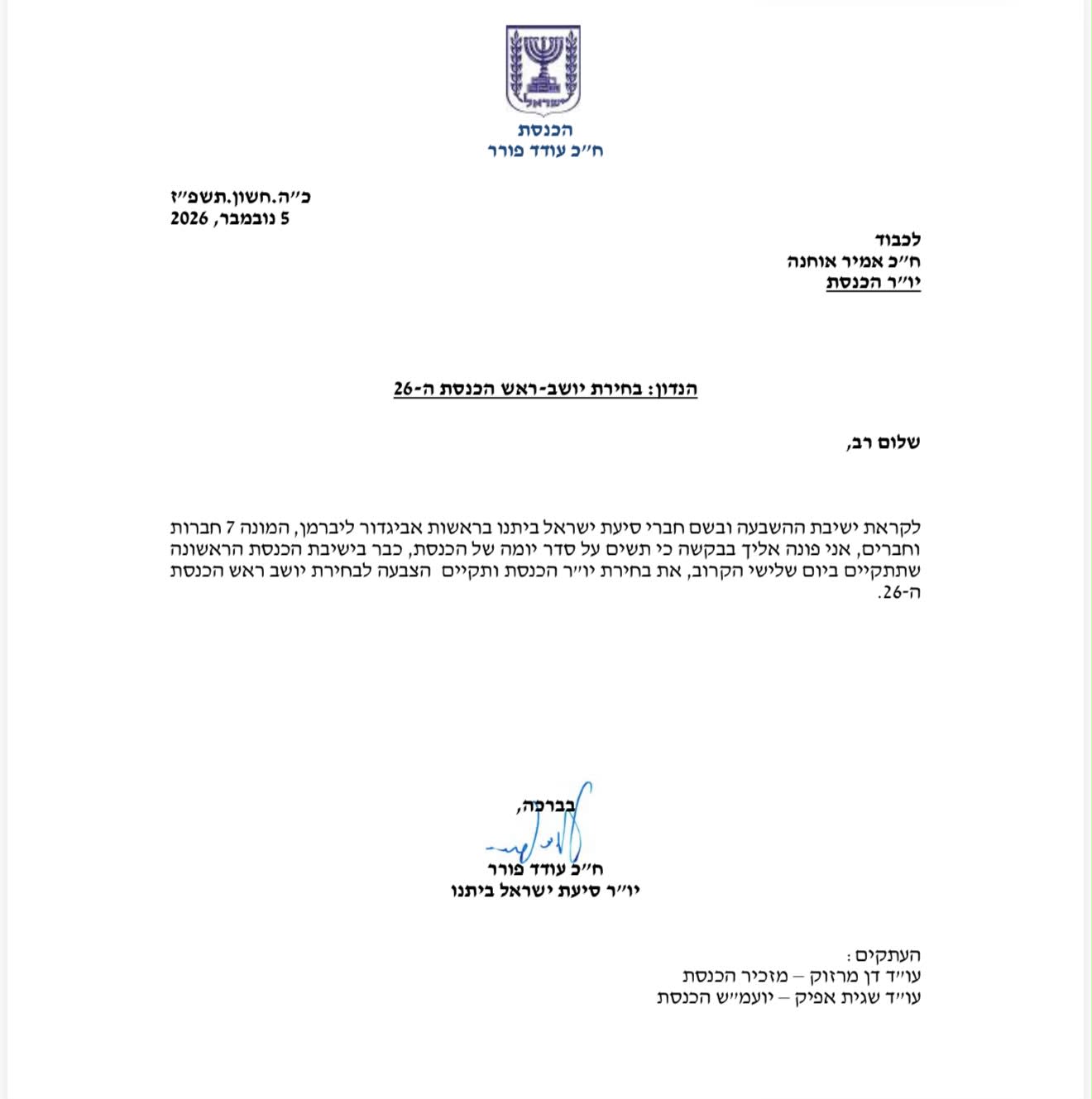
Opposition parties in the bloc seeking to replace Prime Minister Benjamin Netanyahu on Thursday called on Knesset Speaker Amir Ohana to hold a debate and vote on electing a new speaker as early as Tuesday, when the newly elected Knesset is set to be sworn in.
The inaugural ceremony for the 26th Knesset is set to take place on Tuesday, regardless of whether a coalition government has been formed amid the political deadlock between the two blocs.
Replacing Ohana, a member of Netanyahu's Likud, would give the opposition bloc greater control over the parliamentary agenda, including votes, legislation, and committee appointments, even if Netanyahu remains in office as head of a caretaker government.
Both the Democrats and Yisrael Beytenu had sent separate letters demanding that the Knesset speaker be replaced already on Tuesday next week. Later, the Arab-led Joint List party also stated that it would request to convene an urgent session to replace the Knesset speaker.
In a response posted on X/Twitter, Ohana said that the date for the election of the new Knesset speaker would only be set when the new government is formed, unless a majority of Knesset members sign a letter requesting that it be scheduled earlier.
"There will be no clinging to the altar," Ohana wrote. "You can stop promoting conspiracy theories in the media."
Opposition fears Netanyahu bloc planning Israel's own 'January 6'
To replace the speaker of the Knesset, at least 61 MKs must formally sign a request or vote in favor of electing a new speaker.
At the same time, sources within the bloc claimed to have received information about an alleged Likud plan to disrupt the vote, including physically preventing MKs from entering the plenum.
According to the sources, hundreds of Likud Central Committee members are expected to arrive at the Knesset on the day of the vote and attempt to block lawmakers from entering the chamber.
The information also suggests that widespread disruptions are being planned during the debate itself, with the aim of forcing Ohana to suspend the session and close the plenum, thereby preventing a vote on his replacement.
The opposition bloc has warned of this possibility but insists that it intends to proceed with replacing the Knesset speaker even if attempts are made to disrupt the vote.
However, it is important to emphasize that these allegations are based on information that sources within the bloc claim to have received. The alleged plan has not been independently verified or confirmed by Likud.

Opposition split on candidate for Knesset speaker
Meanwhile, alongside its confrontation with Likud, the opposition bloc is still struggling to agree on a candidate to replace Ohana. Party leaders concluded their latest meeting without reaching a consensus and set next Monday as the deadline for a decision.
At the center of the dispute are Yashar chairman Gadi Eisenkot and Yesh Atid chairman Yair Lapid. Yisrael Beytenu chairman Avigdor Liberman supports appointing Lapid to the position, while Eisenkot wants to become Knesset speaker himself.
One concern raised during the negotiations is that the position could be given to a representative of a party that might later join a government led by Netanyahu. As a result, the identity of the next Knesset speaker could have political implications extending well beyond the management of parliamentary proceedings.
Sources familiar with the discussions say Eisenkot wants to secure the position immediately, giving him a significant position of influence during coalition negotiations. Under one proposal being considered, Eisenkot would resign as Knesset speaker if he succeeds in forming a government and becoming prime minister. If he fails, he could remain in the position and retain influence over the parliamentary agenda.
For now, the parties have not reached an agreement, and the decision on their candidate has been postponed pending further negotiations.
Despite the disagreement, the opposition bloc intends to seek the first mandate to form a government from President Isaac Herzog while simultaneously moving forward with efforts to replace the Knesset speaker.
Eisenkot said on Tuesday that the opposition bloc would act quickly to form “a national emergency government” and carry out parliamentary measures, including repealing laws that “threaten democracy,” following the swearing-in of the new Knesset.
The Yashar party leader added that Netanyahu lacked a majority and was “a caretaker prime minister with the support of only 46 members of Knesset.”
Jerusalem Post Staff contributed to this report.