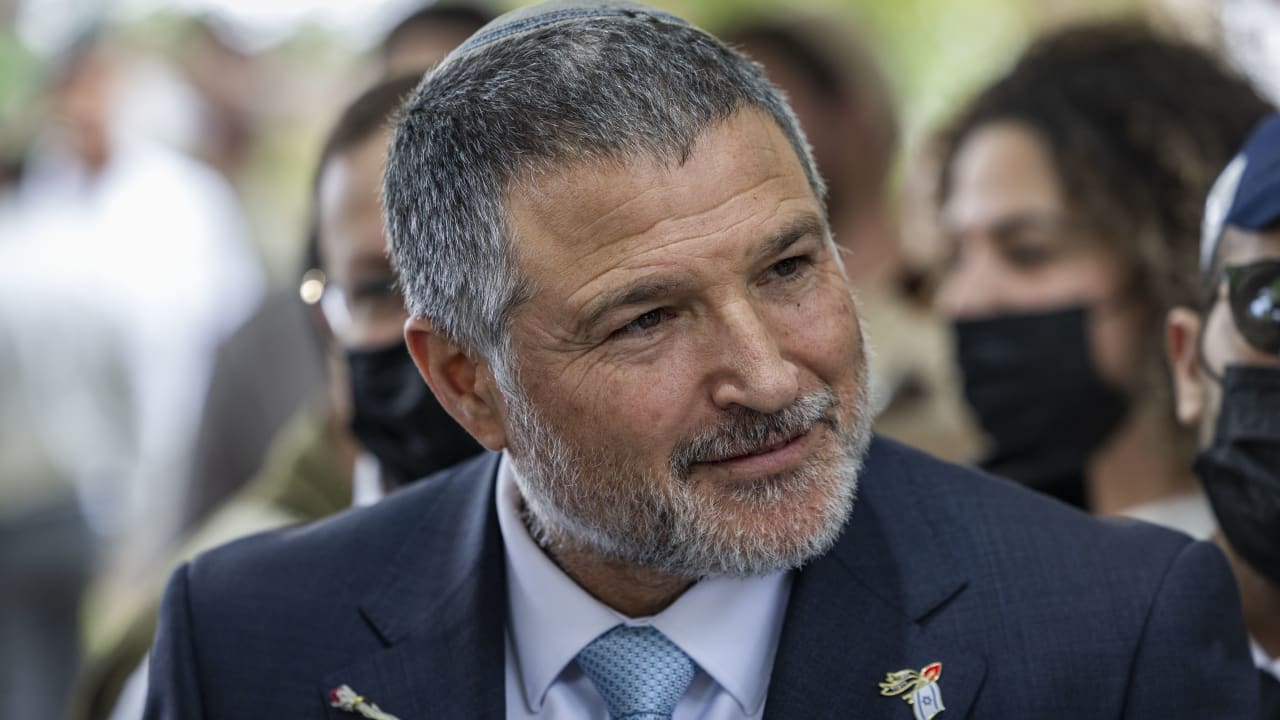
The Central Elections Committee's (CEC) presidium and plenary ratified the results of Israel's Knesset elections on Wednesday, despite an ongoing public dispute between Attorney-General Gali Baharav-Miara and Shin Bet chief David Zini over an investigation into alleged foreign interference in the October 27 vote.
The dispute centers on Zini's reported request to interrogate lawmakers from Arab parties as part of a probe into allegations that the parties received foreign funding to boost voter turnout in the Arab sector.
In a statement on Tuesday, the Attorney-General's Office said the Shin Bet had "failed to transfer the collected investigative materials to the special investigative team" in recent days, "thereby effectively delaying the handling of the matter."
The office also stressed that "it is not permissible to interrogate citizens or elected officials without evidence to justify such action." Zini reportedly sought to question Ra'am chairman Mansour Abbas, Ta'al chairman Ahmad Tibi, and Balad chairman Sami Abu Shehadeh as suspects under caution.
On Wednesday, a Joint List spokesperson confirmed to The Jerusalem Post that former Joint List leader Ayman Odeh is also among the Knesset members suspected of receiving hundreds of thousands of shekels in foreign funding.
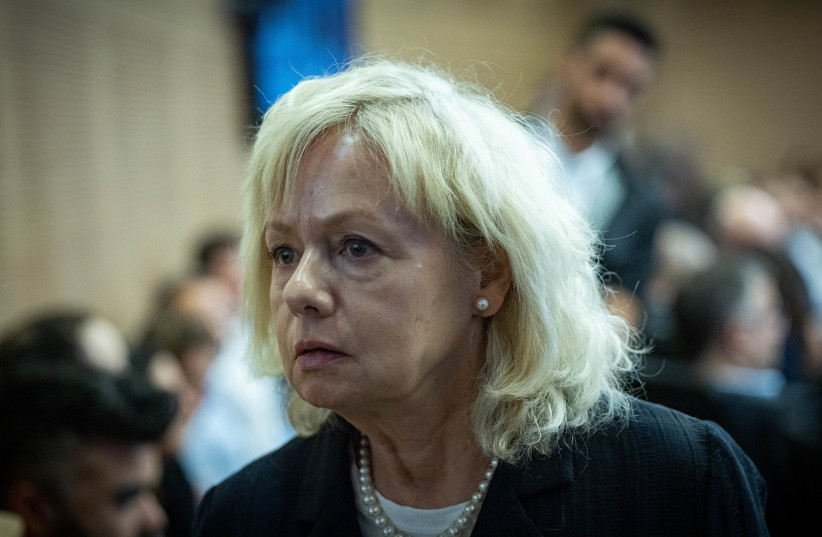
All four have accused Zini of launching a "politicized investigation," while Prime Minister Benjamin Netanyahu and his Likud faction accused Baharav-Miara of attempting to "cover up and thwart the investigation."
Zini is not attempting to challenge the election results, as he has made clear twice in a public fashion, the Post understands.
The Shin Bet chief would not deny that there were disagreements between him and the A-G, as well as between him and senior Shin Bet officials, regarding how to probe the allegations of election interference, the Post also understands.
However, Zini would say that those disagreements are a sign of a healthy democracy more broadly and of open debate within his agency. While these disagreements have been portrayed as Zini trying to assist Netanyahu's efforts to challenge the election results, the Shin Bet chief would say they were simply his professional opinions about how to handle the case.
Zini has not publicly explained why he thought it was necessary to probe top Arab Israeli Knesset officials, regarding the issue as still classified. He also would not be able to explain why the A-G shot down his request in such a strong and public fashion, though he does understand that the political environment is challenging for all officials involved.
Zini would say that at every stage of the situation he first spoke to the A-G or CEC chairman Justice Noam Sohlberg, and only later spoke to Netanyahu, despite allegations that he has coordinated some moves with Netanyahu.
Ben-Gvir calls for Zini to bypass A-G, arrest Arab MKs
Some Netanyahu colleagues have attacked Zini for disloyalty, while top officials from Yashar head Gadi Eisenkot's bloc have slammed him for interference.
The Post cannot independently evaluate the various contradictory narratives, though there is no question that the public way all of this has played out has harmed Zini's public standing.
Earlier on Wednesday, representatives of Likud and Shas abstained from the five-member presidium vote to approve the election results, while representatives of Yesh Atid and Blue and White voted in favor. The results were subsequently approved by the CEC's full plenary, with 15 members voting in favor, two opposing, and 14 abstaining, most of them from parties in the Netanyahu bloc.
The committee said its review had found no irregularities or findings indicating that election integrity had been compromised or that the results would change. It said corrections had been made where necessary, based on voting records and materials.
The official results saw Netanyahu’s coalition parties win 53 seats, the opposition bloc holding 48, and the Arab parties with a record 19. Neither of the two competing blocs secured the 61 seats needed for a Knesset majority.
Zini working as 'Netanyahu's instrument,' Segalovitz accuses
Later that day, President Isaac Herzog received the results from Sohlberg, prior to the beginning of consultations with party representatives on whom they recommend to form the next government.
Herzog said regarding the investigation that "patience is needed" and that the investigation will be carried out "professionally, in cooperation among all the bodies on the special investigative team, and I trust these processes."
"Tension between the Shin Bet and the legal system has existed in Israel before, and it will exist again. It is a tension built into a democratic state," he added. Herzog also warned that Arab society in Israel "must not be smeared."
"Beware of generalizations. I hold Arab society in Israel in great respect. I value its contribution to the country in every area of life, and its desire to integrate. This is something to be welcomed."
"I condemn the coarseness and racist expressions that we have heard recently. There is no place for them toward any community in Israel," Herzog added.
After presenting Herzog with the results, Sohlberg said that in recent days, there have been voices seeking to cast doubt on the election results and that this poses a "real danger" to democracy.
“We presented the suspicions to the Central Elections Committee. At this stage, they remain suspicions only. These suspicions in no way cast doubt on the voting of Arab society. A high voter turnout is a welcome thing," Sohlberg added.
Ben-Gvir calls on Zini to arrest Arab party leaders
Sohlberg's comments came amid an attempt by the Likud to challenge the legitimacy of the results, demanding a "swift and thorough investigation in order to preserve the integrity of the Knesset elections and the sovereignty of the people."
Israel's ruling party added that, "until the investigation is concluded, a dark cloud hangs over the election results in Israel."
National Security Minister Itamar Ben-Gvir further called on Zini to arrest and interrogate Arab party leaders, even without permission from Baharav-Miara, "until the suspicions have been fully investigated."
He also called for the ratification of election results and formation of a new government to be halted immediately.
"Elections were stolen here in the State of Israel," he said. "We must not stay silent about this, and we must not leave even a single stone unturned on the way to exposing the truth."
Meanwhile, the oppostion bloc seeking to oust Netanyahu has encouraged a full and thorough investigation to be conducted.
Last week, Sohlberg instructed the Shin Bet director to investigate suspicions of improper foreign funding and election bribery by foreign actors. Sohlberg stressed that he could not assess the merits of the suspicions and asked the agency to obtain evidence to substantiate or refute them.
The Shin Bet on Wednesday presented intelligence indicating the alleged transfer of large sums of money into Israel from foreign entities aimed at influencing the elections.
According to the Shin Bet, the alleged funding is a widespread phenomenon that may have affected thousands of people, if not more, adding that additional intelligence gathering and investigative efforts are required to determine the full scope of the phenomenon.
Tal Spungin contributed to this report.