
As Israelis head to the polls, Diaspora Jews are watching with a stake in an election they cannot vote in, fearing its consequences will follow them home.
From Norway to Mexico to the US, Diaspora Jews told The Jerusalem Post they are “terrified” that the outcome could deepen the conflation of Israel’s government with Jews worldwide, leaving them to bear the fallout of decisions they did not make.
Robert Hercz, the head of B'nai B'rith Norway, told the Post that he has been closely following the elections and is "terrified: not only for the future of Israel, but also for how the election will affect Jewry worldwide."
"The world - and especially the European countries - are disproportionately occupied with Israeli politics - and much of what we get served in the media is oversimplified and polarized. And governments and politicians need to fodder their Israel-bashing voter bases."
This means that if Netanyahu wins, Hercz continued, "the politicians and the media in our parts of the world will go crazy, which in turn will have extremely negative consequences for us Jews living outside Israel."
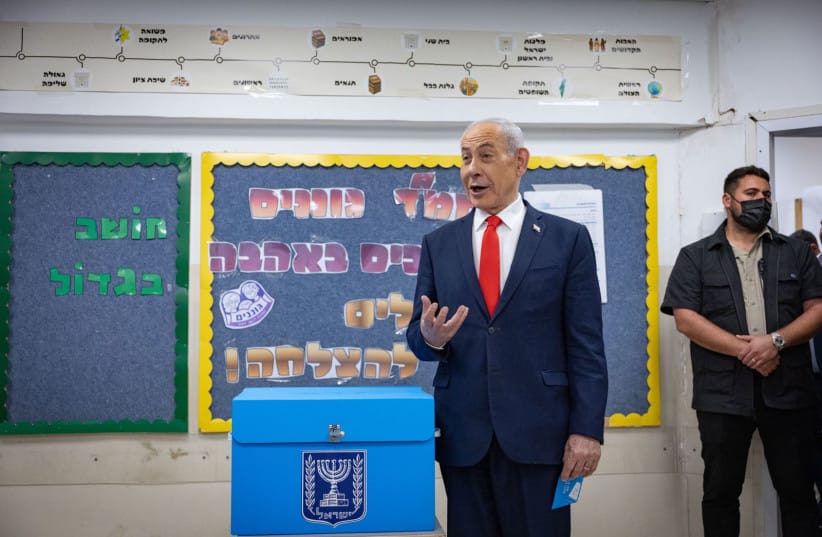
Israel-Norway relations will not improve while Netanyahu in office
Regarding Norway, Hercz opined that Israel-Norway relations will not improve as long as Netanyahu is in office.
"Not necessarily because of the politics in Israel, but because the Norwegian government and institutions are so over-invested in anti-Netanyahu rhetoric that they will not be able to move over to a different relationship and policy until Netanyahu is no longer in office," he added.
Mark Freedman has spent 43 years working as a Jewish communal professional. He has also served as North American board chair of the Pardes Institute of Jewish Studies, and chairs the board of Amiti, a US-based nonprofit that works primarily in Israel to help CEOs of Israeli NGOs.
He told the Post that "The sands have shifted beneath our feet."
"In the past, lay leadership primarily took a neutral role in how it viewed the Israeli government and the elections that created that government."
"I think the main change now is the emergence of an old form of antisemitism that has renewed itself, the one that deems Jews in North America to somehow have collective responsibility for the actions of the Israeli government."
"So that naturally makes one feel that [Diaspora Jews] have more of a stake in the outcome of the elections."
He gave examples of how Israeli domestic politics filters are felt in the diaspora.
"A lot of it plays out in local elections, where you see discussions about Israel that you've never seen before. Local municipalities are now adopting resolutions that are criticizing Israel as racist and genocidal. That would have been unheard of 15, 20 years ago."
"So naturally this filters down to the local level."
Freedman does believe that the outcome of the elections could have an impact on global antisemitism, and that a new government could lead to an "incremental shift" in a positive direction.
"If there's a government in Israel that is willing to align itself with what we view as traditional values in terms of law enforcement, in terms equal participation in society, that would have an impact certainly on American views."
He added that, on a personal level, "it's really heartbreaking," to see the divisions and issues inside Israel.
"There is so much positive about Israel, as a Jewish state and beyond that as a democratic state, and that's at risk right now," Freedman told the Post.
"I think that people in the United States who follow Israeli politics and who care about Israel as a Jewish homeland are just deeply concerned. So tomorrow's election will have a great deal of impact on the way that the that perception will be formed going forward."
Netanyahu's international image is 'permanent flashpoint'
Arielle Shturman Waiss is a physician from Mexico City and the founder of ConCiencia Project, a science-based sexual and reproductive health education initiative. She leads health programming in the humanitarian aid sector and is active in Jewish communal life in Mexico and the international Jewish world.
She told the Post that Netanyahu's international image is a "permanent flashpoint" and that "regardless of context, he ends up embodying everything perceived as wrong with Israeli political leadership."
This perception, by immediate extension, attaches to Jews in the diaspora, Shturman Waiss added, "because the ability to distinguish between what is Israeli, what is Jewish, and what is legitimate criticism of a government keeps eroding in public debate."
"For those of us living in the diaspora, the problem is more specific: his electoral victory imposes a presumption of consensus on us. It is assumed that we endorse his actions and his radical style of leadership, and that we do so by choice. Because he reached power through a democratic process, that presumption becomes nearly impossible to dismantle any nuance we try to introduce reads as an excuse."
"But a citizenry's vote of a complex parliamentary structure is not a mandate over the identity of an entire people," she stressed.
Israel events affect Diaspora Jews more since October 7
"Whatever happens in Israel reaches us in Jewish communities worldwide," Venezuelan national and founder of Tikun Talks, Deborah Apeloig, told the Post.
"That has always been true, but since October 8, 2023, we have seen it and felt it with a different intensity."
Apeloig spoke of October 8 deliberately, as she says this day marked the moment the narrative "began shifting against Israel, even as we were still trying to comprehend the massacre."
She added that, as a Venezuelan Jew working across Latin America, she has felt "how quickly events in Israel become judgments about Jews everywhere."
"Too often, the Israel presented to the world is reduced to black and white. Its complexity, humanity and diversity disappear behind headlines, political statements and social media narratives better known as 'TikTok University.' Through Tikun Talks, I work to reach beyond our echo chamber, build bridges and repair the world, one conversation at a time."
Apeloig told the Post she has received hundreds of thousands of meaningful messages from non-Jewish people whose perspectives have shifted, alongside comments "demonizing Netanyahu or using inflammatory statements by Ben-Gvir and Smotrich to condemn an entire country and Jews collectively."
Echoing the words of Shturman Waiss, she said it can feel like we take one step forward in building bridges, and a "radical politician’s words send us ten steps backward."
"Those politicians are responsible for their words; the people spreading antisemitism are responsible for theirs. But we in the Diaspora live with the consequences of both."
Because of this, she said the elections are of great importance to her, even though she cannot vote.
"The decisions belong to Israeli citizens, but their impact reaches far beyond Israel’s borders."
"I’m hopeful as I watch Israeli democracy unfold, and I hope the outcome brings leadership that strengthens Israel, helps heal its divisions and builds a brighter future for the Jewish people worldwide," she concluded.