
According to assessments by officers in the IDF Central Command, Israeli forces will withdraw from Hebron after the elections because the operation has run its course and is generating tensions that serve as "fuel" for incitement and copycat terrorist attacks.
The officers explained that military activity over the past 24 hours has been pointless and is undermining the legitimacy of IDF operations in the area, particularly given the failure to locate weapons or terrorists in the neighborhood.
As previously reported, Walla revealed on Monday that a disagreement had emerged between IDF Chief of Staff Lt.-Gen. Eyal Zamir, Central Command chief Maj.-Gen. Avi Bluth, and 98th Division commander Brig.-Gen. Meni Liberty on one side, and Prime Minister Benjamin Netanyahu and Defense Minister Israel Katz on the other, over whether to continue the operation in Hebron.
As part of the operation, IDF forces evacuated hundreds of Palestinian families from the neighborhood where the terrorists responsible for Friday's deadly attack at a temporary IDF checkpoint in Hebron had originated.
In addition, IDF forces took control of buildings and searched hundreds of structures but failed to locate weapons, military equipment, ammunition, explosives laboratories, or weapons manufacturing facilities.
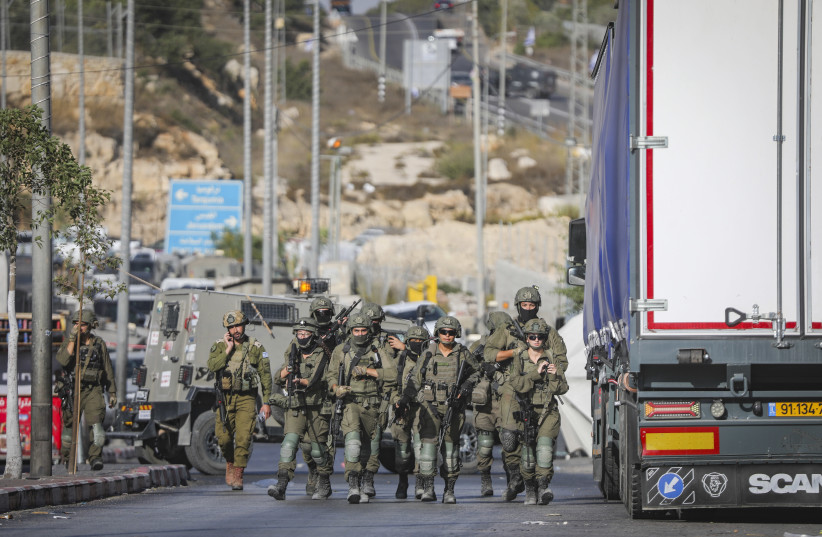
Senior IDF officials call for withdrawal from Hebron
Consequently, senior IDF officials insisted on withdrawing from the neighborhood, arguing that the operation had achieved all it could. However, the prime minister and defense minister insisted that IDF forces remain in place.
Security officials explained on Tuesday morning that Operation "Roar of Judah" in Hebron represents "the difference between strategic security thinking and routine security thinking, even when the latter is carried out professionally and effectively by the IDF."
The officials said a similar dispute had arisen before the takeover of the refugee camps in Jenin, Tulkarm, and Nur Shams, between Defense Minister Israel Katz, representing the political leadership, and senior IDF commanders.
Ultimately, the various operations went ahead, involving the evacuation of Palestinian residents, the takeover of the camps, the elimination of terrorists and seizure of weapons, extensive destruction of physical infrastructure, including homes, and the widening of roads through narrow streets.
Security officials say IDF presence prevents PA from gaining foothold
Security officials further argued in favor of the continued IDF presence in the camps, preventing residents from returning, and denying the Palestinian Authority a foothold in the camps, maintaining that the PA is neither willing nor capable of combating Palestinian terrorism.
The investigation has also revealed that a substantial Hamas network operating in Hebron was uncovered during the operation and is run by local operatives. Authorities are also examining whether the network received instructions from abroad, including from Hamas operatives in Turkey.
According to security officials, the decision to evacuate residents from hundreds of buildings is unprecedented. However, they argued that the small quantity of weapons discovered so far indicates that the operation has not yet exhausted its potential.