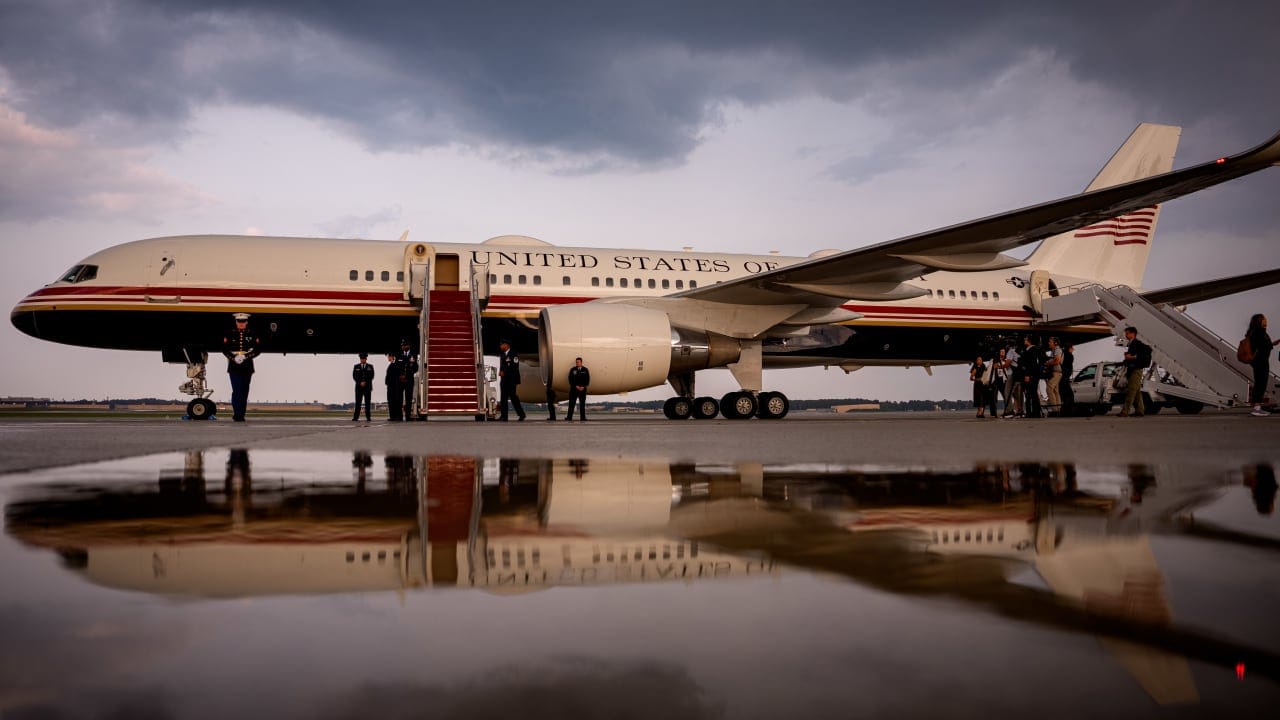
The White House took extraordinary security precautions on Thursday during US President Donald Trump's return flight from China, ordering journalists aboard Air Force One to surrender phones used during the visit over concerns about cyberespionage.
Journalists accompanying the president were asked to place the phones they had used in China in special bags designed to block communication signals until the plane landed in the United States. The unusual directive initially sparked speculation that Air Force One might change its route and make an unscheduled stop.
However, according to an explanation provided by CBS White House correspondent Jennifer Jacobs, who was aboard the plane, the measure was prompted by concerns about cybersecurity risks and possible espionage through electronic devices used in China.
Jacobs reported that after the plane took off from Shenzhen, a member of the Air Force One crew collected spare phones used by White House staff during the visit. The devices were collected to be destroyed or have their stored data erased as part of the security precautions taken following the visit to China.
Journalists accompanying the president were also instructed to place phones they had used during the visit in Faraday bags, which are designed to block wireless communication signals. They were told they could retrieve their devices after landing on US soil.

How journalists sought to protect their devices from espionage in China
The directive, however, did not apply to every electronic device aboard the plane. According to the report, devices that journalists had left in protective bags aboard Air Force One before arriving in China were not collected.
Many journalists and photographers, though not all, chose to leave their personal phones, work devices, laptops, and smartwatches in the special bags throughout the visit. The precaution was intended to reduce the risk of spyware being installed, surveillance, or information being collected through their devices while they were in China.
As a result, journalists who had brought spare phones for use during the visit were able to resume using their regular devices during the return flight to the United States.
By contrast, those who had used their regular devices in China without bringing spare phones were left without access to a mobile phone during the flight.
Jacobs' explanation suggests that the collection of electronic devices was intended to reduce information security risks following the visit to China, rather than necessarily indicating a change in the president's flight plans.
However, the report did not specify whether any changes had been made to Air Force One's planned route.