On November 29, 1947, as representatives of the United Nations gathered to vote on the partition of Mandatory Palestine, one of the most enthusiastic advocates for the establishment of a Jewish state was a diplomat from a small Central American country.
Jorge García Granados, Guatemala’s representative to the United Nations and a member of the United Nations Special Committee on Palestine, had become convinced of the necessity of Jewish statehood during his time investigating the situation in Palestine.
His experiences, which he would later document in his 1948 book, The Birth of Israel: The Drama as I Saw It, made him one of the most committed supporters of the Zionist cause among the international diplomatic community.
Guatemala was among the 33 countries that voted in favor of partition, and García Granados would subsequently become his country’s first ambassador to Israel, presenting his credentials in Jerusalem in 1955.
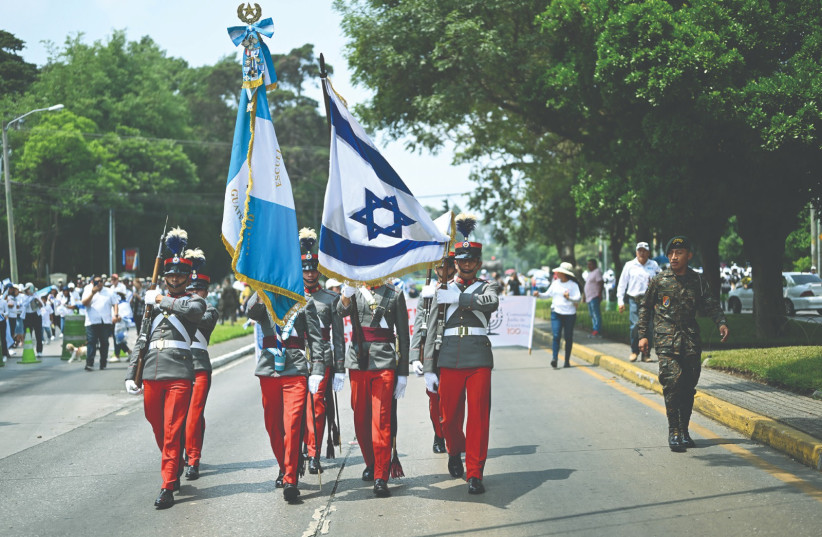
Nearly eight decades later, the relationship between the two countries remains remarkably strong. In 2018, under then-president Jimmy Morales, Guatemala became the first country to follow the United States in relocating its embassy to Jerusalem, returning its diplomatic mission to the Israeli capital.
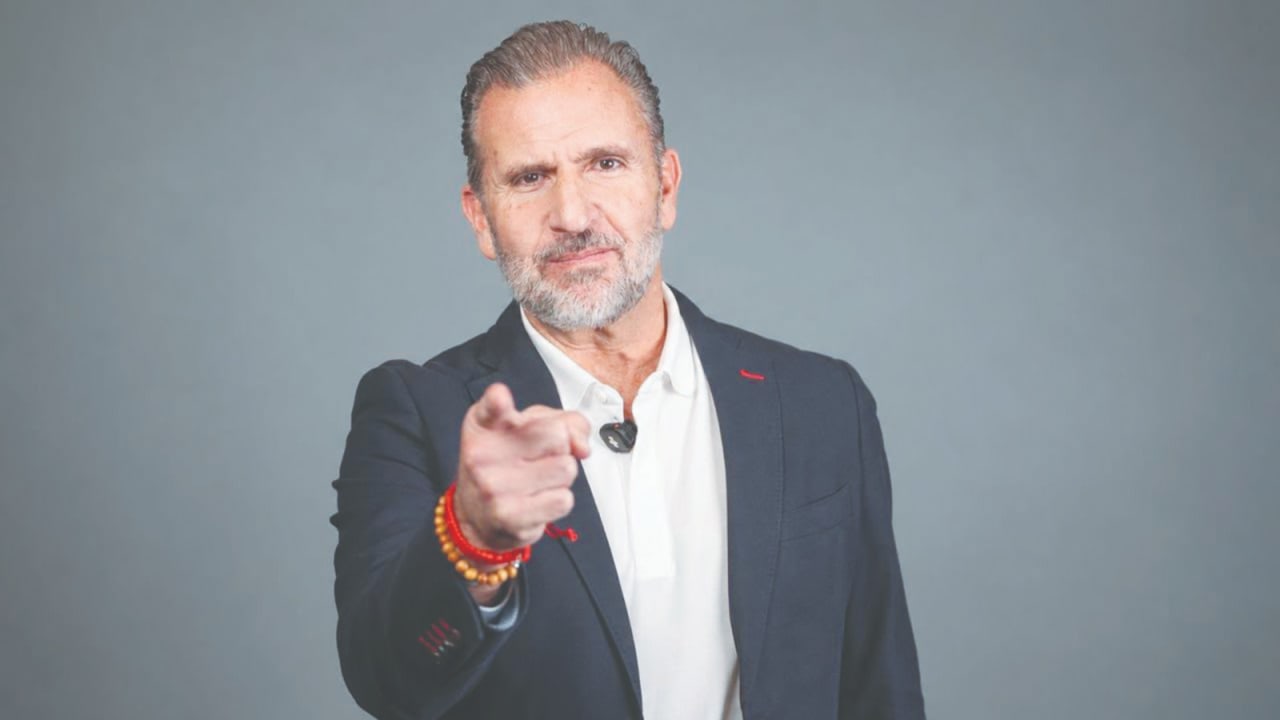
Now, García Granados’s great-grandson, Roberto Arzú García-Granados, is hoping to become the next president of Guatemala, and Israel occupies a considerable place in his plans for the country’s future.
The son of former Guatemalan president Álvaro Arzú, the businessman and presidential hopeful has twice sought the presidency, finishing fifth in the 2019 election before being controversially disqualified from participating in the 2023 contest.
Ahead of the 2027 presidential election, Arzú spoke to The Jerusalem Post about his family’s extraordinary relationship with Israel, his ambitions to enlist Israeli expertise in Guatemala’s fight against organized crime, and his belief that his country has the potential to become one of Latin America’s great economic success stories.
“We have always said that Guatemala should be the Israel of Latin America and the Singapore of Latin America,” Arzú told the Post. “There is no reason that we should not be like those two countries.”
A family affair
For Arzú, the relationship with Israel has been a constant throughout his life. His great-grandfather’s diplomatic achievements are a source of considerable family pride, although the connections between subsequent generations of his family and the Jewish state have extended well beyond the diplomatic sphere.
“We have a lot of pride in what my great-grandfather did, not only for the State of Israel and the Jewish people but also for Guatemala,” he said, recalling García Granados’s efforts to persuade other countries to support partition.
“My great-grandfather always fought for the correct things. He was a very committed person.”
Although García Granados had witnessed the events of the Holocaust from afar, Arzú explained, his great-grandfather understood the importance of providing the Jewish people with a country of its own and was prepared to dedicate himself to achieving that objective.
“He was a revolutionary in a way,” Arzú said. “He was a person who fought for the people who were in more need.”
Several members of Arzú’s family have since studied or lived in Israeli kibbutzim, while an aunt served as Guatemala’s ambassador to Israel. His father, who served as president between 1996 and 2000, also maintained close relations with the country.
Arzú himself has Jewish ancestry through his father’s side of the family, with a Jewish great-grandmother originally from Odesa, Ukraine.
There are other, more dramatic episodes in the family’s history involving Israel. In 1981, when one of Arzú’s uncles was kidnapped, his grandfather sought assistance from the Mossad.
“Since then, we always have ties with security, with the Israeli people, as a family,” he said.
Arzú attributes the enduring relationship between the two countries to several factors. Alongside the historical significance of Guatemala’s contribution to Israel’s establishment, the Central American country’s large Christian population has traditionally been supportive of Israel.
Guatemala, like several other Latin American countries, has experienced considerable growth in its Evangelical Christian population in recent decades, many of whom identify strongly with Israel on religious grounds.
“We are a very conservative and religious country,” Arzú explained. “We feel identified a lot with Israel and their fights, too.”
The extent of that support is visible throughout Guatemala, where streets have been named in recognition of Jerusalem as Israel’s capital, and the relationship between the two countries is celebrated through a national day of friendship.
“There is not one small town in Guatemala that doesn’t have a flag of Israel,” Arzú said.
From civil war to the fight against organized crime
The security relationship between Guatemala and Israel has its roots in a particularly turbulent period in the Central American country’s history.
Between 1960 and 1996, Guatemala was engulfed in a civil war between successive governments and left-wing guerrilla groups. The conflict, which unfolded against the backdrop of the Cold War and the struggle over the spread of Communism in Latin America, left an estimated 200,000 people dead or missing, with the country’s indigenous Maya communities suffering particularly heavily.
As relations between Guatemala and the US deteriorated during the conflict, amid growing international concern over human rights abuses, Israel emerged as an important supplier of military equipment and expertise to the Guatemalan government.
Arzú recalled his grandfather’s involvement in securing Israeli military assistance during the war.
“When we had the civil war in Guatemala, nobody wanted to sell Guatemala weapons,” he said. “My grandfather, the son of my great-grandfather, was able to get Israel to sell us the weapons for the army.”
The conflict eventually ended on December 29, 1996, when Arzú’s father signed a peace agreement with the Guatemalan National Revolutionary Unity, bringing to a close 36 years of fighting and beginning a new chapter in the country’s history.
Thirty years later, Guatemala faces a different set of security challenges, and Arzú believes Israel could once again play a significant role in helping his country confront them.
Organized crime, drug trafficking, and the activities of criminal gangs, including the notorious Mara Salvatrucha (MS-13) and Barrio 18, have contributed to insecurity across Central America, with extortion a particularly persistent problem for Guatemalan businesses and families.
Arzú has made the restoration of security one of the principal objectives of his presidential campaign, and his proposals include extensive cooperation with Israeli security and intelligence agencies.
“We really need to make a revolution in Guatemala, not of arms and blood, but a political revolution,” he said. “We need to stop the corruption that is just out of control. We need to do a revolution against organized crime.
“We need intelligence, military intelligence. We need training for armed forces. We need technology.”
During a recent visit to Israel, Arzú held meetings concerning potential security cooperation. He has also publicly called on the current Guatemalan government to seek assistance from the Mossad in gathering intelligence that would enable the military to regain control of areas dominated by criminal organizations.
“I cannot think of anybody else that can train our forces, that can equip our forces, and that can have intelligence for our forces to fight them,” he said.
The approach to security advocated by Arzú is reminiscent of that of President Nayib Bukele in neighboring El Salvador, whose extensive crackdown on criminal gangs has resulted in a dramatic reduction in the country’s homicide rate and made him one of Latin America’s most recognizable political figures.
The Salvadoran experience has been closely followed throughout Central America, where governments face many of the same security challenges. Bukele’s policies enjoy considerable popular support, although the extensive use of emergency powers and mass incarceration has also generated international debate over their long-term implications for civil liberties.
Arzú would be prepared to go even further than his Salvadoran counterpart.
“We’re going to go all in with the army in the streets to take control of the territories,” he said. “We need the prisons to be hi-tech and really be on the tough side, tougher than Bukele.”
For Arzú, restoring security is also a prerequisite for the economic transformation he hopes to oversee.
“If we don’t stop the corruption, the system in Guatemala, and we don’t stop the organized crime – that means drug traffickers and obviously the gang members, who take away the peace of all the families in Guatemala – nothing will happen.”
A Central American Start-Up Nation
While security cooperation would form a significant part of Arzú’s relationship with Israel, he is equally enthusiastic about the potential for Israeli technology to help transform Guatemala’s economy.
With access to both the Pacific Ocean and the Caribbean Sea, a young population, and geographical proximity to the US, Guatemala enjoys several advantages that Arzú believes successive governments have failed to capitalize on.
He speaks with particular enthusiasm about Israeli agricultural technology, having visited several sites during his recent trip to the country to examine irrigation techniques that could be introduced in Guatemala.
“When I see what you guys have done with the situation of the desert, it’s just shameful that in Guatemala, we just have to throw the seeds and everything will grow here,” he said. “Our climate is incredible. Our land is fantastic.”
Guatemala is already Central America’s largest economy and a significant agricultural exporter, with coffee, bananas, sugar, and cardamom among its principal agricultural products.
The benefits of its economic development, however, have been unevenly distributed, with poverty and malnutrition remaining particularly prevalent among rural and indigenous communities.
The introduction of Israeli agricultural expertise is hardly a new phenomenon in Guatemala. Cooperation through MASHAV, Israel’s international development agency, has enabled generations of Guatemalans to benefit from Israeli expertise in agriculture, education, and other fields.
The two countries have also sought to expand their commercial relationship, with a bilateral free trade agreement coming into effect in March 2024.
Arzú would like to see that relationship develop considerably further.
“We have great entrepreneurs, young people who have great ideas, revolutionary ideas,” he said. “We have everything, absolutely everything. We just need the will of somebody with valor to make it happen.”
He also hopes to establish educational exchanges between the two countries, providing scholarships for young
Guatemalans to study in Israel and encouraging Israeli students to spend time in Guatemala.
A visit to the Weizmann Institute of Science in Rehovot left a particularly strong impression on him. The youngest of his four sons, who studied global health at Harvard, is considering pursuing further studies at the Israeli institution.
“I fell in love with the Weizmann Institute,” Arzú said. “I was in shock. I was impressed.”
His ambitions even extend to establishing direct flights between Israel and Guatemala, an initiative that he believes would encourage tourism in both directions.
With its ancient Maya archaeological sites, volcanic landscapes, and colonial cities, Guatemala has long been a popular destination for Israelis traveling through Central America.
Arzú would also seek to expand the Guatemalan Embassy in Jerusalem, bringing in personnel specifically tasked with strengthening commercial and security cooperation.
“We’re going to put more than diplomatic personnel in the embassy in Israel,” he said. “We’re really going to put a lot of people on the ground there to work and to attract investors, to make commercial ties much deeper.”
As for the embassy’s continued presence in Jerusalem under a potential Arzú administration, the presidential hopeful appeared somewhat surprised that the question even needed to be asked.
“Of course, in Jerusalem; that’s a given, obviously.”
Guatemala’s place in the world
Arzú identifies three countries as Guatemala’s principal strategic allies: the US, Israel, and Taiwan.
The latter relationship is particularly noteworthy given Beijing’s efforts to persuade Taiwan’s remaining diplomatic allies to abandon Taipei in favor of establishing formal relations with China.
Guatemala has maintained its recognition of Taiwan despite several of its Central American neighbors, including Honduras and Nicaragua, switching their diplomatic allegiance to Beijing in recent years.
Under an Arzú presidency, he said, cooperation with all three countries would intensify.
“Our ties with Israel will be much, much, much stronger than what they are now,” he said. “We will really work hard with our three big allies.”
His approach to the Islamic Republic of Iran is equally unequivocal.
Iran has cultivated relationships with several Latin American governments, most notably Venezuela, while the activities of Hezbollah in the region have been a source of concern for both Israeli and American security officials.
Asked whether Guatemala would entertain relations with Tehran under his leadership, Arzú dismissed the possibility.
“As long as any country supports or finances terrorist groups, we’ll never have any relationships under my presidency with anyone,” he said.
“Even though I’m against wars and absolutely innocent people dying all over the place, obviously we have to understand that terrorist regimes and oppressive regimes cannot be applauded or have any type of ties with them.”
Arzú is also closely following developments in Venezuela, where members of his extended family have lived for four decades, and where his family has business interests, including a sugar mill.
He welcomed the removal of Nicolás Maduro by the US earlier this year, although he expressed frustration that the political system over which Maduro presided has remained in place.
“I’ve seen how much my family and my cousins have suffered under that regime,” he said. “I was very happy when they took out Maduro, but I’ve been frustrated that they haven’t taken out the regime.”
Arzú believes Washington should exert greater pressure to ensure free and fair elections in Venezuela, an issue that, given his own political experiences, is particularly close to his heart.
Breaking the system
Arzú’s first presidential campaign, in 2019, saw him finish fifth with just over 6% of the vote. Four years later, his attempt to contest the presidency ended before Guatemalans had even gone to the polls.
In February 2023, Guatemala’s Supreme Electoral Tribunal revoked the registration of Arzú and his running mate, David Esteban Pineda Barrios, in a dispute concerning electoral regulations and allegations of premature campaigning.
The exclusion of several presidential hopefuls from the 2023 election attracted considerable international attention, with concerns raised over the restrictions placed on political participation in Guatemala.
In January 2025, the Guatemalan state reached a friendly settlement with Arzú and Pineda Barrios, acknowledging its responsibility for violations of their political rights. The agreement was subsequently approved in June by the Inter-American Commission on Human Rights, an autonomous body of the Organization of American States.
Arzú believes the agreement provides important protection for his political rights as he prepares for another presidential campaign, although he maintains that attempts to prevent him from contesting the 2027 election are already under way.
“They know I’m not going to negotiate with them,” he said. “I’m not going to give one step back on my decision.”
In October, Arzú announced that he had joined the Fuerza por Guatemala party after leaving the Cabal party, providing him with a new political platform from which to pursue the presidency.
His rhetoric is uncompromising, particularly when discussing the political and economic interests that he believes have prevented Guatemala from realizing its potential.
“They have tried to buy me. They have tried to finance me. They have tried to threaten me in all senses,” he said. “And they have tried to persecute me. And I’m not going to back down.”
Alongside his security proposals, Arzú advocates opening Guatemala’s economy to greater competition, offering incentives to foreign investors, and expanding social programs for communities that have suffered from decades of neglect.
His campaign slogan, “Make Guatemala Great Again,” reflects his admiration for US President Donald Trump, although he readily acknowledges his own limitations as he seeks to bring about the changes he envisages for his country.
“I think the only virtue I have is that I know that I don’t know,” he said. “I have an incredible team. I’m not a very prepared person academically or technically. But I’m a guy who has courage and commitment.”
Jerusalem on Yom Kippur
Before concluding the conversation, Arzú was particularly keen to share an experience from his recent visit to Israel.
A series of meetings was scheduled for the days after Yom Kippur, and because Ben-Gurion Airport was closed for the Jewish holy day, Arzú and his delegation arrived in Israel ahead of the holiday.
With much of the country effectively shut down, Arzú decided to spend Yom Kippur exploring Jerusalem.
Accompanied by a Spanish-speaking guide, he spent 10 hours walking through the city, covering some 22,000 steps.
Although he had visited Jerusalem before, the experience of wandering through its streets with relatively few tourists and little traffic gave him an entirely different perspective on a city with which his family has been associated for generations.
“You could breathe history,” he recalled. “You could breathe so many spiritual things there.”
He has since been encouraging friends to visit Jerusalem specifically for Yom Kippur, describing it as the finest experience he has had in Israel.
Whether Arzú will return to Jerusalem as president of Guatemala will be determined by the Guatemalan people next year.
Should he succeed, however, the relationship his great-grandfather helped establish nearly eight decades ago will occupy a prominent place in the presidency he envisages.
“Hopefully, we’ll be working very hard to make this relationship much, much, much deeper and better,” he said.