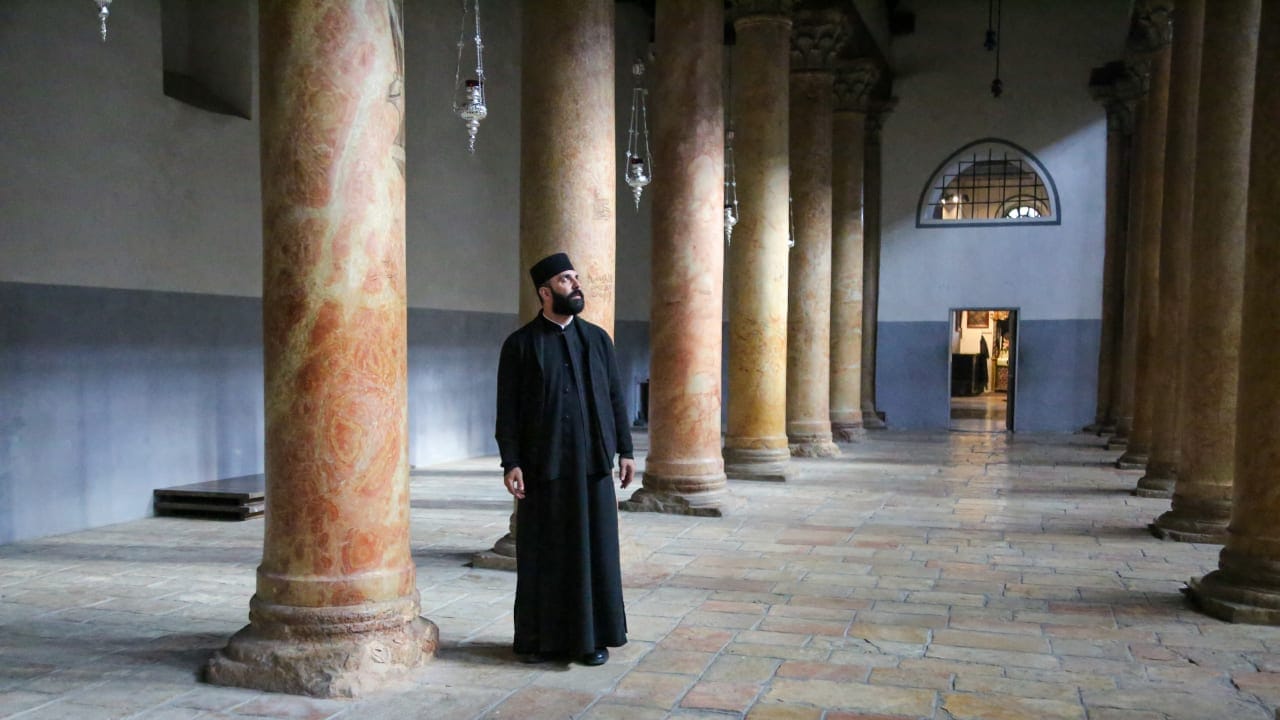
A Palestinian priest was denied entry to the US on account of unspecified "national security" reasons.
Father Issa Thaljieh, the Greek Orthodox parish priest at the Church of the Nativity in Bethlehem, was expected to attend the Not in Christ’s Name conference in Potomac, Maryland, on Saturday, as well as a joint Catholic, Orthodox and Protestant protest against "Israeli settler violence" at the United Methodist Building near the US Capitol on Nov. 16.
The charity The Vulnerable People Project (VPP), a Catholic non-profit and apostolate founded in August 2021 by Jason Jones, said Fr Issa Thaljieh and Rev. Munther Isaac, a Palestinian Lutheran pastor, had been invited to speak about "how Americans are kept from seeing the plight of Palestinian Christians."
VPP subsequently called on President Donald Trump and Secretary of State Marco Rubio to review and reverse the visa denial.
Palestinian identity 'main factor' behind decision to deny entry
In a statement, Thaljieh said his experience during his interview at the US Embassy led him to believe that his Palestinian nationality and identity were the primary reasons for the denial.
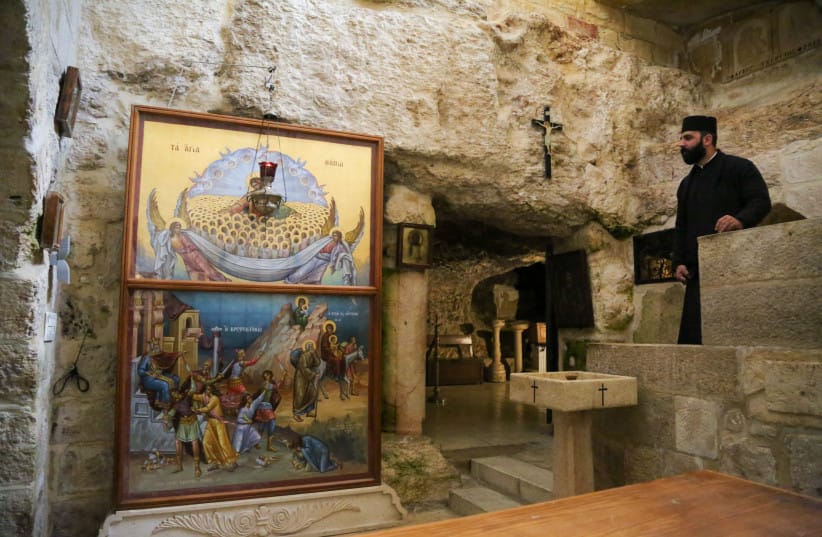
“Throughout the interview, considerable emphasis was placed on the fact that I am Palestinian, and I felt that this was the main factor behind the decision to deny my visa,” Father Thaljieh said.
“I had hoped to share the reality of Christian life in Bethlehem, the birthplace of Jesus Christ, and speak about the challenges facing our Christian community and the people we serve,” he added.
VPP president and founder Jason Jones, who will be at the conference, said, “Father Issa and I were supposed to discuss why American audiences are kept from seeing the true face of Palestinian Christians in the Holy Land."
"Christians in America deserve to hear from him. President Trump and Secretary Rubio have to reverse this decision and let him come, if only for the sake of their own credibility with the American public.”
VPP also reported that Isaac was denied a visa; however, Isaac himself rejected this claim.
"Some reports about my absence from the Church at the Crossroads conference in Atlanta suggested that I had been personally banned from entering the United States," he said on Facebook.
"I want to clarify what happened. I did not apply for a US visa. I knew that the Trump administration’s visa restrictions apply to all Palestinians who hold a Palestinian Authority passport, and several friends who had applied told me that none of them had received a visa."
'Every visa decision is a national security decision'
"For us as Palestinian Christians, these restrictions make it harder to stay connected with the wider church and to meet with our American partners and the people who support our work," he said.
When contacted by The Jerusalem Post, a State Department spokesman said the Trump Administration "continues to put America and its interests first by fully enforcing US immigration laws and ensuring lawful travel through our visa process."
"Our embassies and consulates around the world are prioritizing thoroughly vetting each visa case above all else. They do not issue a visa unless the applicant can credibly demonstrate they meet all requirements under US law.
"Every visa decision is a national security decision," the spokesperson added.
The visa denials come amid broader US restrictions on Palestinian Authority passport holders.
Under Presidential Proclamation 10998, which took effect on January 1, 2026, the Trump administration suspended the issuance of both immigrant and non-immigrant visas to individuals traveling on Palestinian Authority-issued or endorsed documents.
The proclamation provides limited exceptions, including case-by-case waivers where travel is deemed to serve the US national interest, but it does not exempt religious leaders or clergy.
It remains unclear whether Thaljieh's application was rejected under this blanket restriction or following an individual security assessment, and whether he was considered for an exemption.
The State Department has not clarified the specific grounds for his refusal.
VPP, however, said the denial of entry visas to Palestinian Christian leaders seeking to draw international attention to the conditions of their communities and advocate for accountability "highlights the challenges facing Palestinian religious leaders attempting to do so."