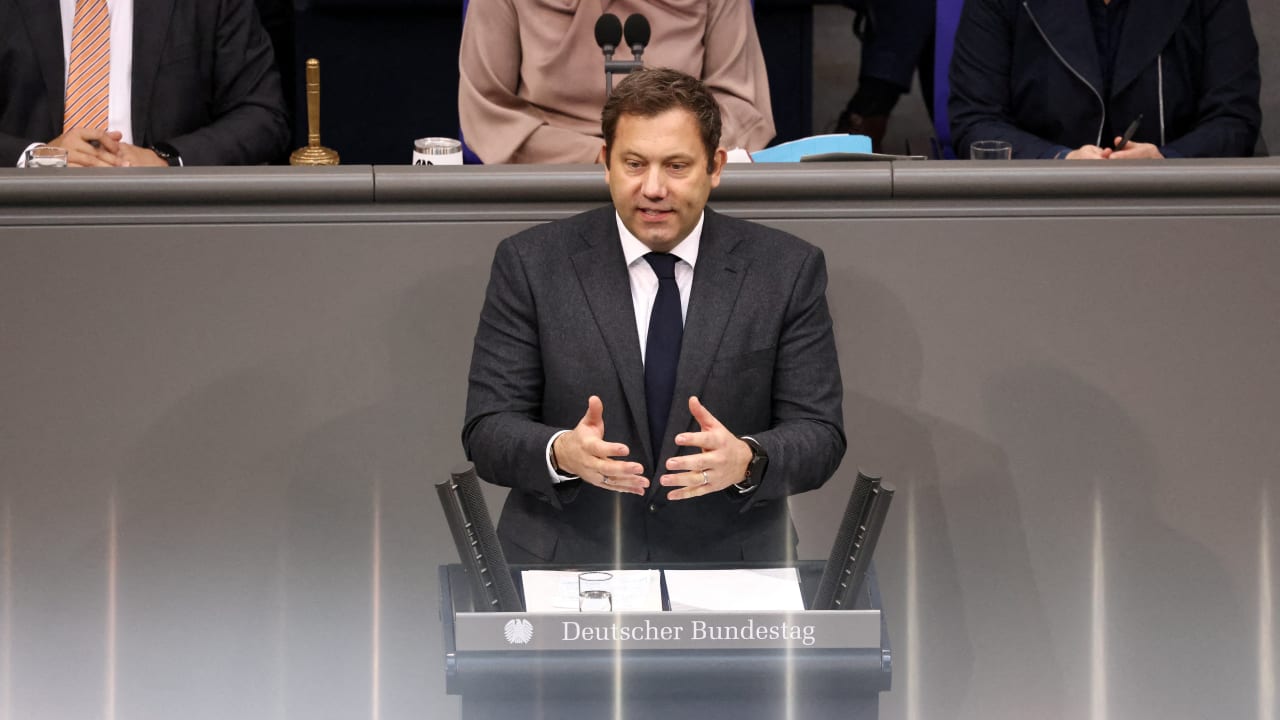
The principles of international law apply to everyone, including the United States, German Finance Minister and Vice Chancellor Lars Klingbeil said on Sunday, in reference to President Donald Trump's threats to seize Greenland.
"It is solely up to Denmark and Greenland to decide about Greenland's future. Territorial sovereignty and integrity must be respected," Klingbeil said ahead of his departure to Washington for a meeting of finance ministers from the Group of Seven advanced economies.
A US military seizure of the mineral-rich Arctic island from Denmark, a long-time ally, would send shockwaves through NATO and deepen the divide between Trump and European leaders.
"We increase security in the Arctic together as NATO allies, not in opposition to one another," Klingbeil said.
Access to critical minerals will be G7 focus
Monday's G7 meeting will focus on access to critical minerals as Western countries seek to reduce their dependence on China, given moves by Beijing to impose strict export controls on rare earths.
Klingbeil said Germany has a strong interest in expanding international cooperation in this area in order to strengthen security of supply, reduce dependencies, and ensure reliable economic framework conditions.

"That is why it is important that we consult with our international partners and - wherever possible - act together," he said.
China dominates the critical minerals supply chain, refining between 47% and 87% of copper, lithium, cobalt, graphite, and rare earths, according to the International Energy Agency.