
Who could have known (certainly not I), while standing by the cart of old giveaway books at the National Library of Israel, that I would be springboarded through the early history of our state?
The book with no cover, which I chose, contained the political cartoons of Arieh Navon. With a character called Mr. Yisrael, Navon made statements about Israel. Found in the newspaper Davar, his artwork was chosen for what it casually said about our nation – from its beginning.
I enjoyed the cartoons very much. Only a citizen of Israel since 1977, my eyes were joyously opened for me through the poignant cartoons I saw and studied. Then I began to read about the exciting and pioneering work of Navon. There was a critique of our beginnings, but also how his work, seen today, can bring us joy.
The struggle for survival according to Navon's 'Mr. Yisrael'
The opening drawing in the book shows Mr. Yisrael wearing the military-folded cap of the Israeli soldiers and holding a dumbbell high up in the air, labeled “Kibbutz Galuyot.” Around him are other dumbbells, one labeled “Building” at one end and “Protection-Defense” at the other. There were two more, one labeled “Struggle for Survival” and the other labeled “The Economy.” This drawing was very relatable, and I assume it would be for others as well, considering the reality we live in.
Arieh Navon was born in the Ukraine in 1909 as Arieh Kligman. His family made Aliyah in 1919 and lived in Tel Aviv. Arieh studied art at the studio of Yitzhak Frankel in 1928 and 1929, and then he traveled to study in Paris from 1930 to 1932.
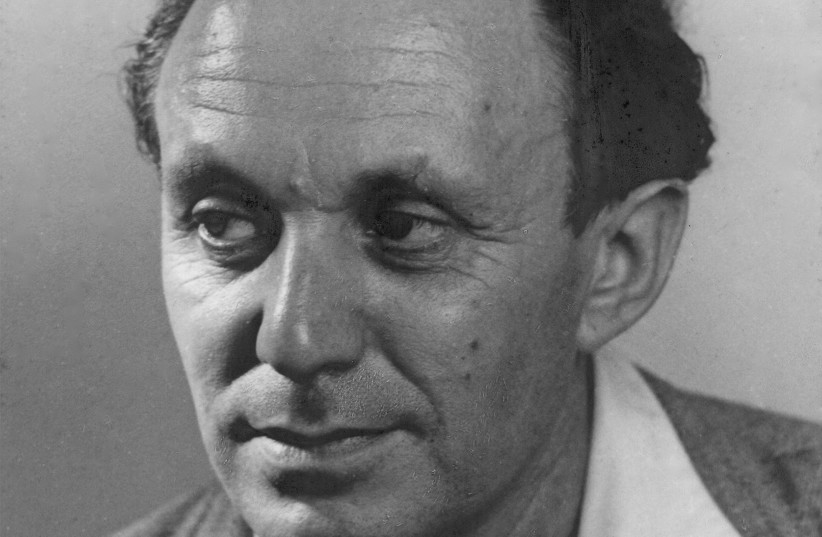
Upon his return to Tel Aviv, Navon found the city bubbling over with new immigrants. There were a number of Hebrew newspapers interested in his work, and in 1933, his cartoons began to appear in Davar, which continued until 1964.
Navon is also recognized for his artwork with text by Leah Goldberg for Uri Kaduri, a children’s book that caused years-long excitement because of its presentation of a little boy who does everything backward. However, since the internet is filled with children’s tales now, the book does not attract the way it once did.
Eli Eshed, a historian of Hebrew comics, has suggested that the cartoon by Navon, published on May 7, 1948, in Davar, showing an old couple of Palmachniks telling tales to their grandson, was an inspiration for the famous song “Hayu Zmanim” by Hayim Hefer.
The opus of Navon awarded him the Israel Prize in 1996, a few months before he died. For me, and I would assume for all those who look at his comics, they will catch the spirit of Israelis through the four decades of his work. My suggestion would be to reprint his comic drawings so that Israelis today can laugh with the joy needed in this era of tension and anguish.