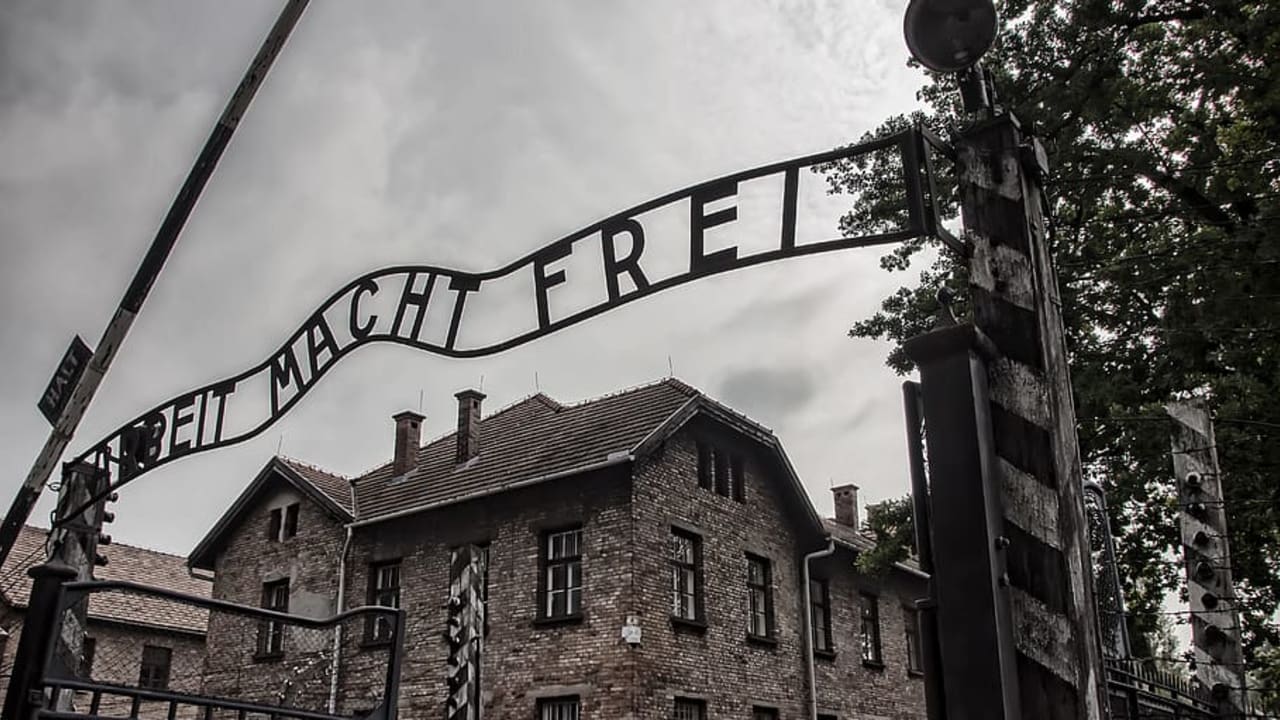
On this day in 1945, the Soviet Army liberated the Auschwitz concentration and extermination camp in occupied Poland, ending the Nazi's largest center of systematic slaughter.
Roughly 7,000 prisoners, many too sick or weak to move, were found alive when the Soviets arrived. In the preceding days, the Nazis had forced nearly 60,000 inmates to march west in brutal winter conditions.
When Soviet troops opened the gates, they also uncovered warehouses of personal effects, including hundreds of thousands of garments and tons of human hair, stark evidence of the industrial scale of murder carried out at the site.
The liberation of Auschwitz is largely recognized as a marker of the end of World War II, as it was the moment the full scale of the Holocaust was revealed to the world.
Soviet soldiers reported shock and horror at the evils the Nazis had imposed on the prisoners of Auschwitz.

Over 1.1 million people were murdered at the Auschwitz-Birkenau complex, the vast majority of them Jews. The site has since become a central symbol of the Nazi genocide.
The date is now globally recognized as International Holocaust Remembrance Day
January 27 is now observed annually worldwide as International Holocaust Remembrance Day by governments and institutions.
At milestone anniversaries, survivors and world leaders have gathered at the former camp to honor the victims and bear witness.
As of early 2026, fewer than 200,000 Holocaust survivors are alive globally, with half of those living in Israel, according to data from the New York-based Conference on Jewish Material Claims Against Germany.
At last year's 80th anniversary of the Auschwitz liberation, only 50 survivors attended the ceremony in Poland, and it is estimated that fewer than 1,000 Auschwitz survivors remain globally.