
At the KFWE (Kosher Food and Wine Experience) in Tel Aviv, I make it a point to arrive early. My policy is to turn up at opening time, see who I want to see, taste what I want to taste, and leave early.
That is before the crowds arrive, thrusting their glasses at the pourers saying, “Give me your best red!” This large kosher food and wine exhibition takes place annually in New York, Miami, Los Angeles, London, and Tel Aviv, and is organized like a roadshow by Royal Wine. Represented are some of the best kosher wines from everywhere.
It is an opportunity to touch base with existing and new wines, because the portfolio is always growing. The Tel Aviv KFWE is organized by Zur Agencies, the leading kosher specialists of imported wines here, and Royal’s representative in Israel.
If one arrives early, most of the stands are not ready, and there is nothing worse for a winery to have a visitor who demands attention before the stand is prepared. It is kind of annoying. I know, because I have been on both sides of this equation. It is also frustrating to go up to a stand manned by a religious pourer who had been instructed how to pour wine just five minutes beforehand.
The risk is that you get poured too little or too much, and the wine is either too cold or too warm. That is before you ask a question. Sometimes, it is a challenge to receive the product information you are seeking.
HOWEVER, THIS time, the first stand in the hall was Cantina Giuliano, and standing there was owner Eli Gauthier, with a warm welcome and ready smile, with bottles at the correct temperature, already open and ready for visitors.
We met and started talking before the penny dropped, and realized we knew each other. I had written about him 10 years ago, when his business was a hopeful and brave start-up.
Eli is well traveled. A native of Paris, he moved to London, where he studied for three years. There, he met the love of his life, and by chance also fell into a new career in wine. It started not with a love of wine, but with a need to earn some money.
Started career pouring wine at largest UK kosher retailer
He started pouring wine at Kosher Kingdom on behalf of Kedem Europe, the main kosher wine importer and distributor in Great Britain. While there, he met Lara, an Italian from Tuscany, at London University. They married in Israel and initially lived in London. So by chance, he found a new path and two new passions.
Wine caught his interest and he took an online winemaking course while also training at a winery in Alsace. It was a biodynamic winery, and Eli realized he wanted to make artisan, handcrafted wine with soul and a sense of place, rather than commercial wine in large quantities.
It just so happened that Lara’s parents had a property in Tuscany in the beautiful village of Casciana Alta. Apart from the ginormous Bartenura from Asti in Piedmont, both Italy and Tuscany in particular were a kosher wine desert.
Kosher wine was focused in the Galilee and Judea in Israel, in Bordeaux and in California. There was a kosher winery in Tuscany, which is the admirable Terra di Seta, which makes excellent quality local wines with good typicity.
However, the young couple saw an opportunity. The idea was not to build an empire or to rigidly follow expansive business plans, but to have fun and indulge in what Eli wanted to do. At this stage, it was simply to make wine. In 2014, in his in-law’s garage, he made his first wine. It began life as a genuine “garagiste” winery.
They were not far from Livorno, a great center of Jewish life in Jewish history. My distinguished forebear, Sir Moses Montefiore, was born there. His family made the opposite journey to Eli’s, and settled in London. Montefiore was a great connoisseur of wine, drinking a bottle of wine every day of his long life. He lived in circles of wine appreciation, with his nephew purchasing Chateau Mouton Rothschild.
But that was long ago. Livorno has deep Jewish roots, but today its small Jewish community is a mere reminder of the city’s great days of old.
THE COUPLE’S first wine was a Chianti (what else) called Primize, which refers to the first fruits. They called the winery Cantina Giuliano, after Lara’s grandfather, and they crafted their wine in the same place where Giuliano had made wine and olive oil. The label was a lovely old black-and-white photo of Lara’s father, Giustino, carrying a large demi-john of wine. They had a wine and a story.
The Gauthiers are a much-traveled couple. Eli had lived in Paris, where he grew up, but also in England, California, and Jerusalem. Lara had been to Florence, Istanbul, London, and Jerusalem. However, Jewish life in Tuscany was sparse, so they moved to Strasbourg, where there is a large Jewish community, and traveled seasonally to Tuscany to make wine.
Food is another passion of this young wine-making couple. A few years after producing their first wine, they opened a dairy restaurant in a Tuscany farmhouse. Of course, everything was local and homemade. They used Tuscan vegetables and fruits from their own orchards, and made their own pasta, cheese, and olive oil. Food became a passion, no less than wine.
For them, the process and journey were as important as the final result. The winery became known for its food. Kosher wine tourism was picking up, and it made sense to offer visitors to Tuscany a taste of kosher wine as well as kosher food.
Their menu represented the Tuscan countryside on a plate. Their establishment became a tourism paradise, with its homemade food and artisan wine ensconced in natural, beautiful surroundings. They were able to provide a kosher dolce vita for those eager to visit the Tuscan countryside. It became a must-visit destination for kosher feinschmeckers visiting Tuscany.
Producing 12,000 bottles of wine in first year
In that first year, they produced 12,000 bottles of wine. They started off in a building with no electricity and with only a primitive camping stove to cook. Now, 12 years later, they are making 120,000 bottles a year. The part-time eatery has developed into a proper restaurant, and the growing demand for kosher food has allowed Eli and Lara to develop a full-fledged catering business. They now supply food for events, celebrations, and private holiday home.
Eli grew their wine business steadily through word of mouth and online activity. There were no big company marketing programs or sophisticated promotions. The wines were reasonably priced and have become well-known and appreciated for their authenticity, quality, and value.
However, selling 100,000 bottles is a different undertaking than retailing 10,000, which is why he decided to have his wines distributed by Royal Wine and Zur, in Israel.
Never mind the business. Making wine for him is an emotional, cerebral, and religious affair. He loves nature and agriculture and combining these with his religion. If someone enjoys his food and wine in the Tuscan countryside, while appreciating the kosher Jewish aspect that threads through all his ventures, then he could not be happier.
It is not just the making and doing, but doing it the right way that gives him a kick. Seeing the client and customer appreciation, and knowing that his wines are used for kiddush and during Shabbat meals, gives him great satisfaction.
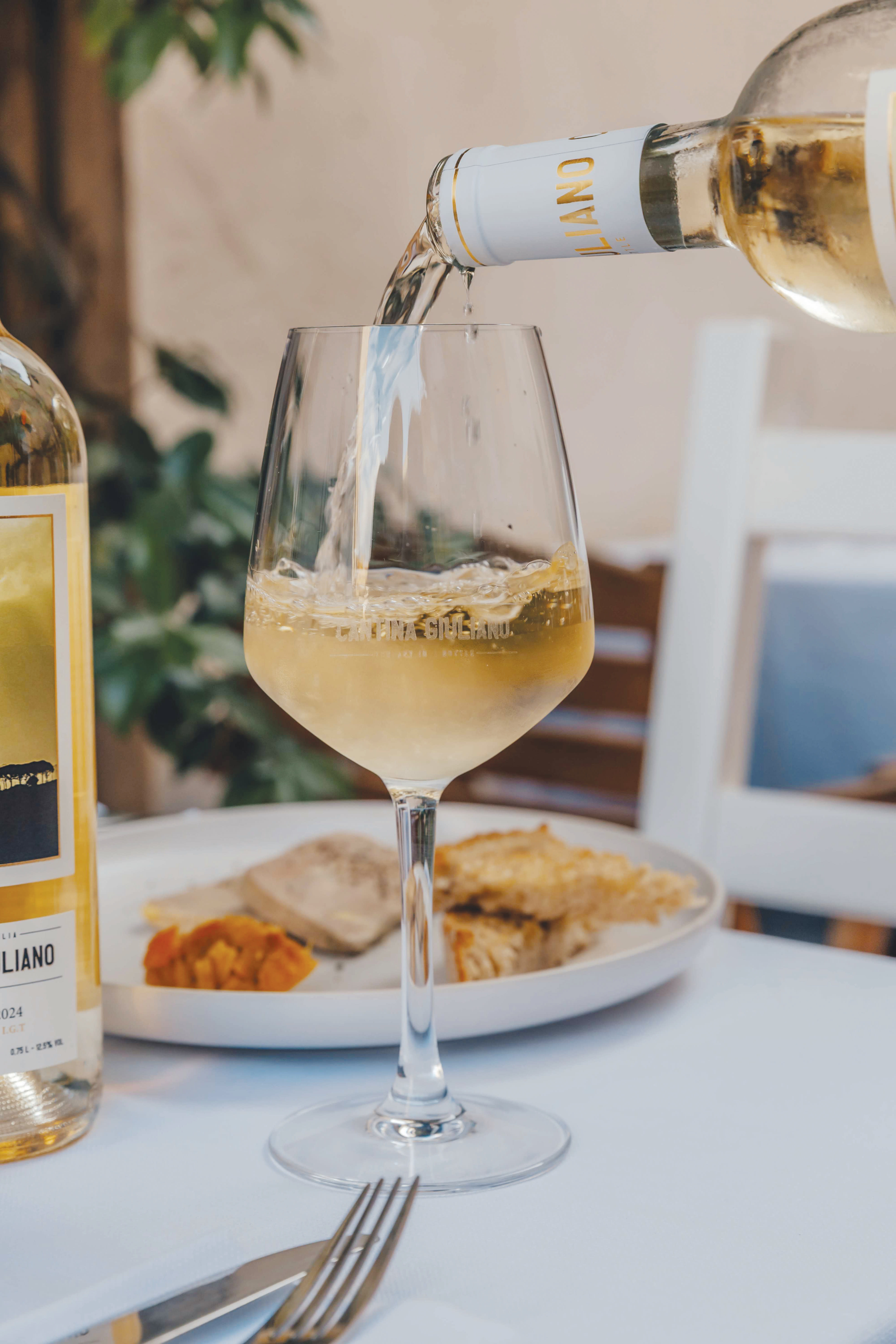
I TASTED the wines recently. Cantina Giuliano has a reasonably new white wine made from Vermentino. It is a popular variety in Sardinia, but is also planted widely in Tuscany. It has saline notes and a tight minerality. The bottle I tasted had more texture than aromatics.
His rosé is called Rosato, made from Sangiovese, the grape of Tuscany. It is nicely colored, exhibiting good, fresh-fruit flavor, and refreshing acidity. We finished this bottle quickly without much thought. It was the perfect summer wine.
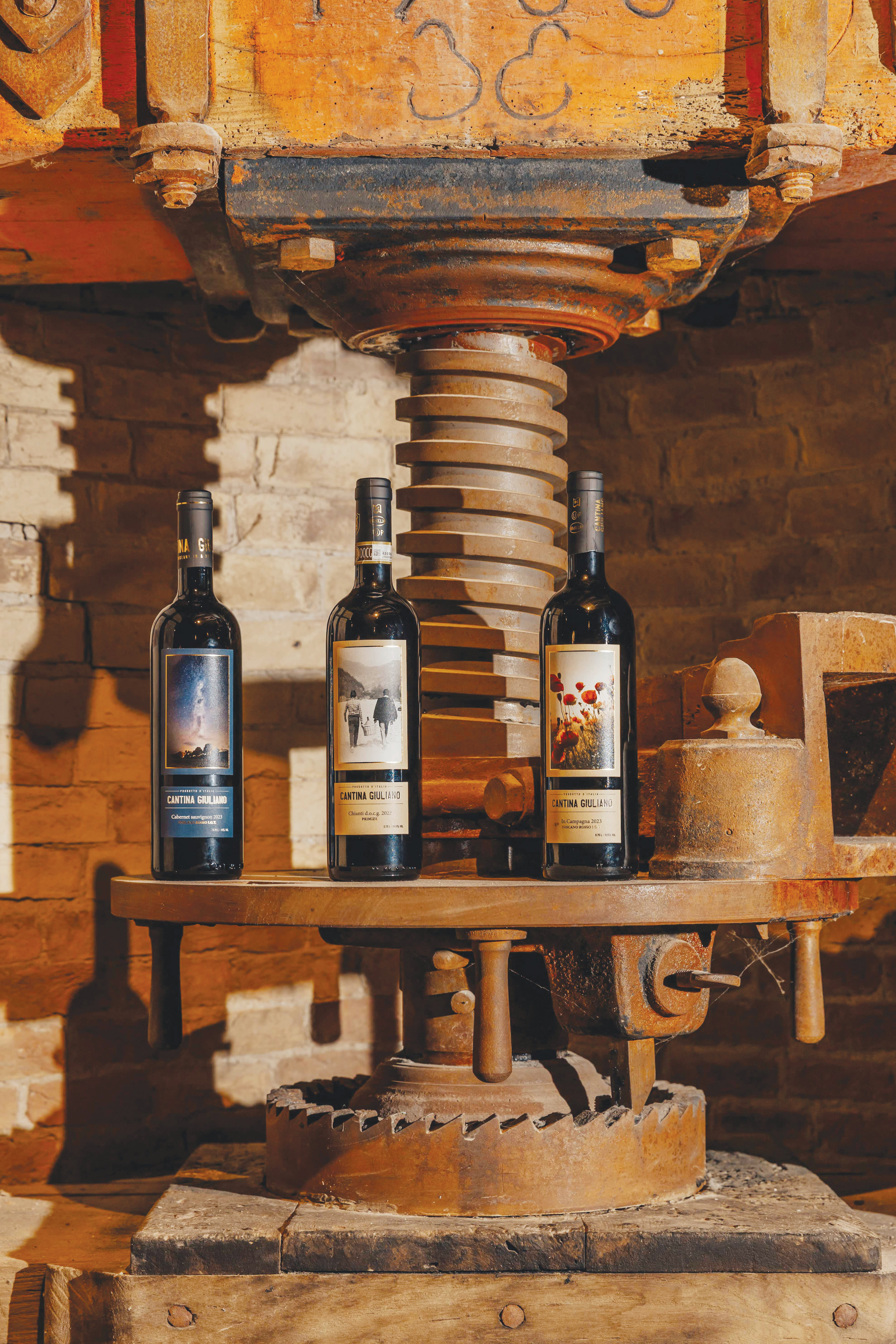
The Chianti Primize is the base wine. It is made mainly from Sangiovese grapes, balanced with the international variety Merlot and the local variety Ciliegiolo. The Merlot provides flesh and roundness; the Ciliegiolo gives the color. The wine is fruity and fresh. It was enjoyable, not too serious, but fun to drink.
We also tasted his Cabernet Sauvignon from Maremma, the southwest coast of Tuscany; and the Super Tuscan, a blend of Cabernet Sauvignon, Cabernet Franc, and Syrah, with a little Merlot. Both are serious, full-flavored wines that need time in the glass. They need to be appreciated over a meal for their aromas and flavors to come to the fore.
Top priced is the flagship A Mano, Italian for “handmade.” It is a handcrafted wine made from Cabernet Sauvignon and Cabernet Franc, grown in 30-year-old vineyards from the Maremma region. It is full-bodied, rich, complex, and opulent.
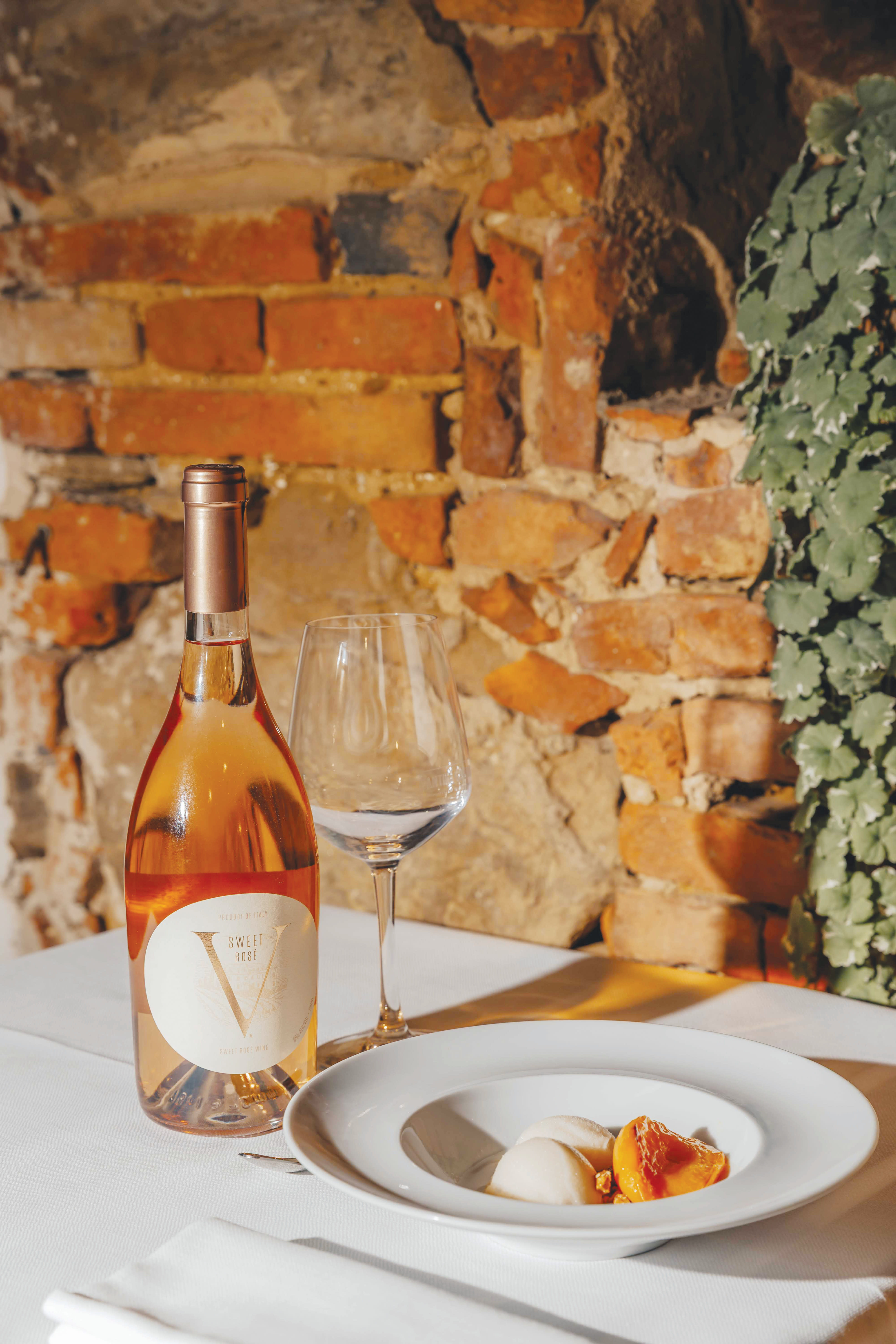
My favorite wines were the Rosato and Primize, but another wine as very popular – the new “V,” made from Vermentino. It was light, aromatic but full-flavored, fruity, frizzante, and sweet. This is a wine to drink ice cold any time, any place, from breakfast, for a brunch, as an aperitif, or with fruit-based desserts.
One of the strange anomalies is that you can count on one hand the number of kosher wineries in Europe, which is surprising, because there is no lack of Orthodox Jews on the continent. More kosher wines are being made, including now in Italy. Yet Cantina Giuliano is one of only five kosher wineries in Europe. Other kosher wines in Europe are being made as kosher batches at non-kosher wineries.
For Eli, Cantina Giuliano is a meeting point of family, Judaism, wine, food, and tourism, in a corner of one of the most beautiful wine regions of the world. Everything is personal, rustic, and rural, and he does everything with a personal touch, with character and great individuality.
So when I approached his winery’s table at KFWE, it was totally appropriate that he would be there in person, to share the experience of making the wines for the curious taster. The person, the wine, and the making of them, is what you get in the glass.
The writer is a wine trade veteran and winery insider turned wine writer, who has advanced Israeli wines over four decades. He is referred to as the English voice of Israeli wine. www.adammontefiore.com